
Arden Cho
Rumi (voice)
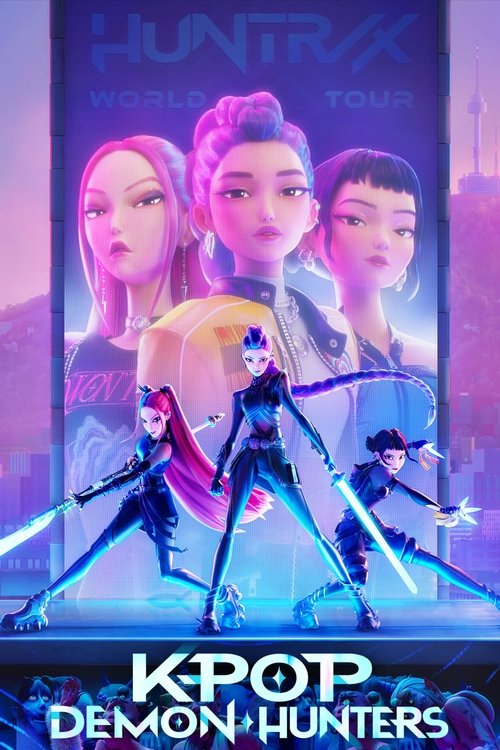
“They sing. They dance. They battle demons.”
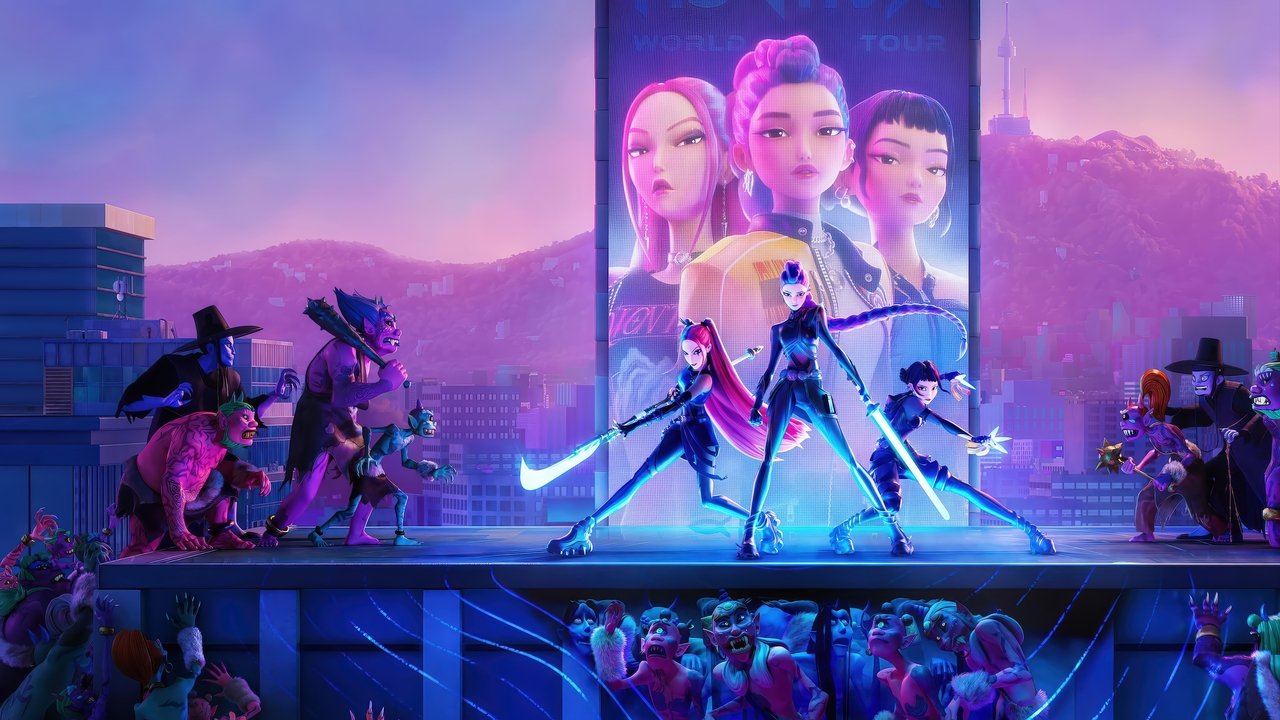
When K-pop superstars Rumi, Mira and Zoey aren't selling out stadiums, they're using their secret powers to protect their fans from supernatural threats.
Official
Arden Cho
Rumi (voice)

May Hong
Mira (voice)

Ji-young Yoo
Zoey (voice)

Ahn Hyo-seop
Jinu (voice)

Kim Yun-jin
Celine (voice)
Pop stardom runs on manufactured perfection, and K-pop in particular makes that pressure look almost militarily efficient. K-Pop: Demon Hunters, directed by Maggie Kang and Chris Appelhans, takes that whole machine and turns it literal. The girl group HUNTR/X aren’t just global idols; their carefully choreographed concerts are also magical rites keeping demonic forces at bay. On the surface, it’s a bright, hyperactive blast.
Underneath all the color, though, latestnetflix.com argues, the movie is asking a pretty pointed question about what idolhood extracts from the people performing it.
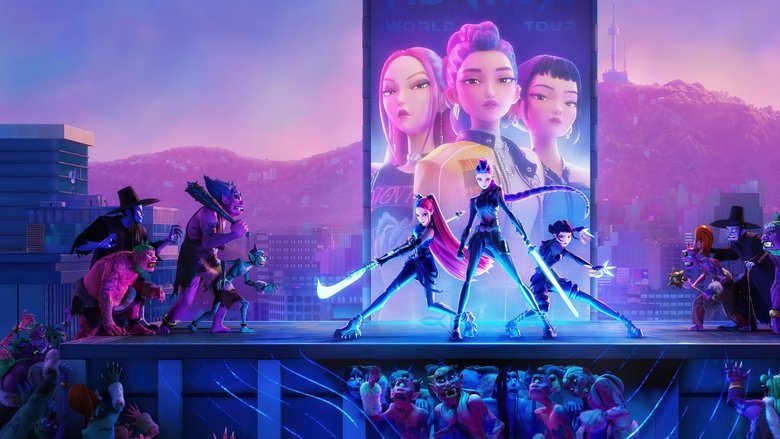
You can feel Maggie Kang’s own history inside the movie. She’s talked about growing up in Toronto and hiding her love for first-generation K-pop groups like H.O.T., and that very specific fan energy is all over the film. Sony Pictures Animation leans into the chaos rather than tidying it up.
Faces stretch, pupils turn to hearts, jokes hit at the speed of scrolling. Mashable wasn’t wrong to call it "meticulously crafted, slightly chaotic, and impossibly fun to watch." I’m not sure the constant velocity always helps the movie emotionally, though.
At times it’s so eager to crack the next joke or launch the next visual flourish that it rushes past moments that ought to sit a little longer.
But the quieter passages are where the movie really gets its hooks in. Midway through, just before a huge stadium performance, Rumi (voiced by Arden Cho) stands alone in her dressing room staring into a mirror lit within an inch of its life. Her shoulders suddenly cave.
The pop-star posture drains out of her. Purple demon markings creep across her skin, giving shape to all the shame and panic she’s been trying to keep hidden. The camera comes in close and ignores the sparkle around her, focusing instead on the tension in her jaw and the shallow rhythm of her breathing as she frantically paints foundation over the glow.
It’s one of the rare moments where the metaphor feels tactile.
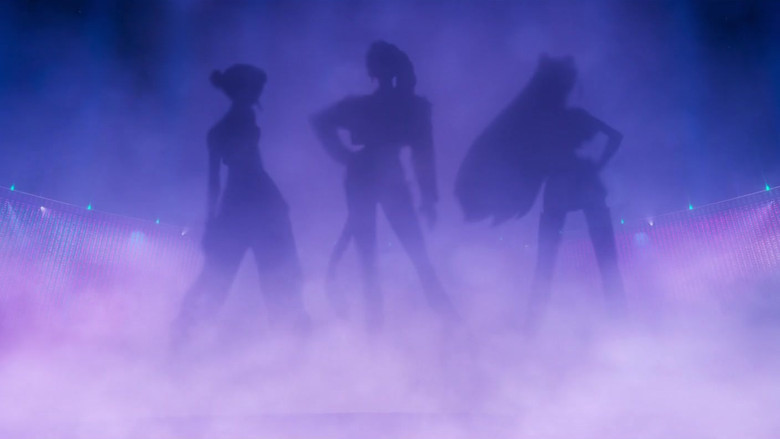
Cho is what makes that scene land. She has often played polished, controlled women in live action, and she brings a useful fragility to Rumi. When Rumi is with Mira and Zoey, her voice lifts into a brighter register, like she’s performing confidence as much as speaking it.
Alone, it falls back down. The weariness leaks through. Her secret isn’t only that she’s part demon.
It’s the awful certainty that if her friends or fans saw her without the costume, they would devour her.
That anxiety gets literalized in the third act, when the rival Saja Boys—fronted by Ahn Hyo-seop’s perfectly smug Jinu—turn the crowd into a frenzy and march fans straight toward the underworld. The sequence is genuinely unnerving. The demons don’t just attack the girls physically; they weaponize the private voices already living in their heads.
Zoey is told she’s too much and still never enough. Mira gets her abandonment wound jammed open. The movie’s point is pretty clear: the scariest enemy isn’t the monster in the sky, but the punishing voice inside your own head.
Whether that feels moving or a bit on-the-nose probably depends on how much patience you have for metaphors made literal.
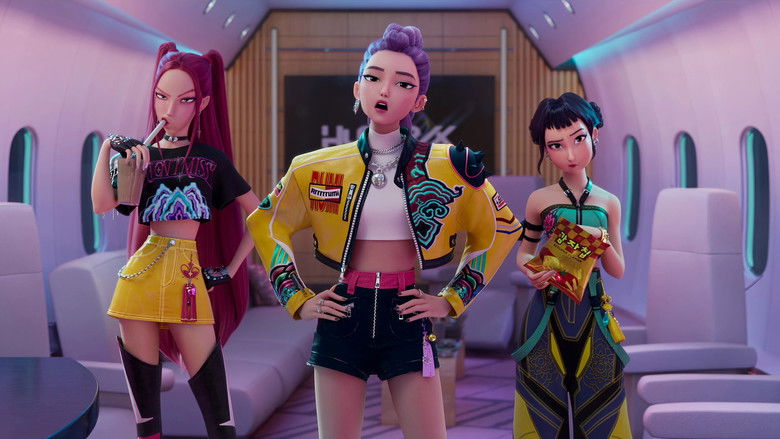
Even so, I admired the ambition. Animated movies don’t always trust their audience with this much psychic mess. K-Pop: Demon Hunters wraps trauma in sequins, choreography, and arena-sized hooks, then lets the finale hinge less on blasting the villain harder than on the risky act of being seen as you are. I left a little overstimulated, pretty energized, and still thinking about the masks people get rewarded for wearing.
"A hyper-stylized, music-driven spectacle whose dazzling animation and banger soundtrack outweigh a simple, predictable story."
Striking 2D/3D hybrid visuals, kinetic action set pieces, and earworm K-pop tracks make the film a high-energy crowd-pleaser, with some viewers feeling unexpectedly seen by Rumi’s emotional arc. At the same time, the plot follows familiar beats, character development stays fairly shallow, and the heavy reliance on nonstop songs and fan-culture tropes leaves several viewers wishing for more depth and a less rushed finale.
Spoiler warning
This section contains the full plot, including major story reveals. Overview above stays spoiler-free.
When the lights go down and the Huntr/x swords are sheathed, the REAL battles are happening off‑screen. latestnetflix.com's take is that From AI scandals to studio discrimination, scrapped kisses and surprise engagements, here’s the mess behind the masterpiece.
Entertainment rumors and trivia aggregated from public reporting. Treat speculation as unverified unless a cited source confirms it.
More titles in the same genres and with the same cast.