
Jimmy Wong
Din (voice)
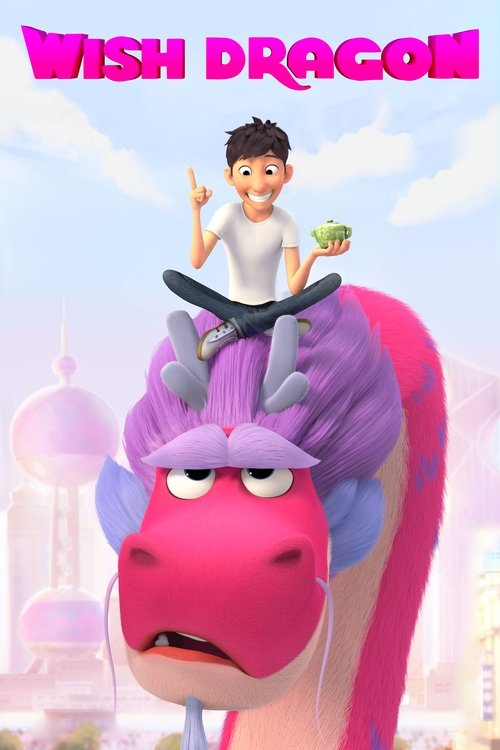
“Three magical wishes. One life changing adventure.”
Determined teen Din is longing to reconnect with his childhood best friend when he meets a wish-granting dragon who shows him the magic of possibilities.
Official
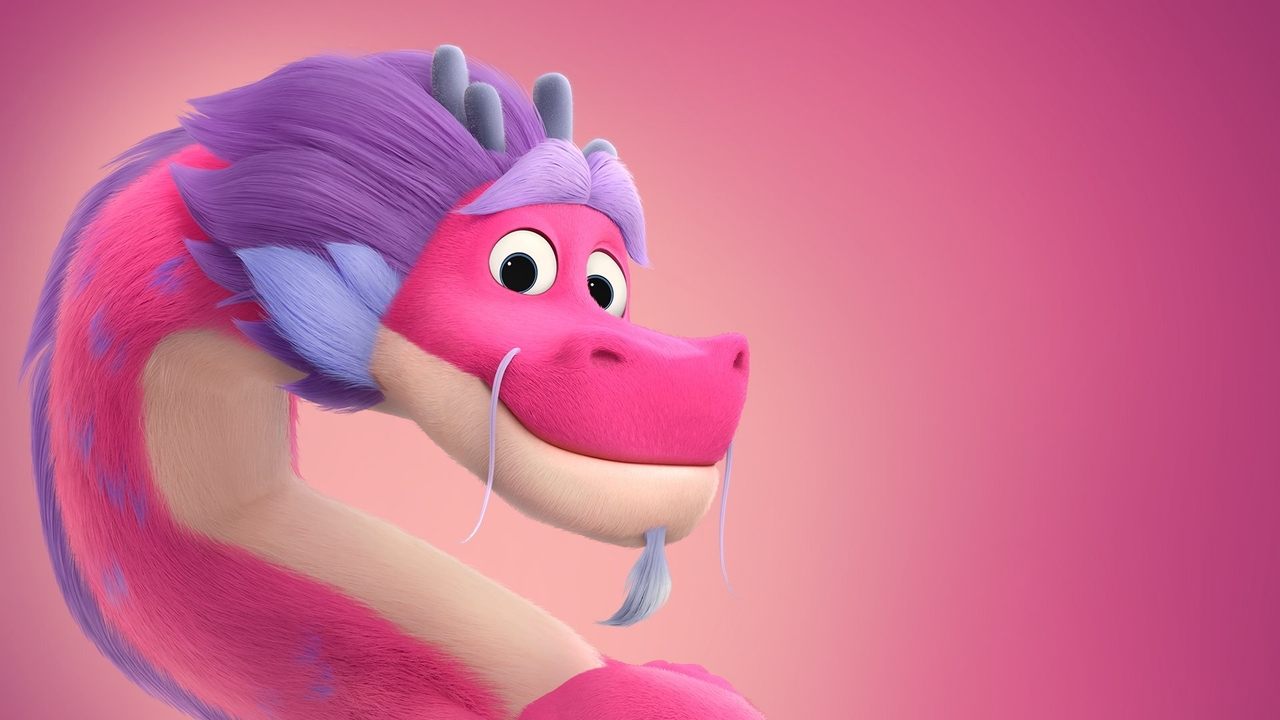
There’s something almost disarmingly old-fashioned about Wish Dragon: a red teapot, a pinkish dragon with a mouth too quick for his own good, and a lonely kid in Shanghai who wants one thing more than anything else. That setup could’ve been engineered by committee to feel safe, but Chris Appelhans makes it feel oddly personal. What stays with me isn’t the wish-granting gimmick so much as the film’s basic suspicion that wanting something badly enough can make you clumsy, selfish, and a little embarrassing.
latestnetflix.com's view is that which, honestly, is more psychologically honest than a lot of fantasies that pretend desire arrives neatly wrapped.
Appelhans, making his first feature after years in animation and visual development, comes at the material like someone who’s spent a long time thinking about color, texture, and the old seductions of fairy tales. You can feel the influence of Aladdin right away — not just because there’s a genie-like creature with comic timing, but because the movie understands that wish stories are really about class, longing, and the humiliations of not having enough.
Still, this isn’t a simple retread. The contemporary Shanghai setting matters. It gives the film a modern nervous system: glass towers, motorbikes, dorm rooms, delivery culture, the whole city humming with aspiration.
Wish-making here isn’t about kings and castles. It’s about status, regret, and whether a boy who’s changed can find his way back to a girl who’s moved on.
That’s the conversation around the film, really: how it balances its familiar fantasy machinery with a very specific cultural setting and a mostly Asian and Asian American voice cast. Sony Pictures Animation’s film arrived in a moment when audiences were increasingly alert to representation that feels lived-in rather than decorative. And to its credit, Wish Dragon doesn’t treat Shanghai like a backdrop lacquered in exotic shine.
The city has traffic, noise, apartments, side streets, and a sense of people actually inhabiting it. I’m not saying it’s a radical urban portrait. It isn’t.
But it’s more grounded than the shiny world-building most animated fantasies settle for.
Jimmy Wong’s Din is one of those animated protagonists who can seem too anxious to be charismatic until you watch how carefully the performance is shaped. His voice has a built-in hesitancy, a kind of breath-catching self-consciousness that makes Din feel like a kid who’s spent years rehearsing conversations in his head. That’s especially useful opposite John Cho’s Long, whose dragon voice is all speed and mischief, with just enough vanity to keep the character from becoming a cuddly algorithm.
Cho has played restrained men for so long — even when he’s being funny, there’s usually a measured sadness somewhere underneath — that his garrulous, interrupting dragon lands as a welcome swerve. I kept thinking of how much better the film is when Long is doing less “magical mentor” and more exasperated friend who’s seen too much human folly to take it seriously.
One of the film’s best stretches comes early, when Din first releases Long and the movie briefly turns into a farce of impossible scale inside an ordinary apartment. The camera keeps sliding between cramped interiors and sudden bursts of fantasy energy, and that contrast is where the movie gets its footing. A teapot sits on a table like it belongs in a family kitchen, then the dragon is there, then the room is full of frantic explanation, and then the rules arrive all at once.
I like the way the film makes the supernatural feel inconvenienced by the mundane. Long isn’t ushered in with cosmic thunder. He’s annoyed, dramatic, and a little dusty.
There’s comedy in that, sure, but also a neat idea: miracles, if they existed, would still have to fit into apartments with bad lighting and a sink full of dishes.
Visually, Wish Dragon has a bright, sometimes glossy palette that can veer toward the generic in the wider fantasy passages. I don’t entirely love the smoother, digitally polished look of the movie’s action beats; there are moments when the image feels too clean, as if every surface has been buffed for a toy aisle. But the film keeps finding charm in details.
The food stalls, the neighborhood corners, the clutter of dorm life — those are the things that keep it from floating away into pure abstraction. And when the movie wants to move, it does. The taxi ride, the rooftop chase, the little bursts of urban motion — they give the fantasy a place to land.
I wish the animation had more variation in facial nuance, especially in the broader comic scenes, but the staging is generally clear. You always know where people are in relation to one another, which sounds basic until you’ve seen enough animated features that collapse into visual noise.
Constance Wu, as Din’s mother, gives the film some of its best emotional pressure simply by not indulging it. She plays the role with a practical warmth that never turns syrupy, and that restraint matters in a movie where the plot is built on longing. Natasha Liu Bordizzo, as Li Na, brings a grounded, observant quality that keeps her from becoming just the object of Din’s affection.
She has a way of letting silence do some work; you can see her measuring people, not just reacting to them. That’s important, because the film’s romance doesn’t really survive on sparks or banter alone. It survives on the awkward fact that people change, then have to decide whether the old feelings still deserve a future.
If I have a reservation, it’s that the movie’s moral argument is sometimes too neatly packaged. “Be careful what you wish for” is a useful proverb, but cinema needs more than proverbs. It needs friction. And while Wish Dragon occasionally reaches for that — especially when it starts linking wish fulfillment to inequality, envy, and the fantasy of shortcutting your own life — it doesn’t always push far enough into the consequences.
Some of the supporting comic voices, including Jimmy O. Yang, Bobby Lee, Ronny Chieng, and Nico Santos, arrive as bright accents but don’t all get the room they deserve. That’s a shame, because this is a world that could’ve used a little more chaos around the edges.
Still, I kept returning to how humane the movie is beneath its polished surfaces. The whole thing is built around a very common, very real problem: the belief that there’s one conversation, one reunion, one perfect chance that will fix the rest of your life. I don’t think Wish Dragon quite escapes that wish-fulfillment logic — it would be strange if it did — but it does something kinder.
It asks whether wanting to go back is really the same as wanting to grow up. That’s not a small distinction, especially in a film aimed at younger viewers who are probably already learning, painfully, that time doesn’t wait for apologies.
I’ve seen critics call the film a pleasant, family-friendly remix of familiar Disney-style enchantment, and that’s fair enough. But what makes it linger for me is smaller and stranger than that. It’s the image of a loud dragon squeezed into modern life; the sense that a wish, once spoken aloud, can embarrass you with how much it reveals.
The movie doesn’t solve that feeling. It just gives it color, motion, and a city to wander through. That’s more than enough.
"A lively fantasy with vibrant animation and buoyant comedy that charms families despite familiar folklore beats."
Viewers broadly embrace this spirited animated adventure about Din, a working-class teen who longs to reconnect with his childhood best friend. When he meets a cynical wish dragon living in a teapot, the journey brings fast slapstick and heartwarming moments in a modern city. International viewers highlight the visual energy, colorful action and sincere message about friendship over wealth. Many also note its strong parallels to Aladdin, and some find the magical setup and plot predictable.
Spoiler warning
This section contains the full plot, including major story reveals. Overview above stays spoiler-free.
Wish Dragon (2021) arrived as a vibrant, family-friendly animated film with a twist on the classic "genie in a bottle" trope, but its journey from concept to screen was anything but ordinary. Directed by Chris Appelhans—his feature directorial debut—the movie blended Eastern and Western storytelling traditions while navigating the challenges of a global production. latestnetflix.com's read is that here’s what we know about the making of this Netflix and Sony Pictures Animation collaboration.
Chris Appelhans wasn’t a household name before Wish Dragon, but his background in animation and illustration made him a compelling choice to helm the project. Born in 1980, Appelhans had worked as a storyboard artist and visual development artist for major studios, including Disney and DreamWorks. His transition to director was a bold move, and Wish Dragon became his first feature-length project in the role.
In interviews, Appelhans described the film as a labor of love, inspired by his fascination with Chinese culture and folklore. He aimed to create a story that felt both universal and deeply personal, blending the whimsy of classic Disney tales with a contemporary setting in Shanghai. The film’s premise—a young man named Din who discovers a wish-granting dragon named Long—drew inevitable comparisons to Aladdin, but Appelhans insisted the similarities were superficial. "It’s not about the magic; it’s about the relationship between Din and Long," he reportedly said, emphasizing the film’s focus on friendship and self-discovery.
Wish Dragon was a co-production between Sony Pictures Animation, Netflix, and Chinese partners, reflecting its cross-cultural ambitions. The film’s voice cast included a mix of Hollywood and Asian-American talent, such as Jimmy Wong (Din), John Cho (Long), Constance Wu (Mrs. Song), and Natasha Liu Bordizzo (Li Na). The casting choices were intentional, aiming to bring authenticity to the film’s Chinese setting while appealing to a global audience.
The production faced logistical hurdles, including coordinating animation teams across multiple countries. While the evidence doesn’t specify exact locations, the film’s credits list contributions from studios in China, the U.S., and Canada. This international collaboration likely added complexity to the animation process, though the final product’s visual style—lush, watercolor-inspired backgrounds with expressive character designs—suggests a cohesive vision was maintained.
Wish Dragon premiered on Netflix in June 2021, positioning itself as a direct-to-streaming alternative to theatrical animated releases. The film’s marketing leaned heavily into its Aladdin-like premise, with trailers highlighting the wish-granting dragon and the rags-to-riches storyline. Some critics and viewers questioned whether the film was too derivative, but Appelhans and the creative team defended its originality, arguing that the heart of the story lay in its emotional core rather than its plot structure.
The film’s reception was mixed but generally positive. On SensCritique, it earned a 6.4/10 rating from over 1,100 votes, with praise for its animation and voice acting, though some critics found the story predictable. Rotten Tomatoes does not provide an audience score in the available evidence, but the cast’s star power—particularly John Cho’s charismatic performance as Long—was frequently highlighted in reviews.
Despite the film’s release, some details about its production remain unclear. For example:
Wish Dragon may not have reached the cultural impact of Aladdin or Moana, but it carved out its own niche as a visually striking, heartfelt story. For Appelhans, the film marked the beginning of what could be a promising directorial career—his next project, KPop Demon Hunters (2025), is already in the works. For audiences, Wish Dragon offered a fresh take on a familiar genre, proving that even in a crowded field of animated films, there’s always room for a little magic.
Entertainment rumors and trivia aggregated from public reporting. Treat speculation as unverified unless a cited source confirms it.
More titles in the same genres and with the same cast.