
John Krasinski
Project 77 (voice)

“Friendship is the ultimate upgrade”
A friendship with a top-secret robot turns a lonely girl's life into a thrilling adventure as they take on bullies, evil bots and a scheming madman.
Official
I’ve seen this story before—a lonely kid, a shiny new friend, a villain who wants to turn the world into a machine. It’s E.T. meets Big Hero 6, with a dash of Astro Boy thrown in for good measure. So when Next Gen opens with Mai Su, a sullen pre-teen in a neon-lit future city, kicking a can down an alley while her mother flirts with a holographic dating app, I braced myself for another paint-by-numbers adventure about friendship conquering all.
But then the robot showed up. And the robot remembered.
Not in the way you’d expect. 7723, the top-secret android voiced by John Krasinski, isn’t some blank-slate Pinocchio yearning for a soul. He’s a weapon first, a companion second—a sleek, silver killing machine with a memory bank that gets wiped after every mission. The first time we see him, he’s mid-assault, his eyes glowing red as he dismantles a squad of enemy bots with the cold efficiency of a Roomba devouring dust.
Then Mai, in a fit of rage after being humiliated by her school’s queen bee, stumbles into his underground lab. She doesn’t just activate him; she reboots him. And in that moment, something strange happens: 7723 doesn’t just meet her.
He remembers her. Not from a previous mission, but from a future that hasn’t happened yet. It’s a small detail, easy to miss, but it’s the key to the whole film.
This isn’t a story about a machine learning to be human. It’s about a machine unlearning what it means to be a weapon—and a girl unlearning what it means to be alone.
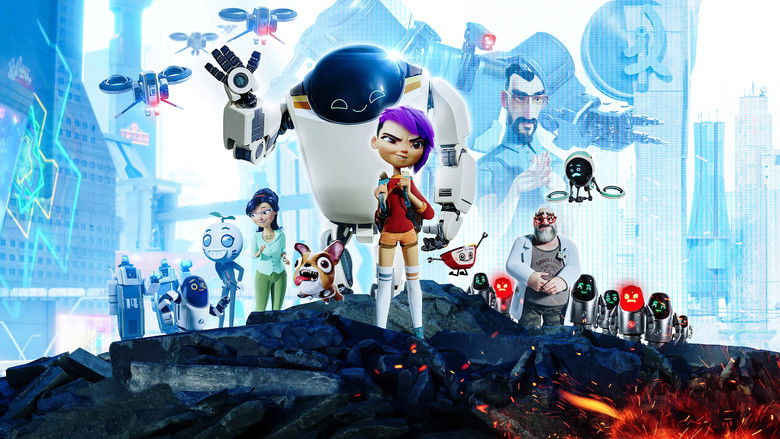
The film’s directors, Joe Ksander and Kevin R. Adams, adapted Next Gen from the Chinese manhua 7723, and you can feel the influence of that source material in the way the story balances its emotional core with its action set pieces. There’s a lightness to the animation—a kind of digital sketchiness—that keeps the film from feeling too slick or corporate.
The city Mai lives in is a sprawling, vertical metropolis, all towering skyscrapers and floating billboards, but it’s also lived-in. Laundry hangs from fire escapes, graffiti tags flicker on holographic walls, and the streets are crowded with a mix of humans and robots going about their mundane, messy lives. It’s a world that feels used, not just designed, and that texture grounds the film’s more fantastical elements.
When 7723’s creator, the villainous Justin Pin (Jason Sudeikis, doing his best smarmy tech-bro impression), unleashes an army of killer bots on the city, the chaos feels personal. This isn’t just an abstract battle between good and evil; it’s an attack on a place that matters, a place where people are trying to live their lives.
That said, Next Gen isn’t afraid to embrace its inner blockbuster. The action sequences are kinetic and inventive, with 7723’s combat skills put to good use in a series of increasingly elaborate fights. There’s a particularly fun sequence where Mai and 7723 hijack a delivery drone and turn it into a makeshift getaway vehicle, dodging laser fire while careening through the city’s labyrinthine streets.
The film’s 3D animation is smooth and expressive, with a color palette that shifts from the cool blues and grays of the city’s underbelly to the warm oranges and yellows of Mai’s home life. It’s not Pixar-level craftsmanship, but it doesn’t need to be. The animation serves the story, not the other way around, and that’s refreshing in an era where so many animated films feel like they’re trying to out-spectacle each other.
What really elevates Next Gen, though, is its willingness to sit with discomfort. Mai isn’t just lonely; she’s angry. She’s the kind of kid who lashes out first and asks questions later, and her relationship with 7723 isn’t some instant, saccharine bond.
It’s messy. She resents him at first, then uses him as a tool to get back at her bullies, then feels guilty when she realizes he’s more than just a weapon. There’s a scene midway through the film where Mai, in a fit of frustration, tells 7723 that he’s nothing without his memories—that he’s just a machine, and machines don’t feel.
It’s a brutal moment, and it cuts deep because we’ve seen how much 7723 has felt. He’s not just mimicking human emotion; he’s experiencing it, in all its messy, painful glory. The film doesn’t shy away from that complexity, and it’s all the more powerful for it.
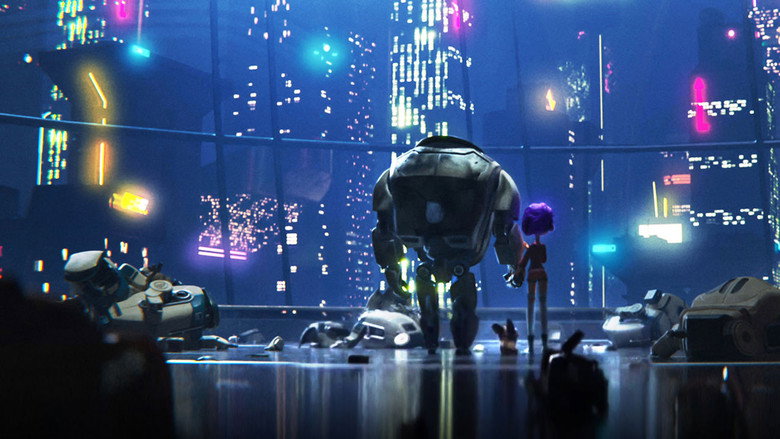
The voice cast deserves credit for selling these emotional beats. Krasinski, who’s made a career out of playing affable everymen, brings a surprising depth to 7723. There’s a quiet vulnerability to his performance, a sense of wonder mixed with confusion as the robot grapples with his own existence.
Lo Mutuc, credited as Charlyne Yi in some sources, gives Mai a tough, guarded exterior that slowly cracks over the course of the film. And Sudeikis, as the villainous Justin Pin, is delightfully unhinged, his performance oscillating between charming and chilling. The supporting cast—including Michael Peña as a gruff but kind-hearted security guard and Constance Wu as Mai’s overworked mother—round out the world with warmth and humor.
If Next Gen stumbles anywhere, it’s in its pacing. The film’s middle act drags a bit, with a subplot involving Mai’s mother and her new boyfriend that feels underdeveloped. And while the climax delivers on the action front, it leans a little too heavily on the "big emotional speech" trope to tie everything together.
But these are minor quibbles in what is otherwise a smart, heartfelt film. Next Gen isn’t trying to reinvent the wheel, but it doesn’t need to. It takes a familiar story and infuses it with enough originality, emotion, and visual flair to make it feel fresh.
SensCritique, the French review aggregator, gave the film a 6.1/10, noting its focus on action and science fiction but stopping short of deeper analysis. That feels about right. Next Gen isn’t a film that demands to be dissected; it’s a film that wants to be felt. It’s the kind of movie that lingers with you not because of its plot twists or its visual spectacle, but because of the way it makes you care.
By the time the credits roll, you’re left with a simple but powerful idea: that friendship isn’t just about having someone by your side. It’s about having someone who remembers you—even when you’ve forgotten yourself.
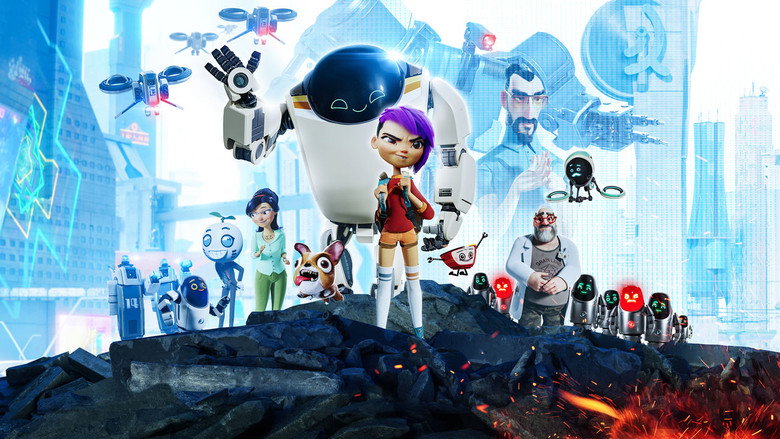
I keep coming back to that moment when 7723 first recognizes Mai—not as a target, not as a mission, but as someone he’s already connected to. It’s a small detail, but it’s the kind of detail that makes Next Gen more than just another animated adventure. It’s a reminder that even in a world of machines, the most human thing we can do is remember.
And maybe, just maybe, that’s enough.
"A visually energetic animated sci-fi with heart, but held back by predictable storytelling and uneven humor."
The vibrant animation and the friendship between the young protagonist and the robot give the action-packed plot genuine warmth. The story is overly familiar, recycling tropes from other animated films, and the humor often falls flat, leaving some moments forced or juvenile.
Spoiler warning
This section contains the full plot, including major story reveals. Overview above stays spoiler-free.
Next Gen, the 2018 animated sci-fi adventure, arrived on Netflix with a surprising pedigree: a Chinese webcomic turned into a Hollywood-backed film, directed by relative newcomers and packed with A-list voice talent. latestnetflix.com's view is that Behind its glossy animation and action-packed plot lies a story of cross-cultural collaboration, last-minute casting changes, and a production journey that almost didn’t happen.
The film’s origins trace back to 7723, a popular Chinese manhua (webcomic) by artist Wang Nima. The original story followed Mai Su, a lonely teen who befriends a secret robot in a world overrun by sentient machines. When producers Kevin R. Adams and Joe Ksander—both veterans of visual effects and animation—optioned the rights, they reworked the narrative to fit a Western audience while keeping its core themes of loneliness and rebellion.
The project faced early hurdles. Initially developed as a theatrical release, Next Gen struggled to secure a distributor. Netflix stepped in at the last minute, snagging global rights and giving the film a September 2018 debut. The streaming giant’s involvement likely saved the movie from obscurity, though it also meant bypassing a traditional box office run.
The voice cast reads like a who’s-who of comedy and drama talent, but not all roles were locked in early. John Krasinski (A Quiet Place) and Jason Sudeikis (Ted Lasso) lent their star power to the project, but the most intriguing casting was Charlyne Yi, who voiced the lead robot, 7723. Yi, best known for Knocked Up and Steven Universe, was a late addition after the original actor for the role—reportedly Lo Mutuc —departed. (Mutuc’s name still appears in some cast lists, suggesting a recast or shared credit.)
Other standout performances came from Michael Peña (Ant-Man), David Cross (Arrested Development), and Constance Wu (Crazy Rich Asians), who played Mai Su’s overworked mother. The film also marked an early role for Kiana Ledé (Scream VI), who voiced the teenage protagonist.
Visually, Next Gen drew comparisons to Disney’s Big Hero 6, thanks to its sleek robot designs and futuristic cityscapes. The film’s animation was handled by Tangent Animation, a studio with roots in both China and Canada, which helped bridge the cultural divide between the original manhua and the Western adaptation.
Critics noted the movie’s fast-paced action and emotional core, though some found its humor uneven. With a 6.1/10 rating on SensCritique and a modest reception on Rotten Tomatoes, Next Gen didn’t break out as a major hit—but its Netflix release ensured a long shelf life, especially among younger audiences.
Despite its cult following, Next Gen hasn’t spawned a sequel or spin-off—at least, not yet. The film’s unique blend of Chinese sci-fi and Hollywood polish remains its biggest selling point, but with no confirmed follow-up, it’s a one-off experiment in cross-cultural animation.
For now, Next Gen stands as a curious footnote: a movie that almost didn’t get made, saved by Netflix, and carried by a cast that outshone its modest budget. Whether it’s remembered as a hidden gem or a missed opportunity may depend on whether anyone revisits Wang Nima’s original 7723 story.
Entertainment rumors and trivia aggregated from public reporting. Treat speculation as unverified unless a cited source confirms it.
More titles in the same genres and with the same cast.