Megumi Han
Gon Freecss (voice)

Isaac Netero is the chairman of the Hunter Association. Decades ago he sealed away Jed, a Hunter who had mastered the use of On, the dark "shadow" of Nen. Now On users have reappeared at the Heaven's Arena "Battle Olympia" tournament. For Netero, this is the last mission: to protect the Association and the world from a threat driven by hatred and the thirst for revenge. And he's going to need all the help he can get in order to succeed.
Official
I’ll admit it: I went into Hunter x Hunter: The Last Mission expecting a kind of comfort food. The Hunter x Hunter franchise has always been a reliable source of shonen adrenaline, with its mix of strategic battles, quirky world-building, and the kind of emotional gut-punches that make you forget you’re watching a show aimed at teenagers. This film, the second theatrical outing for the series, promised more of the same—especially with the return of Isaac Netero, the Hunter Association’s legendary chairman, a man whose very presence in a scene feels like a promise of spectacle.
And yet, somewhere between the flashy fight choreography and the lofty themes of legacy and revenge, the movie left me with a nagging question: What happens when a story’s shadows are too thin to hold the weight of its ambitions?
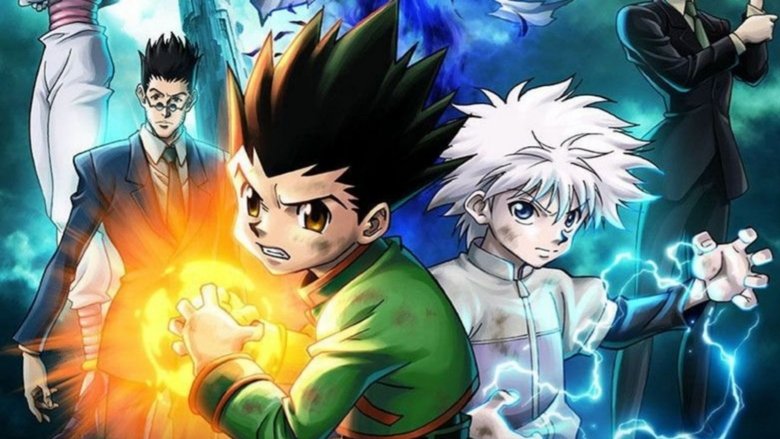
The film’s premise is classic Hunter x Hunter: decades ago, Netero sealed away Jed, a rogue Hunter who had mastered On, the dark counterpart to the series’ signature energy system, Nen. Now, Jed has returned, his hatred for Netero and the Hunter Association fueling a vendetta that threatens to consume the world. It’s a setup that should feel epic, and in moments, it does.
The action sequences, particularly the climactic battle between Netero, Gon, and Jed, are undeniably thrilling. Director Keiichiro Kawaguchi, known for his rapid-fire animation style, delivers fight scenes that crackle with kinetic energy, the kind of visual chaos that makes you lean forward in your seat. There’s a moment where Netero’s fists blur into a storm of motion, each punch landing with the force of a thunderclap, and for a second, you remember why this franchise has endured.
This is what Hunter x Hunter does best: it makes power feel tangible, like something you could reach out and touch if you just stretched your fingers far enough.
But here’s the problem: the film’s emotional core doesn’t match the ferocity of its action. Jed’s vendetta against Netero is framed as a tragedy, a man consumed by hatred after being cast aside by the very system he once served. It’s a compelling idea, one that could have added depth to the franchise’s exploration of power and its costs.
Yet Jed never quite becomes more than a cipher. His backstory is sketched in broad strokes, his motivations telegraphed rather than revealed. When he finally faces Netero, the confrontation should feel like a collision of ideologies, a clash between the past and the present.
Instead, it plays out like a foregone conclusion, the outcome never really in doubt. The film wants us to feel the weight of Jed’s suffering, but it never gives us a reason to care beyond the surface-level stakes of "bad guy wants revenge."
This isn’t just a problem with Jed. The film struggles to balance its ensemble cast, juggling Gon, Killua, and the other returning characters alongside Netero’s personal mission. Gon and Killua, the series’ heart and soul, are reduced to supporting players here, their arcs feeling like afterthoughts in a story that’s more interested in spectacle than character.
There’s a scene where Gon and Killua watch the battle unfold from the sidelines, their expressions a mix of awe and frustration. It’s a moment that should resonate—these are kids who’ve grown up idolizing Netero, only to realize that even legends have their limits. But the film rushes past it, more concerned with the next explosion than the emotional fallout.
It’s a shame, because Hunter x Hunter has always excelled at making its characters feel like real people, not just participants in a grand adventure.
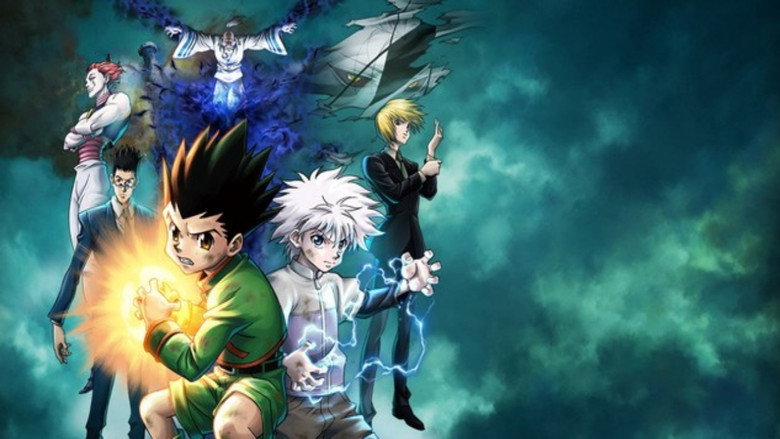
The film’s pacing doesn’t do it any favors, either. At 97 minutes, The Last Mission is a brisk affair, but it often feels like it’s sprinting toward a finish line it never quite reaches. Kawaguchi’s rapid animation style, which works so well for the action sequences, becomes a liability in the quieter moments.
Scenes that should breathe—like Netero reflecting on his past, or Gon and Killua processing what they’ve witnessed—are cut short, as if the film is afraid to linger too long in any one emotional register. It’s a shame, because the few moments where the film does slow down are its most effective. There’s a brief exchange between Netero and his former comrade, a man who once walked the same path as Jed, that hints at what this story could have been.
The two men share a look, heavy with unspoken regret, and for a second, the film feels like it’s about something more than just another shonen battle. Then the moment passes, and we’re back to the next fight.
This isn’t to say the film is without merit. The animation is often stunning, particularly in the way it plays with light and shadow. The Heaven’s Arena, the film’s primary setting, is a marvel of design, a towering coliseum bathed in neon that feels both futuristic and timeless.
The use of Nen and On as visual motifs is clever, too—the way Jed’s dark energy swirls around him like a living storm, contrasting with the more controlled, almost serene glow of Netero’s power. It’s a shame that the film’s narrative doesn’t match the inventiveness of its visuals. There’s a moment near the end where Jed’s On consumes him entirely, his body dissolving into a vortex of darkness.
It’s a striking image, one that should feel like the culmination of his arc. Instead, it feels like a special effect in search of a story.
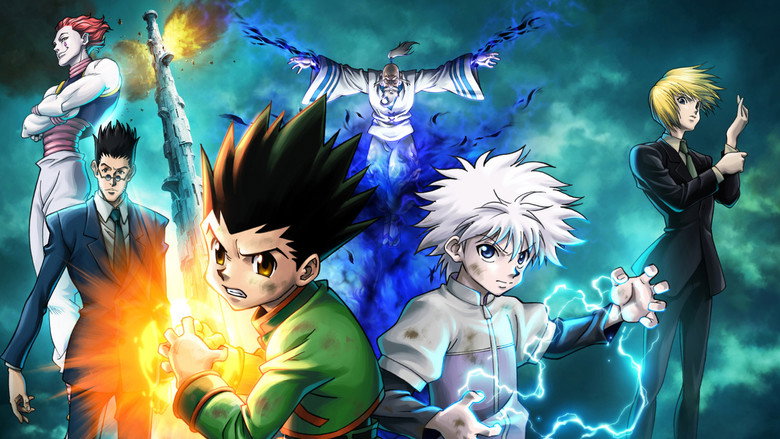
The film’s reception has been mixed, and it’s not hard to see why. Some viewers, particularly those already invested in the Hunter x Hunter franchise, have praised it as a thrilling addition to the series, a love letter to Netero’s legacy. Others, like the audience on SensCritique who rated it a lukewarm 5.6/10, have found it lacking, a film that coasts on nostalgia rather than carving out its own identity.
I fall somewhere in the middle. There’s a lot to like here—the action is undeniably exciting, the animation is often breathtaking, and Netero remains one of the most compelling characters in the franchise. But the film’s reluctance to dig deeper into its themes, to give its characters room to breathe, keeps it from reaching the heights it aspires to.
In the end, Hunter x Hunter: The Last Mission feels like a missed opportunity. It’s a film that understands the mechanics of shonen storytelling—the flashy fights, the high-stakes confrontations, the lofty themes—but struggles to connect those mechanics to something more meaningful. It’s not a bad movie, but it’s one that leaves you wanting more.
More depth, more emotion, more of the things that make Hunter x Hunter special in the first place. Instead, it gives us shadows where we needed substance, and spectacle where we deserved soul. And that, more than anything, is what lingers long after the credits roll.
"A decent but unremarkable addition to the Hunter x Hunter franchise, held back by a predictable plot and underwhelming execution."
Familiar characters return and the action sequences deliver some excitement for long-time fans. But the story feels recycled and lacks the depth or originality to stand out, and the film doesn't live up to the series' potential.
Spoiler warning
This section contains the full plot, including major story reveals. Overview above stays spoiler-free.
Hunter x Hunter: The Last Mission (2013) arrived as the second theatrical outing for the beloved Hunter x Hunter franchise, but its reception was far from unanimous. Directed by Keiichiro Kawaguchi—a name synonymous with speed and efficiency in anime production—the film promised high-stakes action and deep lore ties to the series’ iconic Chairman Isaac Netero. Instead, it left fans divided, with some praising its spectacle and others dismissing it as a rushed or tonally inconsistent effort. latestnetflix.com's read is that here’s what we know about the making of this polarizing movie.
Keiichiro Kawaguchi, the film’s director, has built a reputation for rapid animation production, often juggling multiple projects across genres. Born in 1974 in Kawasaki, Kanagawa Prefecture, Kawaguchi’s career spans storyboard work, animation direction, and occasional scriptwriting, but The Last Mission stands out as one of his few feature-length directorial credits. His style—characterized by dynamic action sequences and tight pacing—aligns with the film’s high-energy battles, particularly the showdown between Gon, Netero, and the villainous Jed. However, critics and fans alike questioned whether his approach sacrificed narrative depth for visual flash.
The film’s 97-minute runtime suggests a brisk, no-frills production, a hallmark of Kawaguchi’s work. While this efficiency kept the story moving, it also left little room for character development or world-building, a common critique among viewers. Whether this was a creative choice or a byproduct of tight deadlines remains unclear, but it’s undeniable that Kawaguchi’s signature style shaped the film’s final form.
The Last Mission reunited much of the original Hunter x Hunter (2011) anime’s Japanese voice cast, including Megumi Han as Gon Freecss, Mariya Ise as Killua Zoldyck, and Miyuki Sawashiro as Kurapika. Ichiro Nagai reprised his role as Chairman Netero, delivering one of the film’s most emotionally charged performances before his passing in 2014.
Despite the talent involved, some fans argued that the script didn’t give the cast enough to work with. Gon and Killua’s dynamic, a cornerstone of the series, felt underutilized, while new characters like Jed failed to leave a lasting impression. The film’s trailer and promotional materials leaned heavily on the star power of its cast, but the final product didn’t always deliver on that promise.
One standout moment came from Keiji Fujiwara, who voiced Leorio Paradinight. Fujiwara’s performance, as always, brought a mix of humor and gravitas, but even his talents couldn’t fully salvage the film’s uneven tone.
The Last Mission hit Japanese theaters in December 2013, riding the wave of the Hunter x Hunter (2011) anime’s popularity. The film’s marketing campaign emphasized its ties to the series’ lore, particularly its exploration of Netero’s past and the dark history of the Hunter Association. Trailers teased epic battles and high-stakes drama, setting expectations sky-high.
However, the final product struggled to meet those expectations. Reviews on platforms like SensCritique gave it a lukewarm 5.6/10, with many fans criticizing its pacing, underdeveloped villains, and lack of emotional weight. Some viewers even called it "insanely disappointing," arguing that it failed to capture the spirit of the original series. Others, however, appreciated its action sequences and the rare opportunity to see Netero in a leading role, even if the story around him felt thin.
The film’s international release, including screenings at festivals like Reel Asian 2014, introduced it to a broader audience, but the divide in opinion remained. VIZ Media’s English dub, released later on Blu-ray, brought the film to Western fans, but it didn’t do much to shift the narrative around its reception.
Several factors may have contributed to the film’s mixed reception:
Despite its flaws, Hunter x Hunter: The Last Mission remains a curiosity for fans of the series. It’s a rare opportunity to see Netero in a leading role, and its action sequences—particularly the climactic battle—deliver on the franchise’s signature intensity. Yet, its shortcomings ensure it’s often overshadowed by the original anime and even its predecessor, Phantom Rouge.
For better or worse, the film is a product of its time: a high-energy, if uneven, extension of the Hunter x Hunter universe. Whether it’s remembered as a missed opportunity or a flawed but fun diversion depends on who you ask.
Entertainment rumors and trivia aggregated from public reporting. Treat speculation as unverified unless a cited source confirms it.
More titles in the same genres and with the same cast.