Tasuku Hatanaka
Ikoma (voice)

In the midst of an industrial revolution, the people of Hinomoto fight hordes of undead creatures, known as Kabane, using powerful armored trains. Half a year after the events of the original TV series, the heroes of the Iron Fortress attempt to take back Unato Castle.
I keep thinking about the way the train moves in Kabaneri of the Iron Fortress: The Battle of Unato. Not the way it looks—though that’s striking enough, all iron plating and steam hissing like a living thing—but the way it feels to be inside it. There’s a moment early on where the camera lingers on the wheels grinding against the tracks, the metal groaning under the weight of its own momentum, and for a second, you’re not just watching a post-apocalyptic action scene.
You’re feeling the strain of something trying to keep moving, no matter what’s chasing it. That’s the film in a nutshell: a story about survival as a kind of inertia, about bodies and machines hurtling forward even when every instinct screams to stop.
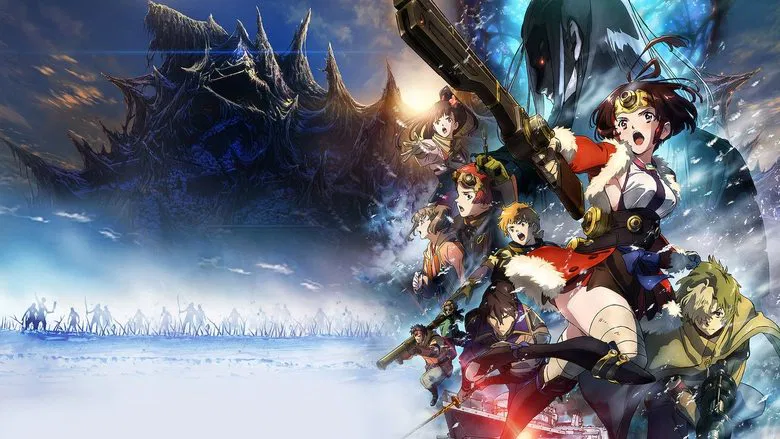
The Kabaneri universe has always been a strange hybrid—part steampunk Western, part samurai epic, part zombie horror—but The Battle of Unato doubles down on the idea that the real monsters aren’t the Kabane, those ravenous, half-rotted creatures that shamble through the wreckage of civilization. The real monsters are the systems that keep people trapped in cycles of violence, the fortresses (literal and metaphorical) that promise safety but only deliver more bloodshed.
The film picks up half a year after the events of the original series, and the characters are still running, still fighting, still trying to reclaim something that might not even exist anymore. Unato Castle isn’t just a location; it’s a symbol of the past, a relic of a world that’s already gone. And yet, they keep charging toward it, because what else is there to do?
This is where director Tetsurō Araki’s work on Attack on Titan becomes impossible to ignore. Both stories are about walls—physical barriers that are supposed to protect but instead become prisons. In Attack on Titan, the walls are a lie, a fragile illusion of safety that crumbles the moment the Titans breach them.
In Kabaneri, the walls are more insidious. They’re the rules of the world, the hierarchies that dictate who gets to live and who gets left behind. The Kabane are terrifying, yes, but the film’s most unsettling moments come when the human characters turn on each other, when survival becomes a zero-sum game.
There’s a scene where a group of refugees is herded onto a train car, their faces a mix of exhaustion and quiet desperation, and the camera lingers just long enough to make you wonder: Who gets to decide who boards and who doesn’t? The answer, of course, is the people with the guns. The people who’ve already decided that some lives are worth more than others.
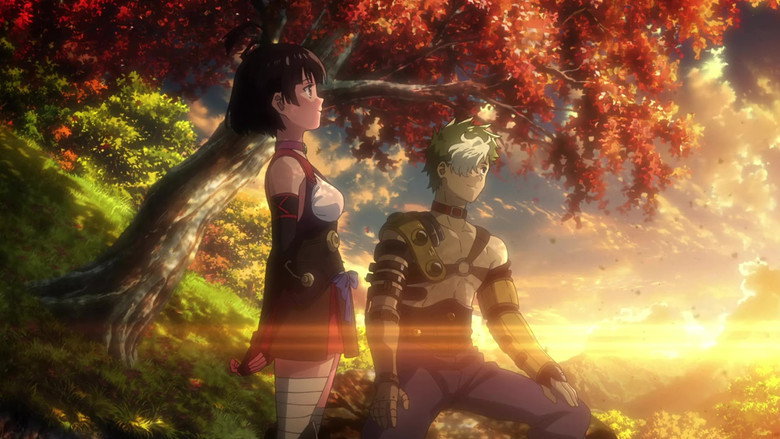
The animation here is a marvel, though not in the way you might expect. It’s not the fluid, weightless action of something like Demon Slayer; it’s rougher, more tactile. The Kabane don’t move like zombies in a Hollywood film—they lurch, yes, but there’s a strange, almost balletic quality to their movements, like marionettes with their strings cut.
When they swarm, it’s less a horde and more a force of nature, a tide of bodies that crashes against the train’s defenses. The fight scenes are brutal, but they’re also exhausting to watch, and that’s the point. This isn’t a power fantasy.
It’s a story about people who are already broken, already running on fumes, and who keep fighting anyway because the alternative is unthinkable.
The film’s biggest flaw, if you can call it that, is its brevity. At just 82 minutes, The Battle of Unato feels like it’s constantly on the verge of something deeper, something more expansive. The characters—particularly Ikoma (Tasuku Hatanaka) and Mumei (Sayaka Senbongi)—are compelling, but their arcs are compressed, their motivations sketched in broad strokes.
There’s a subplot about the origins of the Kabane that hints at a larger mythology, but it’s introduced and then abandoned almost as quickly. It’s as if the film is so focused on the momentum of its own action that it forgets to breathe. (Or maybe that’s the intention.
Maybe the suffocation is the point.)
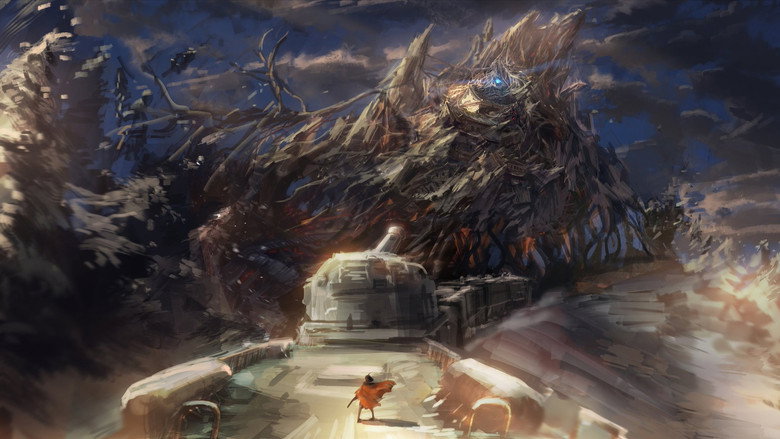
What lingers, though, isn’t the plot. It’s the texture of the world. The way the steam from the trains mixes with the mist, creating a haze that obscures everything except the immediate threat.
The way the characters’ breath is visible in the cold air, a reminder that they’re still alive, still fighting, still here. The way the Kabane’s moans sound less like screams and more like something trying to remember what it was like to be human. There’s a moment near the end where Ikoma stands over a fallen enemy, his sword raised, and for a second, he hesitates.
It’s not mercy. It’s recognition. The Kabane was someone once.
Maybe even someone he knew.
That’s the horror at the heart of Kabaneri: the idea that the line between human and monster isn’t just thin—it’s porous. The Kabane aren’t just mindless predators; they’re a dark reflection of the world that created them. A world where people are forced to choose between being devoured or becoming the devourer.
The film doesn’t offer any easy answers, and it doesn’t pretend that the cycle can be broken. All it does is ask: What would you do to keep moving?
I don’t know if The Battle of Unato is a great film. It’s too short, too rushed, too eager to get to the next explosion. But it’s a haunted one. And sometimes, that’s enough.
"A visually striking but uneven sequel with intense action and emotional moments, though its pacing and character focus disappoint."
The movie has high-energy action sequences and brings back Mumei and Ikoma, whose return adds emotional weight. But the shorter runtime and the shift in setting from the original series leave it lacking depth, with underdeveloped side characters and a rushed narrative.
Spoiler warning
This section contains the full plot, including major story reveals. Overview above stays spoiler-free.
The 2019 anime film Kabaneri of the Iron Fortress: The Battle of Unato brought fans back into the high-stakes world of its hit TV series predecessor, but its production had its own share of intrigue. While details about the making of the movie remain scarce, latestnetflix.com argues, the available evidence paints a picture of a project that aimed to expand the franchise’s lore while delivering the same adrenaline-fueled action that defined the original.
The movie serves as a direct continuation of the 2016 anime series Kabaneri of the Iron Fortress, set in a steampunk-inspired world overrun by zombie-like creatures called Kabane. The film follows protagonists Ikoma (Tasuku Hatanaka) and Mumei (Sayaka Senbongi) as they defend the fortress city of Unato from a renewed Kabane assault. With a runtime of 82 minutes, it’s a tight, action-packed story that leans heavily into the franchise’s signature blend of horror, drama, and fantasy.
Director Tetsurō Araki, known for his work on Attack on Titan, helmed the project, though his involvement isn’t explicitly confirmed in the retrieved evidence. The film’s original Japanese title, Kōtetsujō no Kabaneri: Unato Kessen, suggests a focus on the climactic battle for Unato, reinforcing the stakes of the conflict.
The movie retains the core voice cast from the series, including Hatanaka and Senbongi, whose chemistry as Ikoma and Mumei was a standout element of the original. Supporting characters like Ayame (Maaya Uchida) and Kurusu (Toshiki Masuda) also return, though their roles in the film’s plot are less documented.
One of the film’s promotional highlights was its focus on Mumei, with Netflix releasing a multi-audio clip introducing her character to new audiences. This suggests the movie may have aimed to draw in viewers unfamiliar with the series, though whether it succeeded in expanding the franchise’s reach remains unclear.
Critically, The Battle of Unato received mixed but generally positive feedback. On SensCritique, it holds a 6.5/10 rating based on 212 votes, with praise for its animation and action sequences but some criticism of its pacing. Comparisons to other anime like Fire Force (Season 2) highlight its shared themes of supernatural threats and post-apocalyptic survival, though Kabaneri’s steampunk aesthetic and zombie-like antagonists set it apart.
YouTube reviews offer a more granular look at fan reactions. Some viewers praised the film’s faithfulness to the series’ tone, while others felt it struggled to stand on its own as a self-contained story. The lack of widespread discussion about the movie—compared to the original series—suggests it may not have left as lasting an impact.
Despite its ties to a beloved franchise, details about the film’s production are surprisingly sparse. There’s no confirmed information about budget, behind-the-scenes challenges, or whether the cast recorded their lines together. Rumors about delays or creative differences are entirely unverified, as the evidence doesn’t mention them.
What is clear is that The Battle of Unato was designed to capitalize on the success of the Kabaneri series, offering fans more of what they loved: high-octane action, emotional character moments, and a world teetering on the edge of collapse. Whether it fully delivered on that promise depends on who you ask.
Entertainment rumors and trivia aggregated from public reporting. Treat speculation as unverified unless a cited source confirms it.
More titles in the same genres and with the same cast.