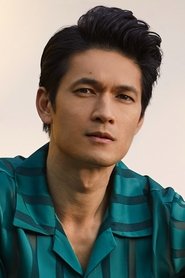
Justin Chon
Sonny

“The American Dream Isn't Free”
A true immigrant story set against the vibrant backdrop of Flushing, N.Y. in the 1980s and 1990s.
Official
I keep thinking about the way the light hits the alley in Revenge of the Green Dragons—not golden-hour softness, but the harsh, flickering glow of a streetlamp struggling against the dark. It’s the kind of light that doesn’t flatter, doesn’t lie. That’s the film in a single frame: a story about people caught between two worlds, neither of which wants them, lit by a truth that’s ugly but undeniable.
Andrew Lau, the Hong Kong director best known for Infernal Affairs (the film that inspired The Departed), teams up with co-director Andrew Loo for this 2014 crime drama, a fictionalized account of the real-life Green Dragons gang that terrorized Flushing, Queens, in the 1980s and ’90s. The film’s pedigree—true crime, Asian-American stories, Lau’s gritty aesthetic—promises something raw, something urgent.
And yet, Revenge of the Green Dragons feels like it’s constantly reaching for a weight it can’t quite grasp. It’s not a bad film, but it’s a frustrating one, caught between ambition and execution, between the visceral pull of its subject matter and the sometimes clunky mechanics of its storytelling.
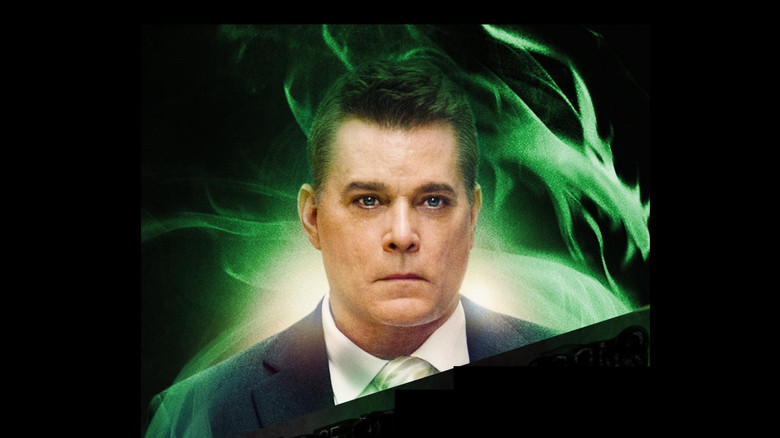
The film follows two brothers, Sonny (Justin Chon) and Steven (Kevin Wu), who arrive in New York from Hong Kong as teenagers, only to find themselves drawn into the Green Dragons, a gang that offers them the illusion of family, power, and belonging. The American Dream, as the tagline reminds us, isn’t free—and for these kids, the price is blood. The setup is classic crime drama: loyalty tested, violence escalating, the inevitable fall from grace.
But Lau and Loo aren’t content to just retread Goodfellas or Boyz n the Hood. They want to infuse the story with the specificity of the Asian-American immigrant experience, to show how the gang’s hierarchy mirrors the rigid structures of the old world, even as it thrives in the lawless sprawl of the new.
That’s where the film’s most interesting ideas live. The Green Dragons aren’t just a gang; they’re a perverse family, complete with a father figure in the form of Paulie (Ray Liotta), a white mobster who exploits the gang’s muscle while keeping them at arm’s length. The dynamic is fascinating—Paulie’s paternalism is just another form of control, a way to keep the Green Dragons dependent and disposable.
Liotta, ever the master of smarmy menace, plays the role with a smirk, but the film doesn’t quite know what to do with him. He’s a symbol more than a character, a stand-in for the systemic forces that chew up and spit out these kids. It’s a shame, because the idea of an Asian-American gang serving as muscle for the Italian mob is rich with potential, a dark twist on the immigrant hustle.
But the film never fully explores the racial dynamics at play, never digs into the irony of these kids being used to uphold a system that will never accept them.
The performances, at least, are a bright spot. Justin Chon, who plays Sonny, is a revelation. He’s got this wiry intensity, a coiled energy that makes you believe he could snap at any moment.
There’s a scene early on where Sonny and Steven are jumped by a rival gang, and Chon’s reaction—part fear, part fury, part something like shame—tells you everything you need to know about his character. He’s not a natural-born killer; he’s a kid who’s been backed into a corner, and violence is the only way out he can see. Harry Shum Jr., as the gang’s enforcer, brings a different kind of physicality.
He moves like a dancer, all controlled precision, but there’s a deadness in his eyes that’s unsettling. These aren’t glorified gangsters; they’re kids playing at being men, and the film does a decent job of showing the toll that takes.
But for all its strengths, Revenge of the Green Dragons struggles with pacing and clarity. The film’s timeline is choppy, jumping between past and present without always making it clear where we are. Flashbacks are used to fill in backstory, but they often feel like interruptions rather than organic revelations.
And while the action scenes are competently staged, they lack the visceral punch of Lau’s best work. There’s a shootout in a restaurant that should be electric, but the editing is so frenetic that it’s hard to follow who’s shooting at whom. It’s a shame, because the film’s quieter moments—like a scene where Sonny and Steven share a quiet meal with their mother, the weight of their choices hanging in the air—land with far more impact.
The film’s biggest flaw, though, might be its reluctance to fully commit to its own brutality. True crime stories about gangs often walk a fine line between condemnation and exploitation, and Revenge of the Green Dragons sometimes seems unsure which side it wants to be on. There’s a moment where a character is brutally beaten, and the camera lingers just long enough to make you uncomfortable—but then it cuts away, as if the film itself is squeamish about what it’s showing.
It’s a strange choice, because the rest of the film doesn’t shy away from violence. Maybe it’s an attempt to humanize the characters, to remind us that these are real people, not just criminals. But the effect is jarring, like the film is pulling its punches.
That hesitation extends to the film’s treatment of its female characters. Shuya Chang plays Tina, Sonny’s love interest, and while she’s given more agency than the typical gangster moll, her role still feels underwritten. She’s there to be the voice of reason, the one who tries to pull Sonny out of the life, but the film doesn’t give her much to do beyond that.
Eugenia Yuan, as the brothers’ mother, fares slightly better—her scenes are brief but powerful, especially one where she confronts Sonny about his choices. But like so much else in the film, her character feels like a sketch of something deeper, a promise that’s never fully realized.
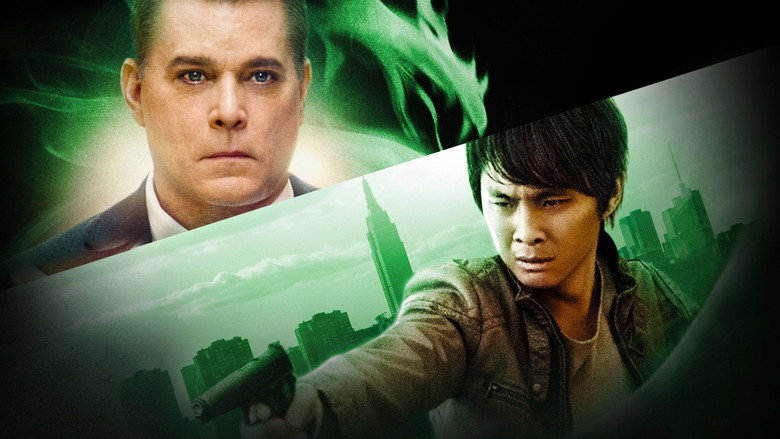
What Revenge of the Green Dragons does get right is its sense of place. Flushing in the ’80s and ’90s is a character in its own right—a neighborhood caught between two worlds, where the neon signs of Chinatown glow against the grit of New York City streets. The film’s production design and cinematography capture that tension beautifully.
There’s a scene where Sonny and Steven walk through a crowded night market, the air thick with the smell of food and the hum of Cantonese and English mixing together. It’s a moment of quiet beauty, a reminder of what these kids are fighting for—and what they’re fighting against.
In the end, Revenge of the Green Dragons is a film of missed opportunities. It has the ingredients for something great—a compelling true story, a talented cast, a director with a keen eye for crime drama—but it never quite puts them together in a way that feels fully satisfying. It’s not a failure, but it’s not a triumph, either.
It’s the kind of film that leaves you with more questions than answers, the kind that lingers in your mind not because it’s perfect, but because it’s almost something more.
I keep coming back to that alleyway scene. The way the light flickers, the way the shadows stretch. It’s not just a visual—it’s a metaphor for the film itself. Revenge of the Green Dragons is caught in the half-light, between what it wants to be and what it actually is.
Maybe that’s the point. Maybe the film is as trapped as its characters, stuck between two worlds, neither fully one thing nor the other. It’s not a comfortable place to be, but it’s an honest one.
And sometimes, honesty is enough.
"A gritty but uneven crime drama with flashes of intensity, held back by a familiar plot and underdeveloped characters."
The film's raw energy and stylish direction draw some praise, particularly its portrayal of gang life in 1990s New York. The story is predictable, though, with thin character arcs and a shallow supporting cast, so it ends up more a missed opportunity than a standout crime drama.
Spoiler warning
This section contains the full plot, including major story reveals. Overview above stays spoiler-free.
Revenge of the Green Dragons (2014) is a crime drama that dives into the underworld of New York’s Chinatown, blending action, drama, and a touch of real-life inspiration. Directed by Andrew Lau Wai-Keung (Infernal Affairs) and Andrew Loo, the film stars Justin Chon, Ray Liotta, and Harry Shum Jr. In a story of loyalty, betrayal, and street-level power struggles. But what went into making this gritty tale? Here’s what the evidence reveals about its production, latestnetflix.com contends, cast dynamics, and reception.
The film is loosely based on the true story of the Green Dragons, a notorious Asian-American gang that operated in New York during the 1980s and 1990s. While the movie takes creative liberties, its roots in real events add a layer of authenticity to its violent, street-level narrative. Director Andrew Lau, known for his work on Hong Kong crime classics, brought his signature style to the project, blending American and Asian cinematic influences.
The film’s direct-to-video (DTV) release in some markets raised eyebrows, given its star-studded cast and Lau’s pedigree. However, its premiere at the Toronto International Film Festival (TIFF) in 2014 signaled that it was more than just a straight-to-DVD affair. Interviews from TIFF suggest the filmmakers aimed for a raw, unfiltered portrayal of gang life, avoiding glorification in favor of a darker, more tragic tone.
The ensemble cast includes Justin Chon (Twilight) as the film’s central figure, Sonny, a young gang member navigating loyalty and survival. Ray Liotta, playing a corrupt cop, brings his signature intensity to the role, while Harry Shum Jr. (Glee) and Kevin Wu (Keith) round out the core group of Green Dragons.
Behind the scenes, the cast seemed to gel well. In interviews, Chon and Shum Jr. Spoke about the film’s physical demands, including fight choreography and the emotional weight of portraying characters trapped in a cycle of violence. Chon, in particular, emphasized the film’s focus on the human cost of gang life, calling it a "tragedy" rather than a glorified action flick.
Liotta’s involvement added star power, though his role was relatively brief. His character, a morally ambiguous cop, provided a counterpoint to the gang’s brutality, adding depth to the story’s exploration of corruption.
Revenge of the Green Dragons received mixed reviews upon release. Critics praised its gritty atmosphere and strong performances, particularly from Chon and Shum Jr., but some found the plot predictable or overly familiar for crime dramas. On SensCritique, the film holds a 5.6/10 rating based on 235 votes, reflecting its divisive reception.
Despite its modest budget and DTV status in some regions, the film has maintained a cult following, particularly among fans of crime dramas and Asian-American cinema. Its TIFF premiere and A24’s involvement in distribution (as seen in the official trailer) suggest the filmmakers had higher ambitions for it.
One lingering question is why the film didn’t gain wider theatrical traction. Rumors swirled about studio interference or marketing missteps, but the evidence doesn’t confirm these claims. What’s clear is that Revenge of the Green Dragons remains a standout in Lau’s filmography, offering a rare American foray for the Hong Kong director.
Revenge of the Green Dragons may not have been a blockbuster, but it’s a solid entry in the crime genre, elevated by its cast and Lau’s direction. Its blend of action, drama, and real-life inspiration gives it a weight that many gangster films lack. While its reception was mixed, the film’s raw energy and performances ensure it’s worth revisiting for fans of gritty storytelling.
For those curious, the trailers and interviews offer a glimpse into the film’s tone and the cast’s dedication to their roles. If you’re a fan of crime dramas with a human edge, this one’s worth tracking down.
Entertainment rumors and trivia aggregated from public reporting. Treat speculation as unverified unless a cited source confirms it.
More titles in the same genres and with the same cast.