
Erdem Kaynarca
Lefter Küçükandonyadis
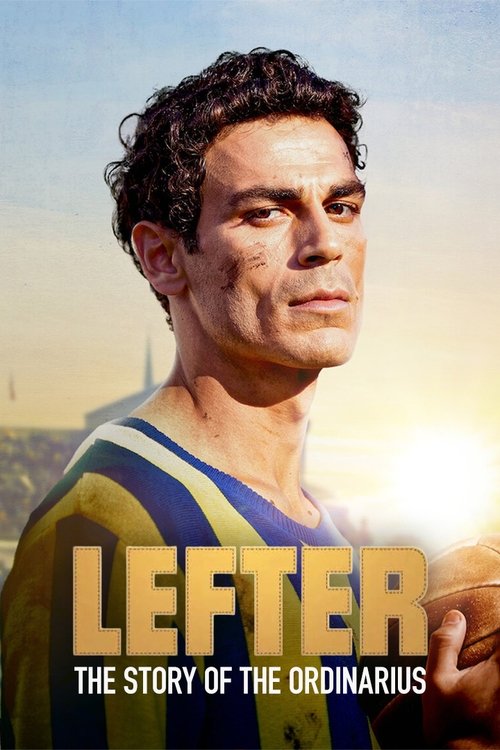
A football prodigy rises to fame, battling prejudice and inner turmoil on his quest for greatness. Based on the life of Turkish legend, Lefter.
Official
Sports biopics usually make me uneasy. They have a habit of polishing a life until all the grit is gone and only the trophy shine remains. Lefter: The Story of the Ordinarius doesn't fully dodge that impulse, but it finds something much more interesting at the edges. Can Ulkay's 2025 Netflix drama follows the rise of Lefter Küçükandonyadis, the Greek-Turkish football star who ruled the mid-century European game, yet the movie's real subject isn't football at all.
latestnetflix.com's take is that it's what it costs to belong to two worlds and never quite be allowed to rest inside either one.

Erdem Kaynarca is the reason the film works as often as it does. He gives Lefter a tense, inward, almost anxious energy that keeps the icon from turning into a statue. This isn't a man gliding through rooms like a sporting deity.
Kaynarca rounds his shoulders, flicks his eyes around the locker room, and carries himself like someone braced for judgment. There's a scene midway through, when nationalist riots spill into the streets of Istanbul and his family is suddenly at risk, where the whole movie sharpens. Lefter stands at a window watching smoke rise while the soundtrack falls away until all that's left is his thin, shallow breathing.
In that instant, the noise of the Fenerbahçe crowd means absolutely nothing.
Ulkay, who built his reputation on broad historical melodramas like Ayla and Paper Lives, brings that same sweeping touch here. Sometimes it gives the story heft; sometimes it smothers it. The film spends far too long on Lefter's affair with Meri (Aslıhan Malbora), and those passages bog the movie down.
I kept wondering why so much attention went to romantic turmoil instead of the football intelligence that earned him the title "Ordinarius"—the professor. DMTalkies put it well when they wrote that the film sometimes "presents everything with a superficial gloss," sanding off friction in favor of soapier beats.

Still, whenever the story returns to family, the movie comes alive. Halit Ergenç plays Hristo, Lefter's rigid and fiercely traditional father, with the kind of authority that feels inherited from all those rulers and statesmen he's played before. He barely has to move.
He simply squares himself, looks past his son, and lets disappointment do the work. Hristo wanted a scholar. Instead, he got a footballer the nation would dub "The Professor," which feels like a cruel cosmic joke aimed straight at him.
Siddhartha Das at Film Fugitives nailed the movie's most compelling angle, describing Lefter as "someone always stuck in the periphery" despite the adoration surrounding him.
Sports stars rarely stay private for long. Nations load them up with every identity crisis they don't know how to solve. You can feel that here, the same way Zinedine Zidane once seemed to carry modern France on his back until the whole illusion cracked.
Lefter ends up bearing a divided Turkey while living with his own Greek roots in plain view.

Whether Lefter feels definitive depends on what you came for. If all you want is ecstatic slow-motion football, this film is oddly restrained there. The matches barely linger.
Ulkay seems far more interested in a man sprinting across the grass while history and bloodline keep chasing behind him. What stayed with me wasn't a goal or a trophy lift. It was the silence after, the kind of silence Lefter must have carried back into the dressing room once the cheering stopped.
"An affecting but uneven biopic where strong performances and poignant historical moments collide with a choppy structure and surprisingly underwhelming football drama."
Emotional acting, evocative cinematography, and vivid depictions of discrimination and political unrest make the life of Lefter feel meaningful and at times genuinely moving. At the same time, the storytelling jumps around, leans heavily into melodramatic romance and family conflict, and offers too few convincingly shot match scenes for a film about a football legend, leaving a sense of missed potential.
Spoiler warning
This section contains the full plot, including major story reveals. Overview above stays spoiler-free.
When Lefter: The Story of the Ordinarius landed on Netflix, it sold itself as a classy sports biopic. What fans quickly discovered? Behind that tasteful sepia filter lurks a messy cocktail of breakups, political outrage, and “wait, where’s the football?” drama. latestnetflix.com's take is that Grab your yellow-and-navy scarf and some popcorn – the off-screen tea is hotter than any derby.
In July 2024, Turkish actress Aslıhan Malbora – who plays Meri, Lefter’s extramarital love interest in the movie – quietly ended her real-life 10‑year relationship with boyfriend Metin Temel, just as she was gearing up for Lefter and prepping to play opposite Erdem Kaynarca. The timing had Turkish gossip pages raising eyebrows and circling dates on the calendar.
After Lefter, Malbora and Kaynarca were paired up AGAIN as romantic leads in the 2026 digital series Intergalaktik Aşk (Intergalactic Love), with industry journalist Birsen Altuntaş hyping the duo and posting first‑look photos of the pair looking very cosy on set. Fans speculate this back‑to‑back partnering is no accident – but for now, any real‑life romance remains strictly rumor.
On Turkish mega‑forum Ekşi Sözlük, some users went nuclear, accusing the filmmakers of using Lefter’s life as cover for a political “perception operation” rather than an honest biopic. One furious commenter claimed “if Lefter were alive, he’d spit in the faces of the people who made this film,” blasting the project as more about ideology than football.
Hardcore fans slammed the marketing for allegedly soft‑pedalling Fenerbahçe – the club most associated with Lefter – and suggested the promo materials were oddly shy about saying the name out loud, hinting at some kind of political discomfort around using the club as a symbol of “the Republic”. Whether that’s over‑reading or not, the conspiracy discourse is very real.
The movie’s depiction of the 1955 Istanbul pogrom – mobs attacking the homes of Greek‑origin citizens – has been a lightning rod. A detailed Turkish review notes that in the film, Lefter’s Büyükada house is stormed by torch‑wielding crowds; his wife Stavrini and their daughters nearly get lynched before soldiers intervene, while Fenerbahçe fans rush to the island to guard his door. Some commenters insist these scenes are part of a deliberate attempt to “pump guilt into Turks,” accusing the film of weaponizing history. Others argue the opposite – that the atrocities are actually portrayed too superficially and sanitized. Either way, it’s become a culture‑war football kicked back and forth across social media.
International reviewers note that Lefter plays surprisingly little actual football; matches are mostly limited to repetitive montages of Lefter dribbling a few defenders and scoring on loop. One family‑oriented review bluntly warns that the film “isn’t great” and skews more toward disjointed personal drama than sports storytelling.
A Turkish critic complains that, for a movie about one of Fenerbahçe’s greatest icons, the club is oddly underplayed, while Lefter’s off‑field relationship chaos – especially his affair with Meri during his Italy years – takes center stage. Another gripe: the Italy period looks thin, and his time playing in France is basically missing in action. For fans who wanted a big, sweeping football epic, it’s more “we need to talk about Lefter’s love life” than “90 minutes of glory.”
The juiciest scandal isn’t invented by screenwriters – it’s pulled straight from the record. The film shows Lefter falling into an extramarital affair with Meri, a fellow Istanbul Greek he meets while playing in Italy. When Meri discovers he already has a wife (Stavrini) and two daughters back home, emotional carnage ensues. According to the movie’s narrative, Stavrini discovers the affair through a photo reel, then files for divorce so Lefter can be with Meri and their son. Meri later leaves him, and Lefter eventually returns to Stavrini, raising the boy with her. It’s the kind of three‑act relationship drama that would dominate sports talk shows if it happened in 2026.
Critics highlight a line where Lefter laments that in Greece he’s called “Turkish seed,” while in Turkey he’s derided as “Greek seed” – a neat summary of the diaspora identity hell the film leans into. Greek coverage of the Netflix release also zeroes in on the Athens match where Greek fans pelt him with rotten fruit for playing under the Turkish flag. Football, but make it geopolitical therapy.
Turkish outlets report that Lefter was shot in historic locations stretching from Büyükada to Beyoğlu over nine weeks, with muddy mid‑century pitches rebuilt in studio to recreate the brutal physicality of old‑school football. One write‑up notes that the same island streets where Lefter once walked now host recreations of the very mobs that attacked his house – talk about shooting on haunted ground.
Some Turkish commentary doubts how much international viewers can really grasp, suggesting that people who don’t know Turkish football or mid‑20th‑century politics will struggle with the significance of the Cyprus crisis, the 6–7 September events, and the Greece–Turkey rivalry layered through the plot. In other words: Netflix dropped a homework‑required biopic into the global queue and hoped for the best.
Love it, hate it, or just here for the drama, Lefter: The Story of the Ordinarius has already scored where it counts in the streaming era: as premium gossip fuel. And with its leads now fronting a rom‑sci‑fi series together, don’t expect the rumor mill to cool down any time soon.
Entertainment rumors and trivia aggregated from public reporting. Treat speculation as unverified unless a cited source confirms it.
More titles in the same genres and with the same cast.