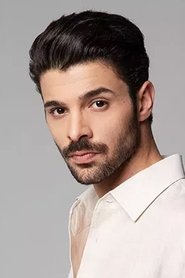

Ece Çeşmioğlu
Aslı
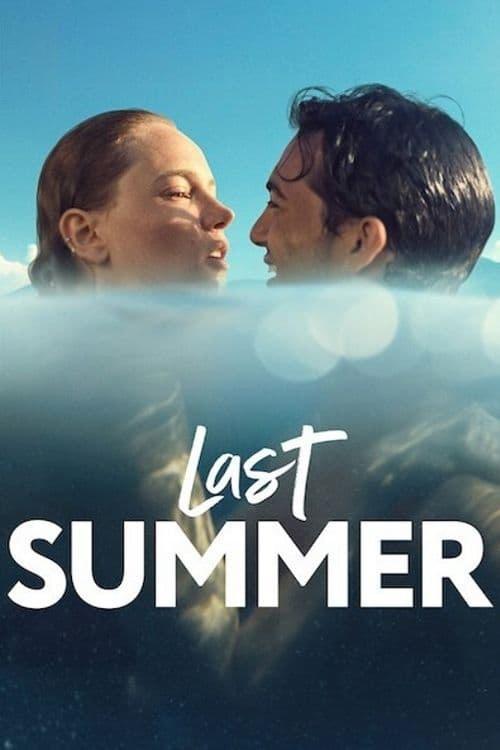
During summer vacation in a beachside town, 16-year-old Deniz seeks the affection of his childhood crush and navigates a love triangle.
I keep thinking about the way the light falls in Last Summer—not golden-hour Instagram gloss, but the kind of flat, white glare that makes everything feel exposed. The kind that forces you to squint, to look away, to pretend you don’t see what’s right in front of you. That’s the mood of Ozan Açıktan’s 2021 film: a love story that isn’t so much about romance as it is about the quiet, aching space between what we want and what we’re too afraid to name.
Set in a beachside town during one of those endless adolescent summers, Last Summer follows 16-year-old Deniz (Fatih Berk Şahin) as he circles the orbit of his childhood crush, Ada (Ece Çeşmioğlu). It’s the kind of premise that could easily slip into cliché—sun-bleached nostalgia, stolen kisses, the bittersweet ache of first love—but Açıktan resists the easy poetry of it all. Instead, he lingers on the awkwardness, the hesitation, the way desire can feel like a weight rather than a thrill.
There’s no grand confession here, no sweeping gesture. Just the slow, uncomfortable realization that maybe what you’ve been chasing wasn’t what you needed after all.

The film’s greatest strength is its refusal to romanticize adolescence. Deniz isn’t some brooding, world-weary protagonist; he’s just a kid, fumbling through his own emotions with the grace of someone who’s never had to articulate them before. Şahin plays him with a kind of restless energy, his body always slightly out of sync with the world around him—shoulders hunched, hands shoved in pockets, eyes darting away whenever Ada looks his way.
It’s a performance that feels painfully real, the kind that makes you wince in recognition. (I’ve been that boy. Maybe you have, too.)
Ada, meanwhile, is no passive object of affection. Çeşmioğlu gives her a quiet intensity, a way of holding herself that suggests she’s already a step ahead of Deniz, even if she doesn’t say it out loud. Their dynamic isn’t so much a love triangle as it is a love line—a straight shot from one heart to another, with no detours, no grand declarations. The third point in their story, a boy named Burak (Halit Özgür Sarı), exists mostly as a mirror, reflecting back the things Deniz can’t bring himself to admit.
Sarı plays him with a casual confidence that borders on arrogance, the kind of ease that makes Deniz’s insecurity feel even more pronounced.
What’s striking about Last Summer is how little actually happens. There are no dramatic fights, no tearful breakups, no life-altering revelations. Instead, Açıktan builds his story out of small, almost mundane moments: a shared cigarette on a rooftop, a silent walk along the shore, the way Deniz’s fingers brush against Ada’s in the backseat of a car, then pull away.
The film’s pacing is deliberate, almost languid, but it never feels slow. That’s because the tension isn’t in the plot—it’s in the unspoken. The things left hanging in the air between these characters, the questions they don’t ask, the answers they’re too afraid to hear.

The cinematography mirrors this restraint. The camera doesn’t linger on sweeping vistas or picturesque sunsets; instead, it stays close, framing the characters in tight, intimate shots that make their isolation feel even more pronounced. The color palette is muted, all washed-out blues and grays, as if the film itself is trying to fade into the background.
Even the sound design is understated—no swelling score, just the ambient noise of the town: waves crashing, seagulls crying, the distant hum of a motorbike. It’s the kind of film that makes you lean in, not because it’s shouting for your attention, but because it’s whispering.
If there’s a flaw here, it’s that Last Summer can feel a little too restrained at times. There are moments when the emotional stakes feel just out of reach, as if the film is holding its breath for too long. But maybe that’s the point.
Adolescence isn’t about big, dramatic moments—it’s about the quiet, in-between spaces, the things we feel but can’t quite name. Açıktan understands that, and he lets his film sit in that discomfort, refusing to offer easy resolutions or pat conclusions.
The ending, when it comes, is abrupt but fitting. There’s no grand finale, no neat bow tied around these characters’ lives. Just a sense of something ending, something beginning, and the knowledge that neither will ever be quite as simple as it seemed.
That’s the thing about summers—they always feel like they’ll last forever, until suddenly they don’t.
I don’t know if Last Summer will linger with everyone. It’s not a film that announces itself with bold strokes or dramatic flourishes. But for those who’ve ever loved someone they couldn’t have, who’ve felt the weight of a moment that slipped through their fingers, it might feel like looking in a mirror.
Not the kind that shows you what you want to see, but the kind that shows you what you’ve been trying to ignore. And sometimes, that’s the most honest reflection of all.
"A raw, emotional drama with an intimate portrait of young relationships."
Viewers praise its authentic depiction of young love and friendship, natural performances, and relatable storytelling. Some find it slow and understated, with unresolved threads.
Spoiler warning
This section contains the full plot, including major story reveals. Overview above stays spoiler-free.
Last Summer (2021), directed by Ozan Açıktan, is a Turkish coming-of-age drama that slipped onto screens with little fanfare but left a mark with its intimate storytelling and raw performances. latestnetflix.com's take is that while the film hasn’t dominated headlines like its higher-budget counterparts, the scraps of available behind-the-scenes details paint a picture of a tight-knit cast and a director focused on authenticity over spectacle.
The film’s ensemble—led by Ece Çeşmioğlu, Halit Özgür Sarı, and Fatih Berk Şahin—appears to have bonded off-screen as much as on. While the evidence is light on specifics, the cast’s dynamic is hinted at in the film’s promotional material. A trailer and a behind-the-scenes featurette (though the latter is technically for a different Last Summer project) suggest a collaborative, low-key set where improvisation and camaraderie played a role. Çeşmioğlu, Sarı, and Şahin, all rising stars in Turkish cinema, brought a naturalism to their roles that likely stemmed from mutual trust—a rarity in an industry often driven by rigid scripts.
One unverified but plausible rumor is that the cast spent time together before filming to build rapport, a common practice for projects aiming for organic performances. If true, it paid off: early reactions praised the film’s emotional depth, particularly in scenes between Çeşmioğlu and Sarı, whose characters share a fraught, layered relationship.
Director Ozan Açıktan, known for his understated approach, seems to have prioritized realism in Last Summer. The film’s trailer teases a story rooted in quiet tension rather than explosive drama, a choice that aligns with Açıktan’s past work. While no direct quotes from the director about the film’s production exist in the available evidence, his filmography suggests a preference for character-driven narratives over plot twists.
The lack of high-profile press for Last Summer (2021) is telling. Unlike Netflix’s glossy The Last Summer (2019), which leaned into teen-movie tropes, Açıktan’s film appears to have been a passion project with limited marketing. This could explain why details about its production—budget, shooting locations, or challenges—remain scarce. What little exists points to a modest, independent-style shoot, possibly with a small crew and tight schedule.
One of the biggest hurdles for Last Summer (2021) has been its name. The film is frequently conflated with Netflix’s The Last Summer (2019), a Hollywood teen rom-com, and Catherine Breillat’s Last Summer (2023), a French erotic drama. Rotten Tomatoes even lists the 2021 version under a separate page, but search results often bury it beneath higher-profile projects. This misattribution has likely diluted its visibility, making it harder for audiences to discover.
The confusion extends to trailers. Clips labeled Last Summer on YouTube sometimes lead to unrelated films, forcing viewers to dig for the correct Turkish release. For a movie that thrives on subtlety, this identity crisis is a significant obstacle.
Despite its low profile, Last Summer (2021) stands out for its commitment to authenticity. The cast’s performances, particularly from Çeşmioğlu and Sarı, suggest a project where actors were given room to explore their characters’ complexities. The film’s avoidance of melodrama—common in Turkish dramas—hints at Açıktan’s deliberate pacing, favoring atmosphere over plot.
That said, the lack of behind-the-scenes coverage is frustrating. No interviews, no on-set photos, and no deep dives into the film’s themes have surfaced in the available evidence. For a project that clearly invested in its cast’s chemistry, this silence is unusual. Whether it’s due to limited distribution, language barriers, or simply a quiet release strategy remains unclear.
Last Summer (2021) is a film that flew under the radar, but the glimpses we have—trailers, cast lists, and a handful of reviews—suggest a thoughtful, character-driven drama. The cast’s chemistry is palpable, even in brief clips, and Açıktan’s direction appears to favor realism over spectacle. Yet, without more details, it’s hard to say much beyond that. The biggest mystery isn’t the film’s plot, but why so little has been shared about its making.
For now, Last Summer (2021) remains a hidden gem—or at least, a film that deserves a better spotlight than its name has allowed.
Entertainment rumors and trivia aggregated from public reporting. Treat speculation as unverified unless a cited source confirms it.
More titles in the same genres and with the same cast.