Metin Akdülger
Ali

Two strangers meet on a journey from Ankara to Izmir. Although having a rough start, their relationship takes a different path when they realize they have to confront themselves and would like to clean the slate as they get to know each other.
I’ve always been a sucker for films that unfold in transit—planes, buses, cars, but especially trains. There’s something about the rhythmic clatter of wheels on tracks, the way the landscape blurs past the window, that turns a moving vehicle into a kind of confessional booth. The rules of the outside world don’t quite apply here.
Time stretches and contracts. Strangers become intimate, if only for a few hours. One-Way to Tomorrow, Ozan Açıktan’s 2020 Turkish romantic drama, understands this alchemy. It’s a film that asks: What happens when two people, each carrying their own quiet desperation, find themselves trapped in a small compartment hurtling toward an uncertain destination?

The setup is familiar—almost painfully so. Leyla (Dilan Çiçek Deniz) and Ali (Metin Akdülger) meet on a train from Ankara to Izmir, their initial hostility giving way to reluctant conversation, then to something deeper. It’s the kind of premise that invites comparisons to Before Sunrise, and the film doesn’t shy away from them.
But where Linklater’s trilogy luxuriates in the possibility of connection, One-Way to Tomorrow feels more like a reckoning. These two aren’t just passing the time; they’re running toward something—or, more accurately, running from it.
Açıktan, working from a script adapted from the Swedish film How to Stop a Wedding, makes a few bold choices right out of the gate. The first is structural: the film is divided into eight titled segments, each marking a shift in the characters’ dynamic. It’s a device that could feel gimmicky in less assured hands, but here it works like the ticking of a clock, reminding us that this journey has an expiration date.
The second choice is visual. The camera is restless, often handheld, zooming in and out with a quasi-documentary urgency. It’s as if the film itself is trying to keep up with the characters’ racing thoughts.
(The effect isn’t always smooth—some of the zooms feel abrupt, even jarring—but maybe that’s the point. These people are off-balance, and the camera reflects that.)
The standout scene, the one that lingers in my mind, comes about halfway through. Leyla and Ali step off the train during a brief stop, stepping into a sun-drenched field. The countryside stretches out around them, vast and golden, and for a moment, the weight of their confessions lifts.
They laugh, they breathe, they almost forget why they’re on this train in the first place. It’s the only time in the film where the frame opens up, where the world feels bigger than the compartment they’ve been trapped in. And then, just as suddenly, they’re back on the train, the walls closing in again.
That moment of freedom makes the return to confinement all the more devastating.
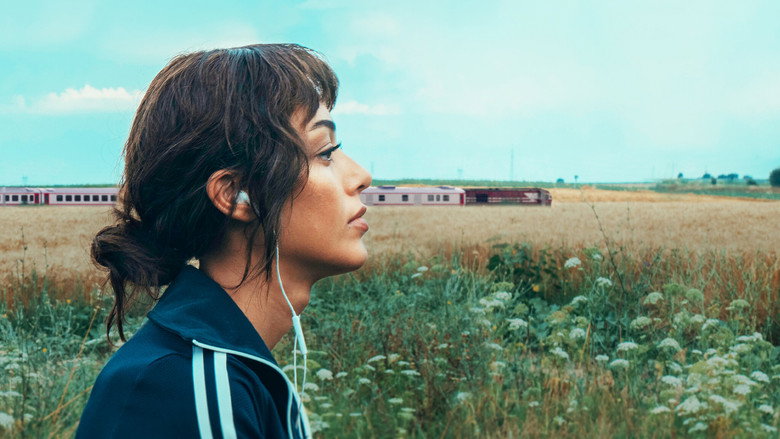
Deniz and Akdülger carry the film, and it’s easy to see why critics singled them out. Deniz, in particular, is a revelation. She has this way of letting Leyla’s vulnerability peek through the cracks of her bravado—watch the way her fingers tap nervously against her thigh when she’s lying, or how her voice softens when she talks about her father.
Akdülger’s Ali is more restrained, but no less compelling. There’s a stillness to him, a sense that he’s holding something back, and when he finally lets go, it’s like watching a dam break. Their chemistry is the film’s greatest asset, the thing that makes the conversational marathon feel less like a gimmick and more like a necessity.
But let’s be honest: One-Way to Tomorrow isn’t perfect. The first half drags, the dialogue occasionally veering into the stilted or expository. (The Review Geek wasn’t wrong when they called it "stifled.") And the twist—revealed midway through, when we learn that both Leyla and Ali are heading to the same wedding to confront the same group of people—feels a little too neat, a little too movie.
Real life isn’t usually this symmetrical. Then again, maybe that’s the point. This isn’t a film about realism; it’s a film about the stories we tell ourselves to make sense of our messes.
What saves it from being just another derivative romance is its refusal to sugarcoat the bitterness beneath the sweetness. These characters aren’t just falling in love; they’re grappling with regret, with the fear of repeating past mistakes, with the terrifying possibility that they might not deserve happiness. The film’s cultural context adds another layer of tension.
There’s a moment early on when Leyla and Ali, an unmarried man and woman, are forced to share a private compartment, and the awkwardness is palpable. It’s a small detail, but it grounds the story in a specific place and time, reminding us that their journey isn’t just emotional—it’s also shaped by the world they live in.

The critical reception was, predictably, mixed. Some, like Common Sense Media, praised the film for its "engaging romance" and "winning cast," while others, like The Review Geek, dismissed it as a missed opportunity. David 'Mad Dog' Bradley of The Adelaide Review put it best when he wrote that One-Way to Tomorrow is "worth watching, despite its issues, if you're sick to death of glossy, cheesy Hollywoody romantic epics."
And that, I think, is the film’s greatest strength. It’s not trying to be a grand, sweeping romance. It’s messy, imperfect, and occasionally frustrating—just like the people in it.
In the end, One-Way to Tomorrow is a film about the stories we tell ourselves to survive. Leyla and Ali’s journey isn’t just from Ankara to Izmir; it’s from isolation to connection, from lies to truth, from the past to whatever comes next. The train keeps moving forward, and so do they.
Whether that’s enough to carry them through is a question the film leaves unanswered. And maybe that’s the point. Some journeys don’t end with a destination, but with the realization that the ride itself is what matters.
Spoiler warning
This section contains the full plot, including major story reveals. Overview above stays spoiler-free.
One-Way to Tomorrow (2020), the Turkish Netflix original directed by Ozan Açıktan, arrived with a quiet buzz—less fanfare than some of the platform’s global blockbusters, but enough intrigue to draw attention to its cast and creative process. While details about the film’s production remain sparse, the available snippets offer a glimpse into its making, latestnetflix.com contends, from casting choices to the director’s vision.
The film stars Dilan Çiçek Deniz and Metin Akdülger in lead roles, a pairing that likely raised eyebrows given their individual trajectories. Deniz, known for her roles in Turkish TV hits like Çukur and Aşk Laftan Anlamaz, brought a fanbase to the project, while Akdülger, a theater-trained actor with credits in The Protector and Love 101, added depth to the ensemble. Supporting roles were filled by Tevfik Kartal, Ömür Kayakırılmaz, İsmail Hakkı Şen, and Fatma Filiz Sencan—actors with varied backgrounds in Turkish cinema and television, suggesting a deliberate blend of fresh faces and experienced performers.
The Netflix preview (Yarına Tek Bilet Ön Bakış) highlights the chemistry between Deniz and Akdülger, framing their dynamic as central to the film’s appeal. Whether their on-screen relationship mirrored off-screen camaraderie—or tension—remains unconfirmed, but the trailer’s focus on their interactions hints at a narrative driven by personal stakes.
Açıktan, the film’s director, has been vocal in interviews about the themes of transformation and impermanence in One-Way to Tomorrow. In a YouTube segment titled "Yönetmen Ozan Açıktan: Elbet o yaz herkes değişti" ("Director Ozan Açıktan: Surely That Summer Changed Everyone"), he reflects on the film’s exploration of fleeting moments and irreversible decisions. While the snippet doesn’t look at specifics, it suggests the story may revolve around a pivotal summer or journey that alters the characters’ lives—a common trope in coming-of-age and drama films, but one Açıktan seems to approach with a personal touch.
Another interview, "Kim Ne İzliyor: Yarına Tek Bilet’in yönetmeni Ozan Açıktan" ("Who’s Watching: Director Ozan Açıktan of One-Way to Tomorrow"), offers a broader look at his creative process. Though the snippet doesn’t provide direct quotes, it implies Açıktan’s involvement in shaping the film’s emotional core, possibly collaborating closely with the cast to refine performances. The title’s literal translation—"A One-Way Ticket to Tomorrow"—hints at a narrative about irreversible choices, a theme that likely resonated with the director.
Unlike some of Netflix’s high-profile Turkish originals, One-Way to Tomorrow didn’t arrive with a massive marketing blitz. The official trailer, released on YouTube, leans into atmospheric visuals and a moody tone, suggesting a drama with elements of romance or suspense. The trailer’s pacing and cinematography—soft lighting, intimate close-ups—align with the film’s thematic focus on personal transformation.
Rotten Tomatoes lists the film, but as of the available evidence, no critic or audience scores are visible, leaving its reception largely undocumented. This lack of buzz isn’t necessarily a reflection of quality; many Netflix originals fly under the radar until word-of-mouth or algorithmic recommendations boost their visibility. The film’s original title, Yarına Tek Bilet, may have resonated more strongly with Turkish audiences, while the English title (One-Way to Tomorrow) was likely chosen to broaden its appeal.
Despite the available snippets, several aspects of One-Way to Tomorrow remain unclear:
One persistent point of confusion is the film’s relationship to One-Way to Moscow (2020), a similarly titled project that appears in search results. However, the latter stars an entirely different cast (Eva Bay, Saladin Dellers, Thomas Douglas) and is unrelated to Açıktan’s film. This mix-up underscores the importance of disambiguation in coverage, especially for titles with generic or translatable names.
One-Way to Tomorrow may not have dominated headlines, but its existence reflects Netflix’s ongoing investment in Turkish storytelling. With a cast of rising stars, a director attuned to themes of change, and a narrative that leans into emotional stakes, the film fits neatly into the platform’s strategy of producing mid-tier dramas with cross-cultural appeal. Whether it becomes a sleeper hit or fades into the streaming abyss remains to be seen—but for now, it stands as a quiet entry in Turkey’s growing slate of Netflix originals.
Entertainment rumors and trivia aggregated from public reporting. Treat speculation as unverified unless a cited source confirms it.
More titles in the same genres and with the same cast.