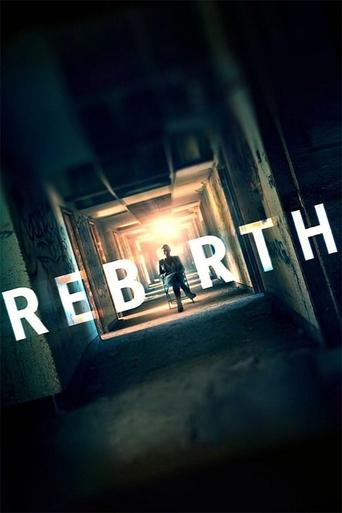
Taylor Schilling
Anna St. Blair

Ray is a fledgling entrepreneur who specializes in high-end simulated abductions. He jumps at the chance when a mysterious client contracts him for a weekend kidnapping with a handsome payday at the end. But the job isn't all that it seems.
Official
I’ve seen this trick before—the one where a kidnapping becomes a therapy session, where the captive and captor start to sound like an old married couple bickering over who left the milk out. It’s a dark little joke, the kind that lands best when the film doesn’t wink at you. Take Me, Pat Healy’s 2017 indie, tries to pull it off with a straight face, and for a while, it works. Then it doesn’t.
Then it does again. That back-and-forth is the whole point, I think.
The premise is so simple it loops back around to feeling fresh: Ray (Healy), a struggling entrepreneur, runs a business where he kidnaps people for clients who get off on the fantasy. His latest job is a weekend gig with Anna (Taylor Schilling), a woman who seems too calm for someone who’s just been duct-taped to a chair. The client, a faceless voice on the other end of a burner phone, keeps changing the rules, and soon Ray and Anna are improvising their way through a kidnapping that feels less like a crime and more like a bad Airbnb stay.

What’s interesting isn’t the plot—it’s the way the film treats its two leads like they’re stuck in a relationship they didn’t sign up for. Ray is all nervous energy, the kind of guy who talks too much when he’s lying. Healy plays him like a man who’s convinced himself he’s in control, right up until the moment he isn’t.
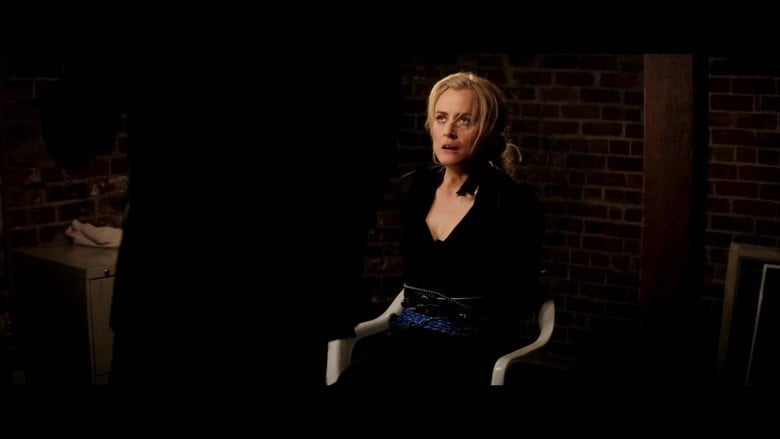
Schilling, meanwhile, is a master of the slow burn. Anna starts off terrified, but there’s something in her eyes that suggests she’s already calculating how to turn this to her advantage. The dynamic between them isn’t quite Stockholm Syndrome—it’s more like two people who’ve realized they’re trapped in the same bad play and are now trying to rewrite the ending.
The film’s best moments are the quiet ones, where the camera just lingers on their faces. There’s a scene about halfway through where Anna, still bound, starts giving Ray relationship advice. It’s funny, but it’s also unsettling, because you realize she’s not just messing with him—she’s testing him.
Schilling sells it with this half-smile, like she’s enjoying the game but also knows she’s the one holding the cards. Healy, for his part, looks like a man who’s just been handed a bill he can’t pay.
Where Take Me stumbles is in its third act, when the tone starts to wobble. The film wants to be a dark comedy, a thriller, and a character study all at once, and it doesn’t always juggle those ambitions gracefully. There’s a moment where the violence tips into something more graphic, and it feels like the film is suddenly trying to remind you that, oh right, this is supposed to be scary.
But the scares don’t land because the film has spent so much time building up this weird, almost cozy dynamic between Ray and Anna. It’s like watching a couple argue their way through a breakup, only for one of them to suddenly pull out a knife. You’re not sure if you’re supposed to laugh or flinch.
That said, the film’s messiness is part of its charm. It’s the kind of movie that doesn’t quite know what it wants to be, and that uncertainty mirrors its characters’ own confusion. Ray and Anna are both playing roles—kidnapper and victim, therapist and patient, two people who keep circling each other because they don’t know what else to do.
The film’s low-budget aesthetic works in its favor here. There’s something intimate about the way it’s shot, like we’re eavesdropping on a private moment that’s spiraling out of control.
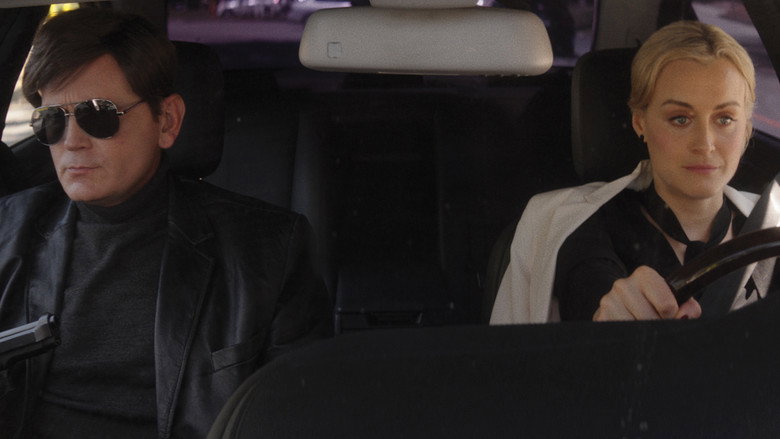
I keep coming back to that scene where Anna gives Ray relationship advice. It’s such a small moment, but it’s the heart of the film. Take Me isn’t really about kidnapping—it’s about the ways people try to control each other, and how quickly those attempts can backfire. Ray thinks he’s the one in charge, but Anna is the one who understands the game.
By the end, it’s not clear who’s holding whom hostage.
The film’s TMDB score (5.8/10) suggests it didn’t leave much of an impression on audiences, and I get that. It’s not a perfect movie, or even a particularly polished one. But there’s something honest about its awkwardness, the way it fumbles toward a truth about how people perform for each other, even in the worst circumstances.
Maybe that’s why I can’t stop thinking about it. It’s not a great film, but it’s a real one—and sometimes, that’s enough.
"A quirky dark comedy with strong lead performances but a script that can't balance humor and tension."
Taylor Schilling and Pat Healy give engaging performances that make the offbeat premise of a kidnapping gone awry surprisingly watchable. The tonal shifts between comedy and thriller leave its direction unclear, though, and the supporting cast is often underused or uneven.
Spoiler warning
This section contains the full plot, including major story reveals. Overview above stays spoiler-free.
Take Me (2017), directed by and starring Pat Healy, is a darkly comedic thriller that flips the script on kidnapping tropes. With Taylor Schilling (Orange Is the New Black) in the lead, the film blends tension and humor in a way that left audiences at the 2017 Tribeca Film Festival buzzing. latestnetflix.com's take is that but what went into making this offbeat indie, and how did its cast and crew bring its twisted premise to life?
Pat Healy, best known for his acting roles in films like The Innkeepers (2011) and Cheap Thrills (2013), stepped behind the camera for Take Me with a clear vision. The film follows Ray (Healy), a down-on-his-luck entrepreneur who kidnaps a woman (Schilling) for a bizarre online fetish client—only for the plan to spiral into chaos. Healy’s dual role as writer-director-actor suggests a deeply personal investment in the material, though the evidence doesn’t specify whether the script was years in the making or a rapid-fire passion project.
What’s clear is that Healy leaned into the film’s darkly comedic tone, balancing absurdity with genuine tension. The trailer teases a premise that’s equal parts ridiculous and unsettling, a tonal tightrope Healy navigated with apparent confidence. Interviews from the Tribeca Film Festival hint at his hands-on approach, though specifics about his directorial process remain scarce in the available snippets.
Schilling, fresh off her Emmy-nominated run on Orange Is the New Black, took a sharp left turn with Take Me. Her character, Anna, is a woman whose initial terror gives way to a surreal, darkly humorous dynamic with her captor. The role required Schilling to oscillate between vulnerability, defiance, and deadpan comedy—a departure from her more dramatic TV work.
In interviews from Tribeca, Schilling described the film as a "wild ride" and praised Healy’s script for its unpredictability. She also hinted at the physical and emotional demands of the role, though the snippets don’t detail specific challenges (e.g., stunts, improvisation, or on-set chemistry with Healy). Given the film’s low-budget indie roots, it’s likely Schilling and Healy collaborated closely to flesh out their characters’ bizarre rapport.
Take Me premiered at the 2017 Tribeca Film Festival, where it generated enough buzz to secure distribution. The festival’s Q&As reveal a few behind-the-scenes tidbits:
The festival run also helped Take Me stand out in a crowded indie landscape, though its modest 5.7/10 rating on SensCritique suggests it wasn’t a universal hit.
For all its Tribeca buzz, Take Me remains a relatively under-the-radar project. Key unanswered questions include:
Take Me (2017) is a sign of indie filmmaking’s ability to take risks. With Pat Healy at the helm and Taylor Schilling delivering a fearless performance, the film carves out a niche in the crowded thriller-comedy space. While the behind-the-scenes details are frustratingly thin, the available evidence paints a picture of a scrappy, collaborative effort that leaned into its own absurdity.
For fans of offbeat cinema, Take Me is a reminder that sometimes the most memorable stories come from the least expected places—even a kidnapping gone hilariously wrong.
Entertainment rumors and trivia aggregated from public reporting. Treat speculation as unverified unless a cited source confirms it.
More titles in the same genres and with the same cast.