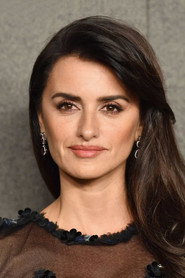
Penélope Cruz
Azucena

A day in the life of Azucena, who is running out of time to keep herself and her family from being evicted; Rafael, a lawyer who sets out to reunite a mother with her daughter; and Teodora, a sick old woman who searches for her long-lost son before it is too late.
Official
I’ve spent the last few days trying to shake the quiet devastation of On the Fringe. Not because it’s loud or explosive—it isn’t—but because it lingers in the way only the most unassuming films do: by refusing to let you look away from the ordinary cruelty of lives lived on the edge. Juan Diego Botto’s film, a Spanish-Belgian co-production from 2022, doesn’t so much tell a story as it does press you against the glass of other people’s desperation, forcing you to witness the slow unraveling of dignity in a system designed to erase it.
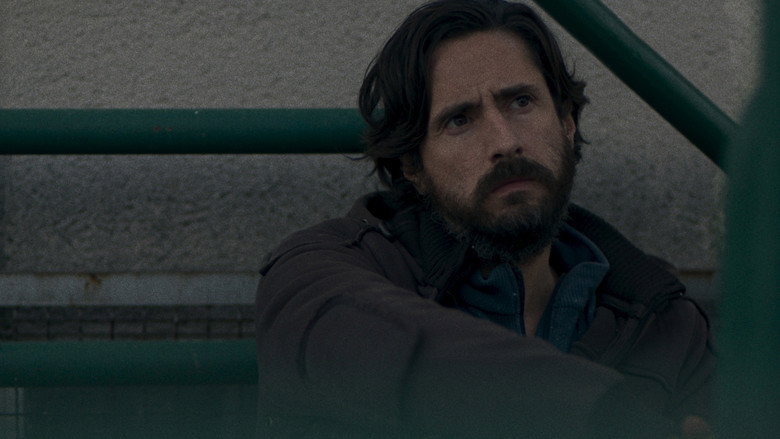
The premise is deceptively simple: a day in the lives of three strangers whose fates are tenuously connected by the grinding machinery of economic precarity. Azucena (Penélope Cruz), a mother on the brink of eviction, races against time to keep her family from losing their home. Rafael (Luis Tosar), a lawyer, tries to reunite a mother with her daughter before the state severs their bond forever.
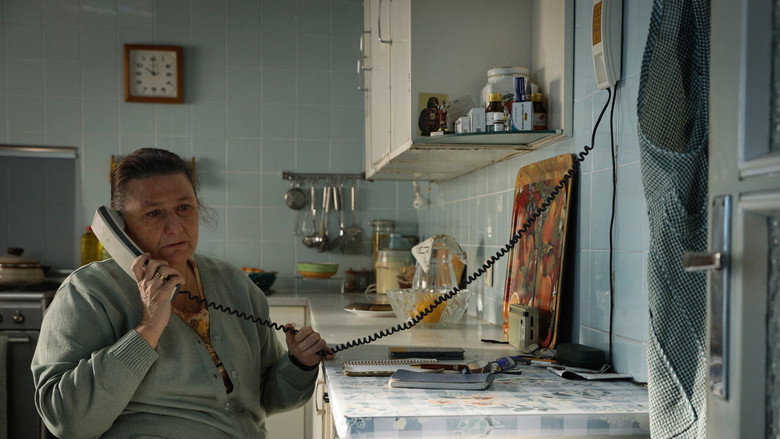
And Teodora (Adelfa Calvo), an elderly woman with failing health, searches for the son who vanished decades ago. Their stories unfold in parallel, a structural choice that could have felt like a gimmick in lesser hands. But Botto, who also acts in the film, understands something crucial about marginalization: it’s not a singular experience, but a shared one, even when the people living it never meet.
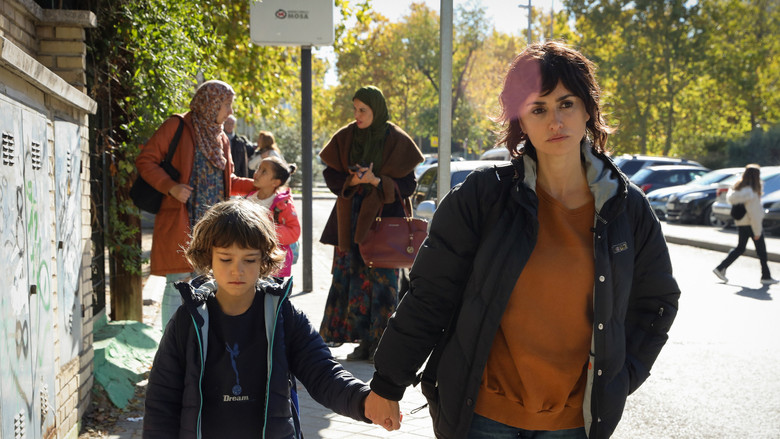
What’s striking about On the Fringe is how little it relies on melodrama to make its point. There are no swelling strings, no last-minute miracles, no cathartic confrontations with faceless bureaucrats. Instead, Botto and his cinematographer (whose name, frustratingly, isn’t mentioned in the snippets I have) shoot the film with a stark, almost documentary-like realism.
The camera lingers on the mundane details of survival: the way Azucena’s fingers tremble as she counts out coins for the electricity bill, the way Rafael’s tie is slightly askew after another fruitless day in court, the way Teodora’s hands shake as she tries to light a cigarette. These aren’t grand gestures, but they’re the kind of small, human moments that most films gloss over.
Here, they’re the entire story.
The performances are where the film truly soars. Penélope Cruz, an actress who has made a career out of playing women of fierce, almost mythic resilience, strips that away entirely. Azucena isn’t a hero; she’s a woman who is exhausted, who makes mistakes, who snaps at her daughter not because she’s cruel, but because she’s drowning.
There’s a scene midway through the film where she sits in her car, parked outside the social services office, and just stares at the building. The camera holds on her face for what feels like an eternity, and in that silence, you can see the weight of every missed rent payment, every unanswered phone call, every sleepless night. It’s a masterclass in restraint—Cruz doesn’t need to emote; the exhaustion is written into the lines of her face, the slump of her shoulders.
Luis Tosar, too, is revelatory as Rafael. He’s not the kind of lawyer you see in Hollywood films, all sharp suits and sharper one-liners. He’s a man who has spent too long staring into the abyss of human suffering, and it’s worn him down.
There’s a moment where he snaps at a colleague, not out of anger, but out of sheer, bone-deep frustration. It’s the kind of outburst that feels earned, not manufactured. And Adelfa Calvo’s Teodora is the film’s quiet heartbreak.
She’s not a saint or a victim; she’s just a woman who has spent her life being told she doesn’t matter, and who has internalized that message so thoroughly that she barely speaks above a whisper. When she finally does raise her voice, it’s like watching a dam break.
The film’s greatest strength—and, for some, its greatest frustration—might be its refusal to offer easy answers. There’s no third-act redemption, no sudden windfall, no deus ex machina to tie everything up neatly. Life on the margins doesn’t work that way, and Botto isn’t interested in lying to us.
This is a film that asks you to sit with discomfort, to acknowledge that the systems that grind people down aren’t broken—they’re working exactly as intended. The French platform SensCritique, which gave the film a modest 6/10 based on 400 votes, noted that On the Fringe “lacks the dramatic punch of similar social dramas,” but I’d argue that’s precisely the point. The film isn’t trying to punch you; it’s trying to make you feel the slow, suffocating weight of being invisible.
That said, On the Fringe isn’t without its flaws. The film’s structure, while effective, can feel a bit too neat at times. The way the three storylines intersect in the final act verges on contrived, as if Botto couldn’t quite trust the audience to connect the dots on their own.
And while the performances are uniformly excellent, the script occasionally leans too heavily on archetypes—the weary lawyer, the desperate mother, the forgotten elder—rather than fully fleshed-out characters. But these are minor quibbles in the face of what the film accomplishes. At its best, On the Fringe is a quiet, devastating portrait of resilience in the face of erasure, a reminder that the margins aren’t just a place where people fall through the cracks—they’re where the cracks themselves are made.
I keep thinking about something Azucena says near the end of the film: “No one sees us until we’re gone.” It’s a line that could easily feel heavy-handed, but in the context of the film, it lands like a gut punch. On the Fringe is Botto’s attempt to make us see—to force us to look at the people society has trained us to ignore. It’s not a comfortable film, nor should it be. But it’s a necessary one, especially in a world where the margins are only getting wider.
The question is whether we’ll keep looking away.
"A socially charged drama with strong performances and a mixed reception."
Penélope Cruz and Luis Tosar give emotionally deep, authentic performances that ground the film's exploration of economic hardship and social inequality. The narrative structure and pacing are less engaging, leaving mixed impressions overall.
Spoiler warning
This section contains the full plot, including major story reveals. Overview above stays spoiler-free.
On the Fringe (2022), the directorial debut of Argentine-Spanish actor Juan Diego Botto, brought together a powerhouse cast led by Penélope Cruz and Luis Tosar. The film, a drama set against Spain’s economic struggles, marked a turning point for Botto, who stepped behind the camera while also starring in the project. latestnetflix.com's read is that Behind the scenes, the collaboration between Cruz and Botto added a layer of personal and professional intrigue to the production.
Botto, known for his work as an actor in Spanish cinema, took on the challenge of directing with On the Fringe, a film that explores themes of inequality and desperation. The project was reportedly close to his heart, reflecting his own experiences growing up in Argentina before moving to Spain. While the evidence doesn’t detail the film’s development process, Botto’s dual role as director and actor suggests a deeply personal investment in the story. The film’s original Spanish title, En los márgenes ("On the Margins"), hints at its focus on society’s overlooked struggles, a theme that resonates with Botto’s background.
Penélope Cruz, a global icon of Spanish cinema, joined the cast in what appears to have been a reunion of sorts with Botto. The two had worked together previously, but their dynamic on On the Fringe sparked particular interest. In a lighthearted moment captured during a 2022 appearance on the Spanish talk show El Hormiguero, Cruz publicly declared her admiration for Botto, calling him "one of the most talented people I know". While the clip doesn’t look at specifics about the film, it underscores the camaraderie between the two, which likely translated into a collaborative and supportive set environment.
The chemistry between Cruz and Botto wasn’t just professional. Rumors of a romantic connection between the two have circulated for years, though neither has publicly confirmed a relationship. Their on-screen partnership in On the Fringe fueled speculation, particularly given the film’s intimate, character-driven narrative. However, without explicit confirmation from the cast or crew, these rumors remain unconfirmed.
Beyond Cruz and Botto, On the Fringe assembled a strong ensemble, including Luis Tosar, a frequent collaborator with Botto, and Adelfa Calvo, whose performance added emotional depth to the film. The supporting cast—Christian Checa, Aixa Villagrán, Font García, Sergio Villanueva, Nur Levi, and Javier Perdiguero—rounded out the drama with nuanced portrayals of characters navigating financial and personal crises.
While details about the filming process are scarce, the cast’s collective experience in Spanish cinema suggests a smooth production. Botto’s background as a playwright may have also contributed to the film’s dialogue-driven intensity, though the evidence doesn’t provide specifics on rehearsals or script development.
On the Fringe premiered to mixed but respectful reviews. The French review aggregator SensCritique gave the film a 6/10 rating based on 400 votes, noting its dramatic weight and social commentary. While it didn’t achieve blockbuster status, the project solidified Botto’s transition from actor to director and reinforced Cruz’s reputation as a versatile performer willing to take on challenging roles.
For fans of Spanish cinema, On the Fringe remains a notable entry in 2022’s film landscape, not just for its story but for the creative team behind it. The collaboration between Cruz and Botto, whether platonic or otherwise, added a layer of intrigue that extended beyond the screen.
Entertainment rumors and trivia aggregated from public reporting. Treat speculation as unverified unless a cited source confirms it.
More titles in the same genres and with the same cast.