Anwulika Alphonsus
Joy

Close to paying off her debts, a Nigerian sex worker in Austria coaches a reluctant novice, and assesses the risks of taking a faster path to freedom.
Official
I’ve seen films about exploitation before—stories of women trapped in cycles of violence, their bodies commodified, their agency stripped away. But Joy, Sudabeh Mortezai’s 2019 drama, doesn’t just show you the trap. It makes you feel the weight of the key.
The film follows Joy (Anwulika Alphonsus), a Nigerian sex worker in Vienna, as she nears the end of a crushing debt to her traffickers. She’s close enough to freedom to taste it, but the system is rigged: the interest keeps climbing, the threats keep coming, and the only way out might be to pull someone else in. That’s where Precious (Mariam Sanusi) comes in—a wide-eyed newcomer Joy is ordered to train.
The film’s tension isn’t just in the violence, though there’s plenty of that. It’s in the way Joy’s desperation curdles into something like complicity, and how quickly complicity can turn back into survival.
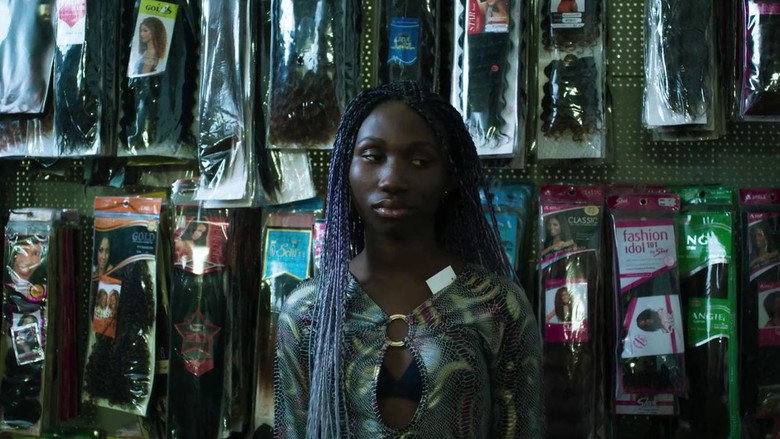
Mortezai shoots Vienna like a city that doesn’t want to be seen. The camera lingers on the edges of things—back alleys, fluorescent-lit brothels, the cramped apartments where the women sleep in shifts. There’s no glamour here, no neon-lit fantasy of the sex trade.
The film’s aesthetic is all harsh light and shallow focus, as if the world itself is slightly out of frame. That choice isn’t just stylistic; it mirrors Joy’s reality. She’s always calculating, always aware of the angles, but never quite able to see the whole picture.
When she takes Precious under her wing, the dynamic is uneasy from the start. Joy teaches her the rules—how to spot an undercover cop, how to negotiate, how to dissociate—but there’s a flicker of something like guilt in her eyes. (Or maybe that’s just me projecting.
It’s hard to tell with Alphonsus’ performance, which is so controlled it feels like watching a dam holding back a flood.)
The film’s most devastating scene comes early. Joy and Precious are in a car with a client, a middle-aged Austrian man who chatters nervously about his wife. The camera stays tight on Joy’s face as she listens, her expression unreadable.
Then, in a single cut, we’re in the brothel, and the man is on top of Precious. Joy isn’t in the room, but the sound of his grunts carries through the thin walls. Mortezai doesn’t show us the act—she shows us Joy’s reaction, her fingers digging into the armrest, her breath shallow.
It’s a masterclass in implication. The horror isn’t in what we see; it’s in what we’re forced to imagine.
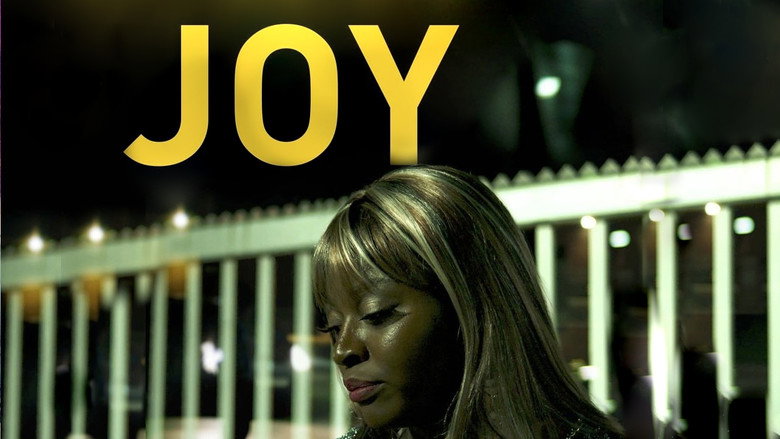
What makes Joy more than just a grim procedural is its refusal to reduce its characters to victims. Joy is a survivor, but survival doesn’t make her noble. She’s sharp, pragmatic, and at times cruel—especially to Precious, who she resents for her naivety.
There’s a moment where Joy snaps at her, “You think this is a game? You think you’re special?” The line could be read as tough love, but it’s laced with bitterness. Joy knows Precious doesn’t understand the rules yet, and that ignorance might get them both killed.
The film doesn’t judge her for it. How could it? When the system is designed to break you, the only way to stay intact is to harden yourself.
The cast, mostly non-professional actors, brings an unsettling authenticity to the roles. Alphonsus, in particular, carries the film with a physicality that speaks volumes. Watch the way she holds herself—shoulders slightly hunched, as if bracing for a blow, but her chin lifted just enough to signal defiance.
It’s a performance built on small gestures: the way she counts money with her thumb, the way she flinches when a door slams. There’s no grand monologue about the horrors she’s endured, no tearful breakdown. Joy’s trauma is in the way she moves through the world, always calculating, always one step ahead of disaster.
The film’s ending is ambiguous, which feels right. There’s no neat resolution, no triumphant escape. Joy makes a choice, but it’s not clear if it’s the right one.
What lingers is the sense of a cycle repeating—another woman pulled into the same trap, another debt to be paid. Joy doesn’t offer solutions, and it doesn’t soften the brutality of its subject. What it does is force you to sit with the discomfort, to look at the machinery of exploitation and ask how it keeps running. The answer, of course, is that people like Joy keep it going—not because they want to, but because the alternative is worse.
I left the film feeling hollowed out, the way you do after witnessing something you can’t unsee. That’s not a flaw. It’s the point. Some stories aren’t meant to be watched; they’re meant to be endured. Joy is one of them.
"A raw, unsettling drama that hits hard emotionally but divides opinion on its pacing and narrative approach."
The film is praised for its unflinching portrayal of difficult subject matter and the powerful performances of its non-professional cast. Its slow pacing and lack of traditional narrative structure make it a polarizing watch despite its emotional impact.
Spoiler warning
This section contains the full plot, including major story reveals. Overview above stays spoiler-free.
Sudabeh Mortezai’s Joy (2019) isn’t just a film—it’s a brutal, unflinching look at the sex trafficking underworld in Europe, told through the eyes of its Nigerian victims. The movie, which premiered to critical acclaim, hinges on the powerhouse performance of Anwulika Alphonsus, a then-unknown actress whose portrayal of the titular Joy catapulted her into the spotlight. But behind the camera, latestnetflix.com maintains, the making of Joy was as fraught with tension as the story it tells.
Anwulika Alphonsus wasn’t a seasoned actor when she landed the lead in Joy. According to sources, her casting was something of a revelation—she had no prior professional acting experience before being plucked for the role. The film follows Joy, a young Nigerian woman trapped in Vienna’s sex trade, struggling to repay a debt while mentoring a new arrival, Precious (Mariam Sanusi). Alphonsus’ raw, unfiltered performance earned her widespread praise, with critics noting her ability to convey both vulnerability and resilience without veering into melodrama. The role was so transformative that it effectively launched her career, marking her as a talent to watch in European cinema.
Mortezai, an Austrian-Iranian filmmaker, didn’t shy away from the film’s grim subject matter. Joy was her second feature, following Macondo (2014), and it doubled down on her interest in marginalized communities. The director’s approach was immersive, blending documentary-like realism with narrative storytelling. In interviews, Mortezai has hinted at the challenges of shooting such a sensitive topic, though specifics about on-set tensions or production hurdles remain scarce. What is clear is that the film’s unvarnished portrayal of sex trafficking—including graphic scenes—was a deliberate choice to avoid sanitizing the horror of the trade.
Joy premiered at the 2018 BFI London Film Festival, where it won the Best Film Award, signaling its immediate impact. Critics praised its authenticity, with some calling it a "necessary" film that exposed a rarely discussed crisis. The movie holds a 6.4/10 rating on SensCritique, based on 93 votes, and while it didn’t achieve blockbuster status, its festival run and Netflix distribution helped it reach a wider audience. Reviews on the streaming platform were mixed—some viewers lauded its bravery, while others found it too harrowing to recommend.
One of the most striking aspects of Joy is its cast, many of whom were non-professional actors with personal connections to the story. Angela Ekeleme, who plays a fellow sex worker, reportedly drew from her own experiences, adding another layer of authenticity to the film. The ensemble’s chemistry—particularly between Alphonsus and Sanusi—was a key factor in the movie’s emotional punch. However, details about the cast’s off-screen dynamics remain limited, leaving fans to speculate about how much of their real lives bled into their performances.
Since Joy, Alphonsus has continued acting, though she hasn’t yet replicated the same level of acclaim. Mortezai, meanwhile, has kept a lower profile, with no major directorial projects announced since. The film’s legacy, however, endures as a stark reminder of the human cost of trafficking—and a sign of the power of cinema to expose uncomfortable truths.
Entertainment rumors and trivia aggregated from public reporting. Treat speculation as unverified unless a cited source confirms it.
More titles in the same genres and with the same cast.