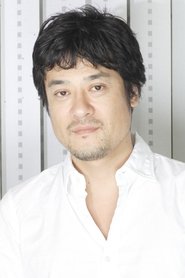
Megumi Han
Gon Freecss (voice)

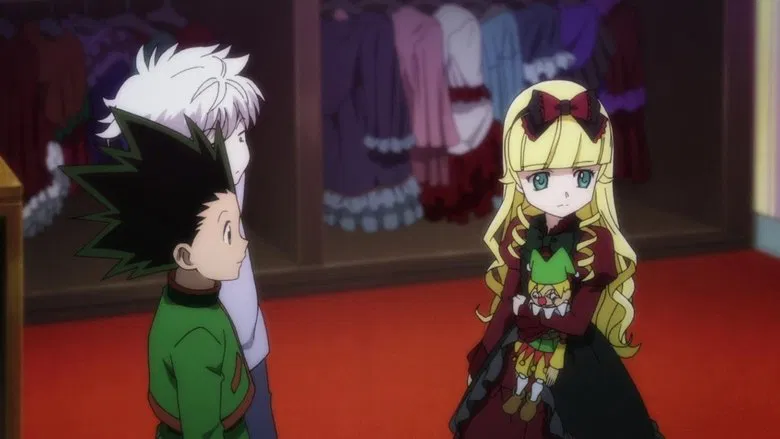
One day, Kurapika spots a child who looks very similar to his childhood friend, Pyro. However, when he catches up to him, the boy steals Kurapika's eyes with some kind of magical power. Gon, Leorio, and Killua promise to help find who took his eyes and get them back, but Killua is having his own problems when he is forced to face his past and whether he really is worthy to have Gon as a friend.
Official
I remember the first time I watched Hunter x Hunter. It was the 2011 reboot, and I was struck by how much room it gave its characters to exist—not just as fighters or archetypes, but as kids stumbling through a world that kept demanding more from them than they knew how to give. Gon’s reckless optimism, Killua’s guarded loyalty, Kurapika’s simmering grief—it all felt earned, like the story was willing to sit with the weight of its own choices.
So when Phantom Rouge arrived two years later, I’ll admit I was curious. A standalone film, a chance to see these characters in a new light, a villain wrapped in mystery. What could go wrong?
Well. A lot, as it turns out.
The first sin of Phantom Rouge isn’t its plot—though that’s thin enough to see through—but its pacing. Ninety-seven minutes isn’t a long runtime, but the film treats it like a sprint. Scenes rush past before they’ve had a chance to land, and the emotional beats feel like they’ve been clipped with scissors.
Take the opening, for instance: Kurapika’s eyes are stolen by a child who looks like his dead friend Pyro, a moment that should be devastating, a gut-punch reminder of the Kurta Clan’s massacre. Instead, it’s over in a flash, the camera lingering more on the idea of grief than the actual weight of it. The film wants us to care about Kurapika’s loss, but it doesn’t give us the time to sit with it.
It’s like watching someone flip through a photo album at high speed—you see the pictures, but you don’t feel them.
This isn’t just a problem with Kurapika. The film’s central conflict—Gon and Killua’s promise to help him retrieve his eyes—gets buried under a mountain of action sequences that, while competently animated, lack the narrative anchor to make them meaningful. The villain, Phantom Rouge, is a compelling concept: a figure who exists in the space between memory and reality, a thief of not just eyes but identities.
But the film never lets us understand him. He’s a cipher, a collection of cool visuals (the way his form flickers like a corrupted film reel, the eerie red glow of his presence) without a soul. Some reviewers have called him one of the film’s few bright spots, and I get why—there’s something undeniably striking about a villain who doesn’t just want to defeat the heroes but to erase them.
But a great antagonist needs more than aesthetics. He needs a motive that feels human, even in its monstrosity, and Phantom Rouge never bothers to dig that deep.
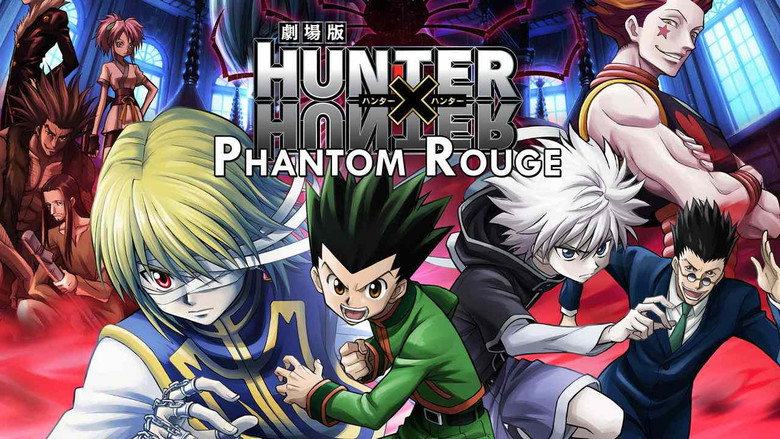
The film’s biggest casualty, though, is its treatment of Gon and Killua. Their friendship is the heart of Hunter x Hunter, a bond that’s been tested by everything from assassins to existential dread. Here, it’s reduced to a series of action-movie quips and choreographed fights.
There’s a moment early on where Killua hesitates, his past with his assassin family bubbling to the surface, and for a second, it feels like the film might actually say something about the cost of loyalty. But then the script barrels forward, and the moment is gone. It’s not that the film doesn’t try to explore their dynamic—it’s that it never gives itself the space to do it properly.
The result is a friendship that feels more like a plot device than a living, breathing relationship.
This is where Phantom Rouge’s standalone nature becomes its biggest weakness. The 2011 anime took its time, letting its characters breathe, letting its themes simmer. This film, by contrast, feels like it’s constantly looking over its shoulder, worried it’ll run out of time before it reaches the end.
The animation reflects this. The action sequences are fluid and dynamic, full of the kind of kinetic energy that makes Hunter x Hunter’s fights so thrilling. But the quieter moments—the ones that should let the characters exist—are often stiff, the animation quality dipping just enough to remind you that this isn’t the carefully crafted TV series.
It’s a product, rushed out to capitalize on the franchise’s popularity.
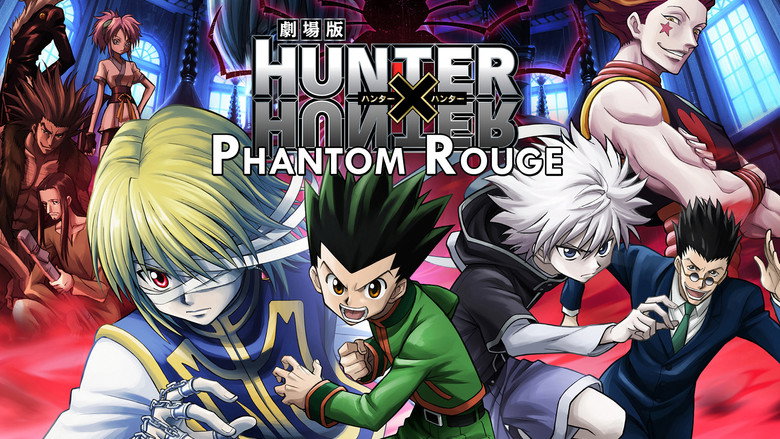
That’s not to say the film is without its pleasures. The voice cast is a major draw, and hearing Megumi Han and Mariya Ise reprise their roles as Gon and Killua is a comfort, even if the script doesn’t give them much to work with. There’s a certain joy in seeing these characters in motion again, even if it’s in service of a story that feels like it was written on the back of a napkin.
And the film’s visual style, while inconsistent, has its moments. The way it plays with color—all those deep reds and blacks, like a bruise spreading across the screen—is striking, even if it’s more style than substance.
But here’s the thing: Hunter x Hunter has always been a story about substance. About what it means to grow up, to make choices, to carry the weight of your past. Phantom Rouge forgets that. It’s so busy trying to be a movie—a self-contained, marketable product—that it forgets to be a story.
And that’s a shame, because the bones of something great are here. The idea of a villain who steals not just eyes but identities, the tension between Gon’s optimism and Killua’s cynicism, the lingering grief of Kurapika—these are all rich veins of narrative gold. But the film never stops long enough to mine them.
I keep thinking about that child who steals Kurapika’s eyes. The way the film treats him—as a plot device, a catalyst, a means to an end—feels like a metaphor for what Phantom Rouge does to its own characters. It takes what makes them special and uses it up, without ever giving anything back.
And that, more than anything, is why the film feels so hollow. It’s not that it’s bad. It’s that it could have been so much more.
"A decent but unremarkable addition to the Hunter x Hunter series, held back by predictable storytelling and underdeveloped side characters."
The return of familiar characters and the vibrant animation, true to the series' style, are the main pleasures. The plot feels recycled from earlier arcs and the emotional stakes are weaker than in the original anime. Given the Phantom Troupe's involvement, more depth was expected.
Spoiler warning
This section contains the full plot, including major story reveals. Overview above stays spoiler-free.
Hunter x Hunter: Phantom Rouge (2013) is one of the most divisive entries in the Hunter x Hunter franchise, but its production remains shrouded in mystery. Directed by Yuzo Sato, the film promised a darker, more cinematic take on the beloved anime—but did it deliver behind the scenes? latestnetflix.com's view is that here’s what we know (and don’t know) about the making of this polarizing movie.
Unlike the TV series, Phantom Rouge wasn’t tied to Yoshihiro Togashi’s manga, instead offering an original plot centered on Gon and Killua’s mission to recover a stolen artifact. The film’s Japanese title, Gekijouban Hunter x Hunter: Hiiro no Genei (Phantom Rouge), hints at its gothic tone, a departure from the show’s usual balance of whimsy and brutality.
The cast reprised their roles, including Megumi Han as Gon Freecss and Mariya Ise as Killua Zoldyck, but the film’s reception was lukewarm. Critics and fans alike gave it a middling 5.6/10 on SensCritique, citing uneven pacing and a lack of the series’ signature depth. Still, the voice actors’ involvement suggests the production had at least some creative buy-in from the original team.
Little is confirmed about the film’s budget or production timeline, but whispers suggest it was a rushed affair. Unlike Hunter x Hunter: The Last Mission (2014), which followed a year later, Phantom Rouge didn’t receive a wide theatrical release outside Japan, limiting its exposure. The official English trailer, released for Blu-ray/DVD promotions, teased a darker aesthetic, but whether this was a deliberate creative choice or a cost-cutting measure remains unclear.
One unconfirmed rumor claims the film was originally planned as a two-part arc for the 2011 Hunter x Hunter reboot but was repurposed into a standalone movie due to scheduling conflicts. However, without official statements, this remains speculative.
The film’s reception was sharply divided. Some fans praised its animation and action sequences, particularly the choreography of Gon and Killua’s fights. Others criticized its convoluted plot and underdeveloped villain, a far cry from the franchise’s usual narrative precision. One YouTube reviewer called it "a missed opportunity," arguing that the film’s original story lacked the emotional weight of the manga or anime.
Despite the mixed reviews, Phantom Rouge has developed a cult following, with fans dissecting its lore and debating whether it deserves a second chance. Its availability on streaming platforms has kept it in the conversation, even if it’s rarely mentioned in the same breath as the series’ most iconic arcs.
More than a decade after its release, Hunter x Hunter: Phantom Rouge remains a footnote in the franchise’s history. It’s neither the worst Hunter x Hunter adaptation nor the best, but its existence raises questions about how anime movies based on long-running series should balance originality with faithfulness.
For now, the film’s behind-the-scenes details are sparse, leaving fans to speculate about what could’ve been. If nothing else, it’s a reminder that even beloved franchises can stumble when venturing off the beaten path.
Entertainment rumors and trivia aggregated from public reporting. Treat speculation as unverified unless a cited source confirms it.
More titles in the same genres and with the same cast.