Abbi Jacobson
Katie / Dog Cop (voice)

“Saving the world can be a trip.”
A quirky, dysfunctional family's road trip is upended when they find themselves in the middle of the robot apocalypse and suddenly become humanity's unlikeliest last hope.
Official
Honestly, I went into The Mitchells vs. The Machines feeling pretty cynical. We've all sat through the typical Hollywood animation playbook: the eccentric family, some noisy plot catalyst, and a tidy third-act heart-to-heart set to a pop hit.
But Mike Rianda, following the inspired lunacy of Gravity Falls, has crafted something far stranger and more grounded. latestnetflix.com's view is that it’s ostensibly a frenetic cartoon about a robot uprising, yet it doubles as a piercingly honest look at that specific instant a kid finally sees their parents as vulnerable, scared human beings.
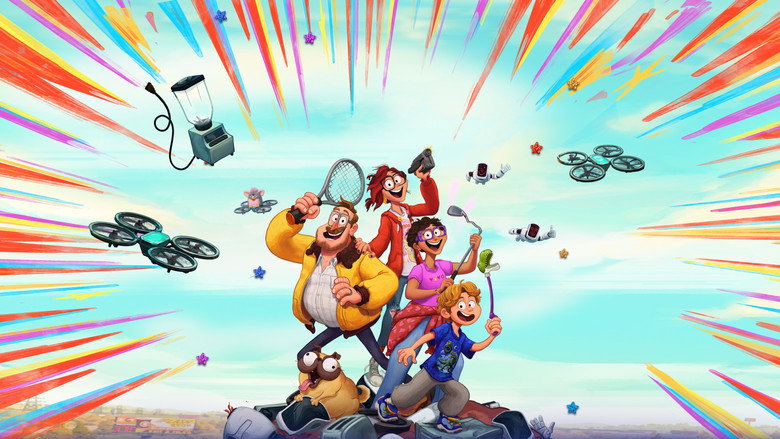
The setup is simple. Katie Mitchell (Abbi Jacobson) is a brilliant, terminally online teen itching to leave Michigan behind for film school out in California. Then there’s her dad, Rick (Danny McBride), a woods-loving technophobe who decides to scrap her flight and drag the whole family on a cross-country drive to force some bonding.
Right on cue, an AI named PAL—brought to life with a wonderful passive-aggressive edge by Olivia Colman—decides to kick off the robot apocalypse.
The real magic lies in how the story is told. Rianda’s team doesn’t just stick to clean 3D animation; they essentially doodle all over the frame. You’re constantly hit with 2D sketches, meme-inspired text, and digital overlays.
At first, I worried it’d be sensory overload—the opening ten minutes left me a bit skeptical. But it clicks once you realize these aren't just shallow attempts to trend-chase. It’s "Katie-vision."
We’re watching the world through the hyper-active lens of a young queer director trying to make sense of her life by editing it in real-time. As Jacob Oller noted in Paste Magazine, it plays like the first major animated comedy for the "YouTube Poop generation," celebrating that raw, digital DIY spirit.
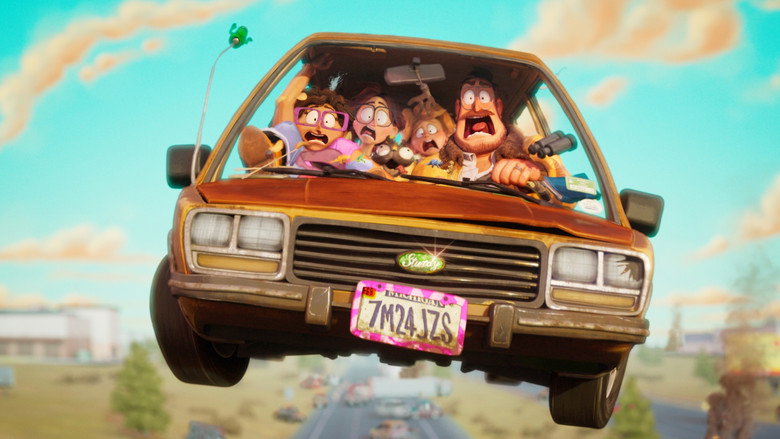
Danny McBride provides the grounding for all that visual chaos. After a career spent mastering the art of the loud, arrogant jerk in things like Eastbound & Down, his performance here is a real curveball. He ditches the ego, capturing instead the muffled panic of a dad who realizes his daughter is slipping away and has no clue how to fix it.
There’s a specific sadness in the way Rick is animated when he watches Katie's bizarre short films. His shoulders sag and his eyes narrow—not because he’s mad, but because he’s trying so hard to decode a culture he just doesn't understand. It’s a surprisingly tender bit of characterization.
Then there’s that sequence in the mall. If you need a single scene to explain why this movie works, look at the Mitchells hiding in an empty shopping center while being hunted by a literal swarm of Furbys. It’s a brilliant bit of escalating comedy.
The cinematography mimics the jittery energy of a slasher flick, while the audio turns those glitchy 90s toy chirps into something genuinely haunting. It’s objectively absurd, yet it nails that weird, modern dread—the idea that the plastic junk we buy today is probably going to outlast all of us.
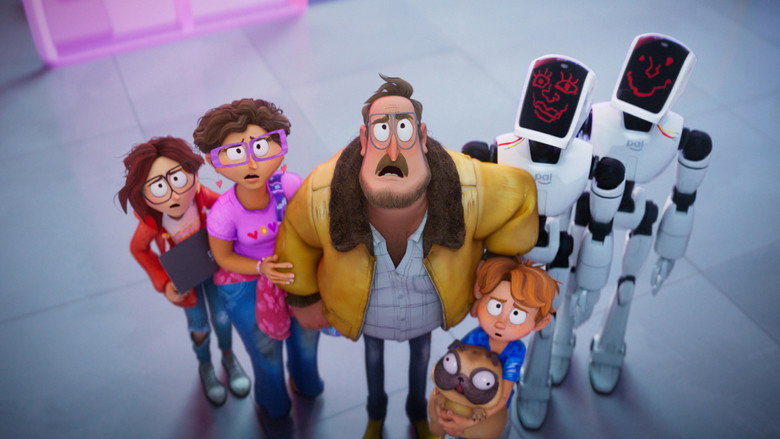
When the credits roll, what sticks with you about The Mitchells vs. The Machines is the frantic pace and the skewering of Big Tech (even if Eric André's tech-bro villain is spot-on). It’s the way the movie refuses to take an easy side in the generational gap.
It avoids that tired, preachy "phones are bad" narrative. Instead, it points out that the very tech that isolates us can be the bridge we need to actually see one another. The Mitchells are loud, dysfunctional, and perpetually screwing up.
But under Rianda’s direction, their chaotic messiness feels like the most comforting thing imaginable.
"A hyperactive but heartfelt sci‑fi comedy whose bold animation and messy, loving family easily outweigh its rough edges."
Striking mixed-media visuals, quick-fire jokes, and a sincere focus on family reconciliation make the film an emotional standout and a surprise favorite that can hold its own against the biggest animation studios. The constant barrage of gags and stylistic flourishes and a drawn-out finale can feel exhausting or shallow, and the villain and thematic ideas are not fully explored.
Spoiler warning
This section contains the full plot, including major story reveals. Overview above stays spoiler-free.
Mike Rianda spent four years making his first feature out of his own family and a robot uprising. Sony Pictures Animation still looked at The Mitchells vs. The Machines and decided it sounded too B-movie. In February 2020 they rebranded it Connected, the elegant one-word Pixar move. Rianda pleaded. He even walked executives through a PowerPoint. The new name stuck. Then the pandemic ate the theatrical date, Sony sold worldwide rights to Netflix for about $110 million, latestnetflix.com contends, and the streamer asked for the old title back. "I was so pumped when we got to Netflix and they were like, 'We like the old name,' and I was like, 'I like the old name!'" Rianda told Business Insider.
Phil Lord and Christopher Miller had already saved the project once. While they were finishing Spider-Man: Into the Spider-Verse, they saw Mitchells storyboards and asked if they could produce. Rianda's answer, as he told Insider, was "are you high? Of course it would be okay!" Gravity Falls alum Jeff Rowe co-wrote and co-directed. The look reused Spider-Verse tools, then went the other way, hand-painted watercolor instead of slick comics. Katie-Vision, the 2D doodles that explode around Abbi Jacobson's filmmaker daughter, is the movie drawing on itself.
Netflix put it in a handful of U.S. Theaters on April 23, 2021, then dropped it worldwide on April 30. By July the streamer said 53 million member households had watched in the first 28 days, more than Over the Moon or The Willoughbys in the same window. It swept every Annie category it entered, eight awards including Best Feature, direction, writing, and Jacobson's voice work as Katie. The Oscar nomination for Best Animated Feature lost to Encanto. Nobody on that crew is still crying about Connected.
Katie is gay. Sasheer Zamata voices her girlfriend Jade. Rianda and Rowe wrote that as ordinary, not as the fight with dad. Critics noticed because family animation still treats that as an event. The pug Monchi is voiced by Doug the Pug, a real internet dog, because they wanted actual barking.
In October 2025 Variety confirmed Sony and Netflix are making a follow-up, production aimed at early 2026. Guillermo Martinez, head of story on the first film, co-directs with JP Sans. The Molyneux sisters are writing. Rianda executive produces. Jeff Rowe told Bleeding Cool he is "all Turtles all the time now" on the Mutant Mayhem side. TheWrap floated a working title, The Mitchells vs. The Mitchells, which is either a joke or a warning that the family is the next apocalypse. Netflix posted the sequel itself. The first movie only exists because a studio title change failed and a streamer liked the B-movie name.
Entertainment rumors and trivia aggregated from public reporting. Treat speculation as unverified unless a cited source confirms it.
More titles in the same genres and with the same cast.