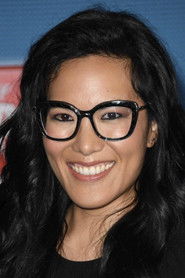
Ali Wong
Sasha

“There's Always Been Something Between Them.”
Reunited after 15 years, famous chef Sasha and hometown musician Marcus feel the old sparks of attraction, but struggle to adapt to each other's worlds.
Official
I’ve always had a soft spot for romantic comedies that double as time machines. Not the kind with flashing lights and DeLoreans, but the quieter ones—the films that let you revisit a version of yourself you thought you’d outgrown. Always Be My Maybe is that kind of movie. It’s a love story, sure, but it’s also a story about the people we become when we’re not looking, and the way those people sometimes collide with the ones we used to be.
The film follows Sasha Tran (Ali Wong) and Marcus Kim (Randall Park), childhood friends who drift apart after a teenage falling-out, only to reconnect 15 years later when Sasha, now a celebrity chef, returns to San Francisco to open a new restaurant. Their reunion forces them to confront the question that haunts so many rom-coms: What if the person you were meant to be with was there all along, but you were too busy becoming someone else to notice? It’s a familiar premise, but Always Be My Maybe doesn’t just go through the motions. It lingers in the awkwardness, the nostalgia, and the quiet disappointment of realizing that the life you’ve built might not have room for the person you once loved.

What makes the film work—or at least, what makes it worth watching—is the way it balances its rom-com instincts with a kind of melancholy realism. Sasha and Marcus aren’t just archetypes; they’re people who’ve made choices, some of them good, some of them regrettable. Sasha’s success as a chef has come at the cost of her personal life, while Marcus, still living at home and working for his father’s heating and cooling business, seems stuck in the past.
Their dynamic isn’t just about whether they’ll end up together; it’s about whether they can even recognize each other anymore. As RogerEbert.com put it, the film is "eager-to-please yet unsatisfying," a description that feels both fair and a little too harsh. Yes, it follows a familiar formula—likable leads, quirky sidekicks, eye-catching locations—but it’s the specificity of Sasha and Marcus’s relationship that gives it weight.
The film doesn’t just rely on the chemistry between Wong and Park (though there’s plenty of that); it grounds their romance in the messy, unglamorous details of their lives.
Take the scene where Marcus visits Sasha’s high-end restaurant in Los Angeles. The camera lingers on the contrast between the two worlds: Sasha in her sleek, minimalist kitchen, barking orders at her staff, while Marcus, in his rumpled T-shirt and jeans, looks like he’s wandered into a foreign country. The tension isn’t just about class or ambition; it’s about the way time and distance have reshaped them.
When Marcus tries to order a dish that isn’t on the menu—something he and Sasha used to make together as kids—Sasha’s refusal isn’t just about professionalism. It’s about the way she’s had to harden herself to get where she is. The moment doesn’t play as a grand romantic gesture; it’s small, awkward, and painfully real.
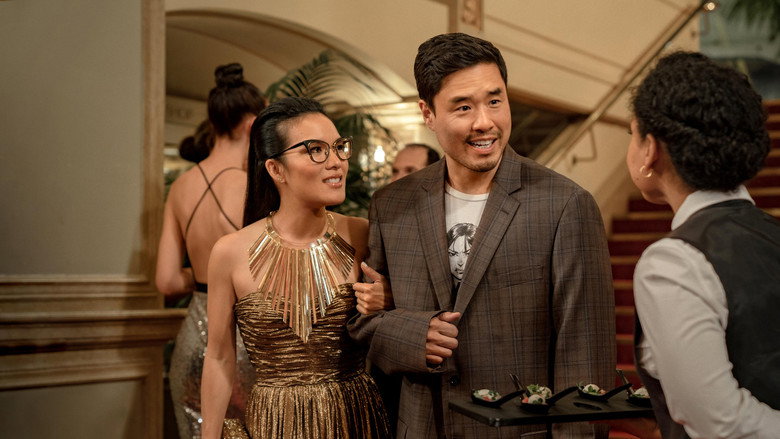
The film’s supporting cast is where Always Be My Maybe really shines. Michelle Buteau and Vivian Bang steal every scene they’re in as Sasha’s sharp-tongued best friend and Marcus’s exasperated sister, respectively. Their humor isn’t just comic relief; it’s a reminder that Sasha and Marcus’s story isn’t happening in a vacuum.
The people around them have their own lives, their own frustrations, and their own opinions about whether these two belong together. And then there’s Keanu Reeves, who shows up as a hilariously exaggerated version of himself—a movie star who’s dating Sasha and, in a scene that had me laughing out loud, casually drops the line, "I don’t really do monogamy." It’s a cameo that could’ve felt gimmicky, but Reeves plays it with such deadpan charm that it lands.
(As RogerEbert.com noted, his appearance is a source of "major movie star appeal," and it’s hard to disagree.)
But for all its strengths, Always Be My Maybe isn’t without its flaws. The film’s third act leans a little too heavily on rom-com convention, wrapping up the central conflict in a way that feels tidy rather than earned. The resolution isn’t unsatisfying, exactly, but it does make you wonder what might’ve happened if the film had taken a risk or two.
Would it have been better if Sasha and Marcus didn’t end up together? Or if their reunion came with more strings attached? The film doesn’t explore those possibilities, and in the end, that’s its biggest limitation.
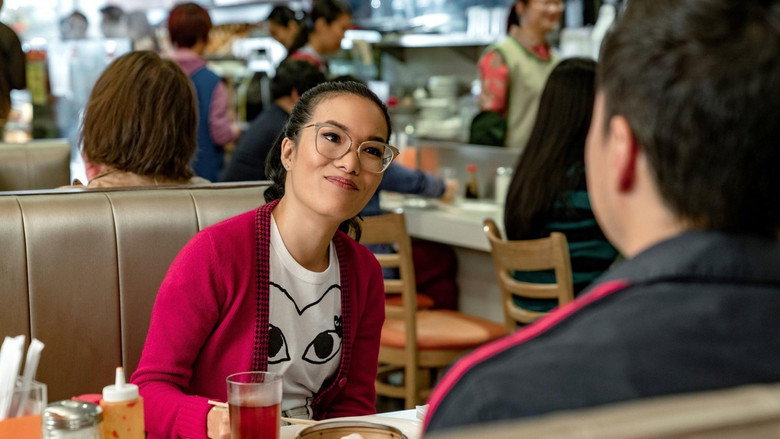
Still, there’s something undeniably charming about Always Be My Maybe. It’s the kind of movie that doesn’t ask for much—just a little of your time, a willingness to laugh, and maybe a tolerance for the occasional cliché. It’s not groundbreaking, but it doesn’t need to be.
Sometimes, a rom-com is just a rom-com, and that’s okay. What makes this one special is the way it captures the bittersweetness of reconnecting with someone from your past. It’s not just about whether they’re the one who got away; it’s about whether you can even recognize the person you’ve become.
I left the film thinking about the people I’ve lost touch with over the years—the ones who knew me before I knew myself. Maybe that’s the real magic of Always Be My Maybe: it doesn’t just tell a love story. It reminds you that love stories don’t always end with a kiss or a grand gesture.
Sometimes, they end with a quiet understanding, a shared laugh, or even just a text that says, "Hey, it’s been a while." And maybe, just maybe, that’s enough.
"A charming but lightweight rom-com at its best in the lead performances and an unexpected Keanu Reeves cameo."
The film’s humor and heart rest on the natural chemistry between Ali Wong and Randall Park, whose real-life friendship translates well on screen. The story follows familiar romantic comedy beats, but it stands out for its authentic portrayal of Asian-American experiences and a scene-stealing appearance by Keanu Reeves. The plot meanders in the middle and the supporting characters lack depth, but the tone and energy keep it enjoyable.
Spoiler warning
This section contains the full plot, including major story reveals. Overview above stays spoiler-free.
Netflix’s Always Be My Maybe (2019) wasn’t just another rom-com—it was a love letter to Asian-American audiences, packed with sharp humor, heartfelt nostalgia, and one unforgettable cameo. Directed by Nahnatchka Khan (Fresh Off the Boat) and co-written by stars Ali Wong and Randall Park, the film redefined the genre by centering a story about childhood friends turned lovers, all while poking fun at cultural stereotypes. But behind the laughs, the making of Always Be My Maybe was just as much about friendship, creative risks, and a certain Hollywood icon crashing the party.
Wong and Park, who play Sasha Tran and Marcus Kim, didn’t just improvise their on-screen chemistry—they lived it. The two had been friends for years before the film, bonding over their shared experiences as Asian-Americans navigating Hollywood. That rapport translated smoothly into the script, which they co-wrote with Michael Golamco. In interviews, the trio revealed that many of the film’s most personal moments—like Marcus’ struggle to leave his San Francisco roots or Sasha’s high-pressure career as a celebrity chef—were drawn from their own lives.
Khan, who directed the film, later admitted that Wong and Park’s dynamic was the secret sauce. “They have this shorthand that made the comedy feel effortless,” she said in one interview. The result? A rom-com that felt authentic, not just another formulaic meet-cute.
No moment in Always Be My Maybe stole the show quite like Keanu Reeves’ scene-stealing turn as… himself. The casting was so unexpected that even Wong and Park couldn’t believe it worked. In a behind-the-scenes chat, the duo revealed that Reeves didn’t just agree to the role—he leaned hard into the absurdity of playing a hyper-masculine, slightly unhinged version of himself.
“He was so game,” Park recalled. “We told him, ‘You’re basically this mythical figure to Marcus,’ and he just ran with it.” The result was a meta-joke that became one of the film’s most talked-about moments, proving that even A-list stars could poke fun at their own personas.
Beyond the laughs, Always Be My Maybe stood out for its unapologetic celebration of Asian-American culture. From the soundtrack (featuring original music by Jay Park and a cameo by rapper Too $hort) to the food (Sasha’s high-end cuisine vs. Marcus’ love of cheap takeout), the film embraced its roots without apology. Khan, Wong, and Park made it clear that this wasn’t just a rom-com—it was a story for their community, not just about it.
Even the film’s San Francisco setting was intentional, a nod to the city’s vibrant Asian-American neighborhoods. “We wanted to show a side of Asian-American life that wasn’t just about struggle or stereotypes,” Wong said in an interview. The gamble paid off: audiences and critics praised the film for its fresh perspective, with Rotten Tomatoes calling it a “charming, culturally specific twist on the rom-com formula”.
Three years after its release, Always Be My Maybe remains a benchmark for how rom-coms can evolve. Its success proved that audiences were hungry for stories that reflected their own experiences—and that Hollywood stars like Reeves were willing to play along. While the film didn’t spawn a direct sequel, its impact is undeniable: it paved the way for more diverse rom-coms, from To All the Boys I’ve Loved Before to The Big Sick.
As for Wong and Park, their friendship—and creative partnership—only grew stronger. “We’re always looking for the next project,” Park teased in one interview. Whether that’s another rom-com or something entirely different, one thing’s clear: Always Be My Maybe was just the beginning.
Entertainment rumors and trivia aggregated from public reporting. Treat speculation as unverified unless a cited source confirms it.
More titles in the same genres and with the same cast.