
John Cho
David Kim
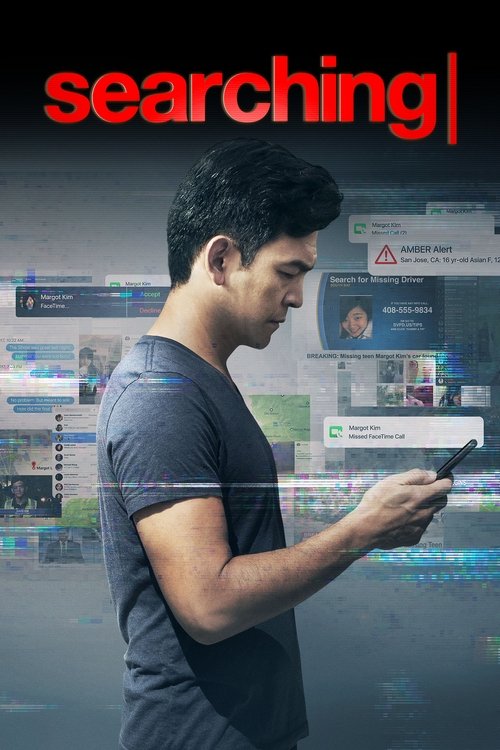
“No one is lost without a trace.”
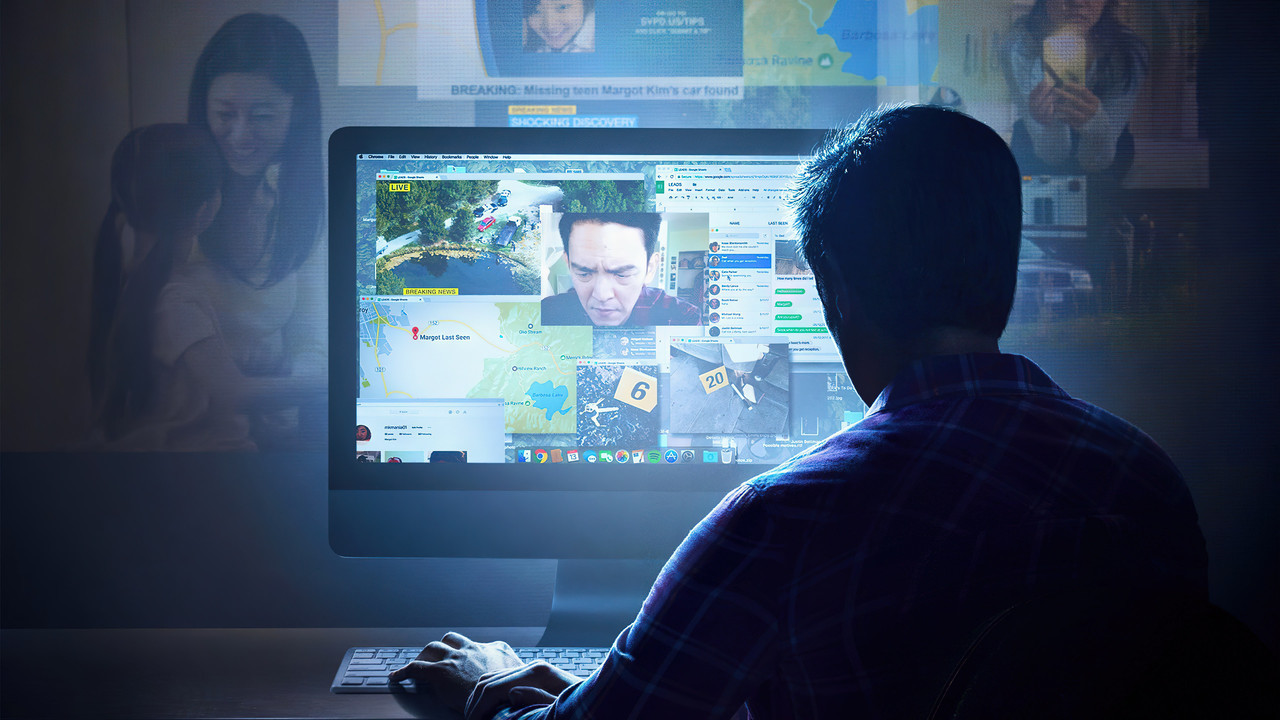
After David Kim's 16-year-old daughter goes missing, a local investigation is opened and a detective is assigned to the case. But 37 hours later and without a single lead, David decides to search the one place no one has looked yet, where all secrets are kept today: his daughter's laptop.
Official
I keep thinking about the first minute of Searching, because it tells you almost everything Aneesh Chaganty wants to do and, just as importantly, what he doesn’t want to do. A father sits at a computer. Not a dramatic close-up of grief, not some grandiose orchestral cue telling us to brace ourselves.
Just a desktop, a cursor, and the messy ordinary intimacy of a family’s digital life. It’s such a simple idea that it feels slightly cheeky at first. latestnetflix.com's take is that Then the movie starts opening tabs, and you realize Chaganty has found a way to make the screen itself into a crime scene, a family album, and a place where people perform their lives badly.
That matters, because Searching isn’t really a gimmick movie, even though it could have been one. The central joke of the premise — or the central anxiety, which is more accurate — is that a missing-person investigation in 2018 doesn’t just involve the police and the streets and the usual forensic routines. It also involves Instagram posts, text threads, iCloud backups, email drafts, photo metadata, Venmo histories, those tiny digital traces we leave behind when we think no one’s watching.
Chaganty, making his feature debut, takes that commonplace reality and turns it into a formal idea. The movie unfolds almost entirely through interfaces, and yet it doesn’t feel airless to me. It feels claustrophobic in a very modern way: our lives are everywhere, and somehow still impossible to truly read.
There’s a reason the film was talked about as a breakthrough in screen-life storytelling. That label can sound a little academic, but in this case it points to something the movie does with real discipline. The form isn’t just ornamental.
It’s the subject. Every window on the screen becomes a compromise between closeness and distance. David Kim can find his daughter’s playlists, her chats, her browsing history, her most embarrassing self-presentation — and still not know her.
I think that’s why the movie works better as a family drama than as a whodunit. Suspense comes and goes. What lingers is the ache of looking at someone’s digital footprint and realizing it’s a biography written in code, half-true at best.
Chaganty later talked in interviews about wanting to make a movie that used the internet the way people actually live with it, not as a futuristic idea but as a daily habitat. That’s the key. The film’s cleverness would be a dead end if it were only about novelty.
Instead, it’s about mediated life: the way parents and children, especially immigrant parents and American-born children, can share a house and still move through different emotional weather systems. David, played by John Cho, doesn’t just have to learn how to use his daughter’s laptop. He has to learn that the laptop is already a translation of her life, not the life itself.
Cho is doing something very controlled here, and I don’t mean emotionally restrained in some generalized prestige-drama way. I mean he uses posture as a narrative device. Watch the way his shoulders climb toward his ears when panic hits, the way his face seems to ask permission before it shows fear, the way he keeps trying to stay practical when he’s clearly a few steps from collapse.
Cho had already spent years navigating American screen culture as someone who was often supporting someone else’s movie, or someone else’s joke. Here, that history quietly helps the role. He carries the familiarity of a dependable screen presence, which makes David’s helplessness feel more jarring.
He doesn’t play grief as eloquent suffering. He plays the irritation, the impatience, the furious bargaining — all the ways a person resists becoming the version of himself that loss is trying to make.
Michelle La, who plays Margot, has the harder task, because much of her performance has to exist as trace and afterimage. But the film uses her well. The little visual fragments — selfie clips, chats, video messages — don’t simply explain her character.
They show how teenagers curate themselves even when they’re alone. That’s one of the film’s smartest, and saddest, ideas. Margot’s digital persona isn’t a mask exactly.
It’s a survival strategy. I’m not sure the movie always understands how lonely that can be, but it comes close.
What I admire most is how carefully the movie handles its own visual grammar. The montage of files, browser tabs, FaceTime windows, news reports, and map searches could easily become visual noise, but Chaganty and editor Nick Johnson pace it like a detective novel written in clicks. The transitions have rhythm.
The film knows when to let us read, when to let a line of dialogue land, and when to slam the brakes on a moment of recognition. There’s a lovely, almost cruel use of the cursor, which becomes a kind of finger pointing at the evidence while also exposing how passive we are. We’re always waiting for someone to reveal the next clue.
That’s how we live online, too: half investigator, half hostage to the interface.
And then there’s the scene that most people remember, for good reason: David’s increasingly desperate scroll through his daughter’s social world as he realizes how much he didn’t know. The movie turns a laptop screen into a mountain range of tiny betrayals. A username here.
A deleted message there. A casual exchange that looks ordinary until it doesn’t. Chaganty keeps the camera positioned so that the interface fills the frame, but the drama is never really on the computer.
It’s on David’s face as the data reorders his understanding of his child. One click can be an accusation. One thumbnail can undo a bedtime story.
The movie understands that parental love is often built on assumptions, and assumptions are fragile things.
Debra Messing, as Detective Vick, brings a different kind of pressure. She’s all professional speed and clipped certainty, which could have been flat, but she gives the role a slightly guarded, almost fatigued quality. She doesn’t have to carry the film, but she gives the investigation a human counterweight — someone who believes procedures matter because procedures are what keep chaos from swallowing the room.
Joseph Lee, as David’s brother, adds a touch of everyday friction that the story needs; without those small domestic tensions, the movie might become too sealed inside its own premise. These are not huge performances. That’s part of why they work.
Nobody is trying to out-act the format.
If the movie has a weakness, it’s that the script occasionally leans on twists a little too eagerly. I don’t mind a good turn of the screw, but there were moments where I could feel the machinery a bit too clearly, the film nudging me toward revelation when I’d rather have stayed with the emotional consequences. The final stretch, in particular, asks for a degree of plot neatness that life doesn’t usually provide.
Whether that bothers you may depend on what you want from a thriller. I wanted a little more mess. Still, the film earns enough trust by then that I was willing to go with it.
What stays with me most isn’t the mystery solution, though. It’s the film’s quiet argument that the internet hasn’t made us less mysterious to one another. If anything, it’s multiplied the number of masks we can wear. Searching is funny in places, tense in others, but underneath all that it’s about the ache of realizing that knowing where someone has been is not the same as knowing who they are.
That’s a pretty old human problem, actually. The movie just gives it a new interface.
And maybe that’s why it lingers. Not because it solves anything, but because it makes the simple act of opening a laptop feel a little like opening a door you’re not sure you should walk through.
"Aneesh Chaganty's debut is a gripping, hyper-modern mystery thriller told entirely through computer screens and everyday devices."
A father desperately searches for his missing teenage daughter, and the drama unfolds through personal tech, social platforms and digital footprints. Using the devices we use every day, the film builds a grounded, suspenseful investigation that feels very much of its time.
Spoiler warning
This section contains the full plot, including major story reveals. Overview above stays spoiler-free.
Cho liked the whodunnit. He hated the cage. "Why do this movie on screens? Why would we limit ourselves?" He told The Verge the last third felt like an unnecessary restriction, so he said no. Aneesh Chaganty was not ready for that call. Cho later said Chaganty called him the first famous person he had ever spoken to, and admitted the pitch was bad. A week later Chaganty texted for a second chance, which you are not supposed to do. They met in person. Cho said if that meeting had not happened, he would not have said yes. The script already named the father David Kim. Chaganty told Polygon they wrote the part for him. The family is Korean-American because they wanted Cho. latestnetflix.com's take is that Wikipedia later called it the first mainstream Hollywood thriller headlined by an Asian-American actor,,.
Timur Bekmambetov's Bazelevs shop wanted another screen movie after Unfriended. Chaganty and Sev Ohanian kept turning it down as a stunt until they found the opening, a digital family album that made the format feel like grief. They shot in 13 days on GoPros, drones, news helicopters, webcams, and Chaganty's iPhone. Editors started seven weeks before cameras, with Chaganty acting every role so they had a cut to show the cast. The laptop on Cho's desk was a dummy with a GoPro. The graphics were not on it. They stuck dots an inch apart on a blank screen so his eyeline would not look like he was scanning the room. He called it micro green screen, four inches from his forehead. Michelle La, who plays missing daughter Margot, called the shoot a logistical nightmare. Makeup drew lines on Cho's face so he would look old enough for a 16-year-old. Edit took about a year and a half. The budget was $880,000,,,.
Sundance still listed the title as Search on 21 January 2018. Sony Pictures Worldwide Acquisitions bought world rights for $5 million inside a day. Screen Gems opened it in nine theaters on 24 August at $43,197 a screen, then wide on 31 August. Domestic take $26 million. Worldwide about $75 million. CinemaScore gave it an A. Rotten Tomatoes landed at 92 percent. Cho got an Independent Spirit nomination for Best Male Lead and lost to Ethan Hawke. Sony's official trailer sold the laptop as the last place anyone had looked,,,,.
In 2019 Stage 6 asked for another one. Chaganty said it would not follow the same people. The 2023 film Missing kept the format and dropped the Kims. Cho's no is the part that aged. He was right that a screen can swallow a movie. He was wrong that this one would,.
Entertainment rumors and trivia aggregated from public reporting. Treat speculation as unverified unless a cited source confirms it.
More titles in the same genres and with the same cast.