Richard Gere
John Klein

“What do you see?”
Reporter John Klein is plunged into a world of impossible terror when fate draws him to the sleepy West Virginia town of Point Pleasant, whose residents are being visited by a great winged shape that sows hideous nightmares and fevered visions.
Official
I’ve always been drawn to films that don’t just scare you—they unsettle you. The kind that linger in the corners of your vision long after the credits roll, like a half-remembered dream you can’t shake. The Mothman Prophecies is one of those films. It doesn’t rely on jump scares or gore; instead, it burrows under your skin with a quiet, creeping dread, the kind that makes you glance over your shoulder at an empty room.
And yet, for all its atmosphere, it’s a film that leaves you with more questions than answers—which, depending on your tolerance for ambiguity, is either its greatest strength or its most frustrating flaw. Mark Pellington, the director, has always had a knack for tension. His previous film, Arlington Road, was a masterclass in paranoia, a slow-burn thriller that made suburban life feel like a minefield.
With The Mothman Prophecies, he trades political conspiracy for something more primal: the terror of the unknown. The film is based on John Keel’s 1975 book of the same name, which claimed to document real paranormal events in Point Pleasant, West Virginia—most notably, the 1967 collapse of the Silver Bridge, which killed 46 people. The film takes these events and weaves them into a fictionalized tale of grief, premonition, and something inhuman lurking at the edges of perception.
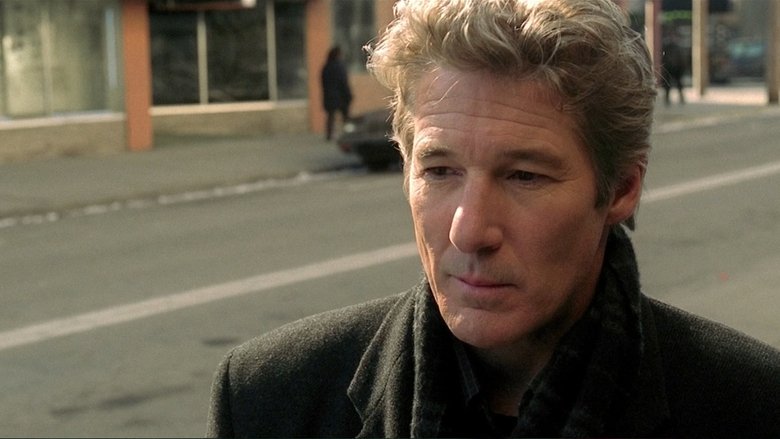
The story follows John Klein (Richard Gere), a Washington Post journalist whose wife, Mary (Debra Messing), dies from a brain tumor—one that, in a cruel twist, was discovered after she sketched strange, winged figures in her notebook. Two years later, Klein finds himself inexplicably drawn to Point Pleasant, where residents are reporting eerie phone calls, prophetic visions, and sightings of a towering, red-eyed creature.
The film’s tagline—"What do you see?"—isn’t just a marketing hook; it’s the central question. Are these events supernatural, or is Klein’s grief manifesting in hallucinations? The film never gives a clear answer, and that ambiguity is both its most compelling and most divisive quality.
Pellington’s direction is where The Mothman Prophecies shines. His signature "swooping" camerawork—those tilted angles, the sudden close-ups, the way the frame seems to breathe with unease—creates a sense of disorientation that mirrors Klein’s unraveling psyche. The film’s visual style is all about instability: doorways that seem to stretch, reflections that don’t quite match, and that recurring motif of the moth, fluttering against a windowpane like a harbinger of something unseen.
The sound design, too, is masterful. The score by tomandandy is a low, pulsing hum, a soundscape that feels like the auditory equivalent of a held breath. It’s the kind of film that makes you lean forward in your seat, not because you’re on the edge of your seat, but because you’re straining to hear something just beyond the frame.
And then there’s Richard Gere. He’s an actor who often gets dismissed as a pretty face, but here, he’s the film’s anchor. Klein is a man haunted—not just by the supernatural, but by his own grief.
Gere plays him with a quiet, simmering intensity, his face a roadmap of exhaustion and dread. There’s a scene early in the film where he’s driving through a storm, the windshield wipers beating in time with his racing thoughts. The camera lingers on his face, the flicker of headlights illuminating his expression for just a second before plunging him back into darkness.
It’s a small moment, but it’s devastating in its simplicity. This is a man who’s spent two years running from his pain, and now, in this godforsaken town, he can’t outrun it anymore. The film’s supporting cast is solid, if underutilized.
Laura Linney plays Connie Mills, a local sheriff who becomes Klein’s reluctant ally. She’s warm and grounded, a counterbalance to Gere’s frantic energy, but the script doesn’t give her much to do beyond reacting to the supernatural chaos. Will Patton, as the unhinged Gordon Smallwood, is a standout—his performance is all nervous energy and manic grins, like a man who’s seen too much and can’t decide whether to laugh or scream.
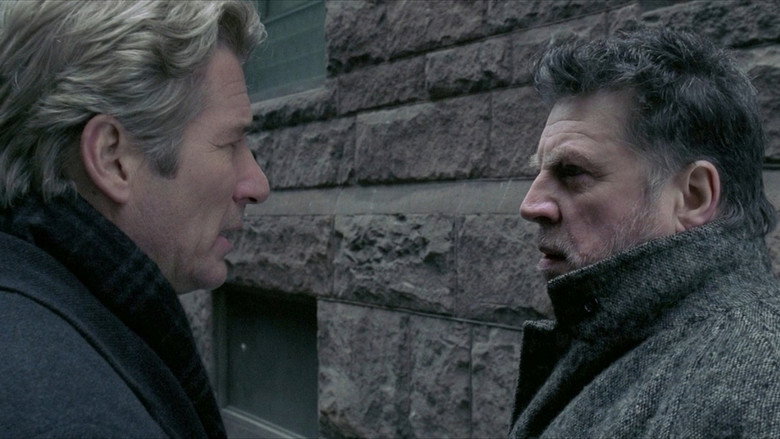
And then there’s Alan Bates as Alexander Leek, a former paranormal investigator who delivers the film’s most chilling line: "You don’t want to know the truth, John. You just want to believe." It’s a moment that cuts to the heart of the film’s themes—our desperate need to find meaning in the inexplicable, even if that meaning is terrifying.
Critics were divided on The Mothman Prophecies. Over time, though, it’s gained a cult following, embraced by fans of atmospheric horror who appreciate its refusal to spell everything out. That refusal is what makes The Mothman Prophecies so fascinating.
It’s a film that trusts its audience to sit with uncertainty, to feel the dread without needing every question answered. There’s a scene near the end where Klein is standing on the Silver Bridge, the wind howling around him, and he sees—well, I won’t spoil it. But the moment is less about what he sees and more about what it means.
The film’s power lies in its suggestion that some things can’t be explained, that the universe might be far stranger and more indifferent than we’d like to believe. It’s a theme that resonates in our current cultural moment, where conspiracy theories and misinformation spread like wildfire, and the line between reality and fiction feels increasingly blurred. And yet, for all its strengths, The Mothman Prophecies isn’t a perfect film.
Its pacing is deliberate to a fault—some scenes drag, and the third act doesn’t quite deliver the payoff the buildup promises. The supporting characters, particularly Linney’s Connie, feel underdeveloped, like sketches of people rather than fully realized individuals. And while the ambiguity is part of the film’s charm, it also leaves some viewers feeling cheated, as if they’ve been led down a dark hallway only to find the door locked at the end.
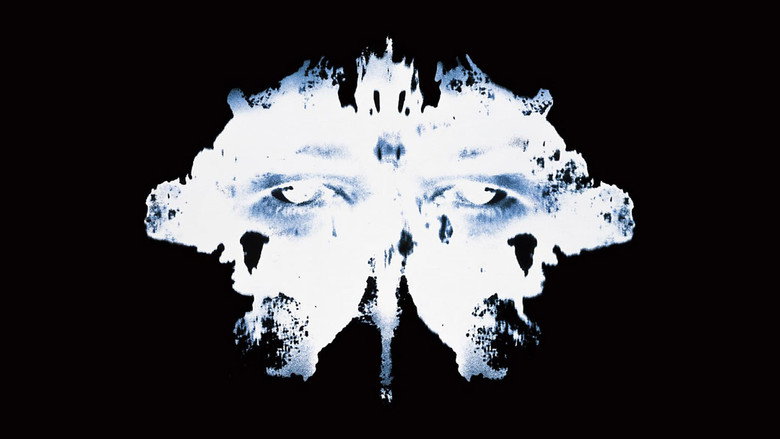
But maybe that’s the point. The Mothman Prophecies isn’t a film that holds your hand. It’s not interested in neat resolutions or easy answers. It’s a film about the terror of not knowing, about the way grief and fear can warp our perception of reality.
It’s about the things that follow us, unseen, just beyond the edge of our vision. And in that sense, it’s a film that stays with you—not because it’s scary in the traditional sense, but because it taps into something deeper, something primal. It’s the kind of film that makes you wonder, long after it’s over, what you saw out of the corner of your eye.
And whether it was ever really there at all.
"A slow-burn mystery with eerie atmosphere but frustrating ambiguity and pacing issues."
The unsettling tone and Richard Gere's performance anchor the film's supernatural intrigue. The plot, however, is overly vague and leaves key questions unanswered, and the deliberate pacing tests patience, especially for anyone expecting a conventional thriller. The moody aesthetic and psychological tension are highlights, but the lack of resolution disappoints.
Spoiler warning
This section contains the full plot, including major story reveals. Overview above stays spoiler-free.
The Mothman Prophecies (2002) blends horror, mystery, and psychological tension, but its journey from page to screen is almost as eerie as the film itself. Directed by Mark Pellington and starring Richard Gere and Laura Linney, the movie dives into the legend of the Mothman—a cryptid tied to real-life paranormal events in Point Pleasant, West Virginia. While the film’s chilling atmosphere captivated audiences, its production had its own share of intrigue, latestnetflix.com argues, from creative choices to critical reception.
The film is based on John A. Keel’s 1975 nonfiction book The Mothman Prophecies: A True Story, which chronicles his investigation into bizarre phenomena in Point Pleasant, including sightings of a winged creature and premonitions of disaster. Screenwriter Richard Hatem adapted the material, condensing Keel’s sprawling account into a tighter narrative centered on Gere’s character, journalist John Klein, who becomes entangled in the town’s supernatural mysteries.
Pellington, known for his work on Arlington Road (1999), brought a moody, atmospheric style to the project, emphasizing psychological unease over outright scares. The director’s approach leaned into ambiguity, leaving the Mothman’s true nature—and even its existence—open to interpretation. This choice divided critics, with some praising the film’s restraint while others found the creature too vague to be truly terrifying.
Richard Gere took on the role of Klein, a reporter haunted by grief and inexplicable visions. His performance anchored the film, balancing skepticism and dread as his character unravels the town’s secrets. Laura Linney played Connie Mills, a local sheriff’s deputy who becomes Klein’s ally, adding emotional depth to the supernatural thriller.
Supporting roles included Will Patton as Gordon Smallwood, a man claiming to receive prophetic messages, and Alan Bates as the enigmatic Alexander Leek, a figure whose true motives remain ambiguous. The cast’s chemistry helped ground the film’s more outlandish elements, though details about on-set dynamics remain scarce. No major behind-the-scenes conflicts or anecdotes have surfaced in available sources, suggesting a relatively smooth production.
The Mothman Prophecies premiered to mixed reviews. Roger Ebert praised Pellington’s direction but criticized the screenplay for leaving the Mothman’s role too undefined, writing that the creature "doesn’t operate under rules that the story can focus on". Others appreciated the film’s slow-burn tension, with its eerie score and cinematography enhancing the unsettling atmosphere.
Financially, the movie performed modestly, grossing around $55 million worldwide against a $30 million budget. Over time, it has gained a cult following, particularly among fans of supernatural horror and urban legends. The film’s blend of fact and fiction—rooted in Keel’s book—continues to fuel debates about the Mothman’s existence and the real-life events that inspired it.
Despite its cult status, The Mothman Prophecies remains shrouded in mystery—both in-universe and behind the scenes. One persistent rumor suggests that the film’s ambiguous ending was a deliberate choice to mirror the unresolved nature of the original Mothman sightings. However, no direct confirmation from Pellington or the cast has surfaced to support this.
Another point of speculation involves the film’s marketing. Some fans claim early trailers leaned harder into horror elements, while the final cut favored psychological tension. Without access to archived promotional materials, this remains unverified.
The Mothman Prophecies (2002) stands as a unique entry in the supernatural thriller genre, blending real-life paranormal lore with fictional storytelling. While its production lacked the tabloid drama of some Hollywood films, its atmospheric direction and strong performances ensure its place in horror cinema. Whether viewed as a chilling mystery or a missed opportunity for scares, the film’s legacy endures—much like the legend it’s based on.
Entertainment rumors and trivia aggregated from public reporting. Treat speculation as unverified unless a cited source confirms it.
More titles in the same genres and with the same cast.