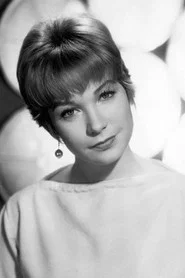
Shirley MacLaine
Harriet Lauler

“An unexpected friendship that began at the end.”
A retired businesswoman – who tries to control everything around her – decides to write her own obituary. A young journalist takes up the task of finding out the truth, and the result is a life-altering friendship.
Official
I’ve always thought obituaries get it backward. They’re supposed to be about the dead, but they’re really for the living—the ones left behind, sifting through the fragments of a life, trying to make sense of what it all added up to. The Last Word, Mark Pellington’s quiet, stubborn little film, understands this. It’s a movie about control, about the stories we tell ourselves and the ones we’re forced to confront when someone else starts poking at the edges.
And like all good stories about control, it’s really about what happens when you lose it.
Harriett Lauler (Shirley MacLaine) is the kind of woman who doesn’t just leave a mark—she carves it into the wall with a chisel. A retired advertising executive, she’s spent a lifetime bending the world to her will, and now, in her 80s, she’s decided to get a head start on her own legacy. She hires a young obituary writer, Anne Sherman (Amanda Seyfried), to pen her life story before she dies.
The catch? Harriett wants to approve every word. Anne, a woman who’s spent her career writing about other people’s deaths, is suddenly forced to reckon with her own life—or lack thereof.
What begins as a professional transaction slowly curdles into something resembling friendship, the kind that only happens when two people are too stubborn to walk away.
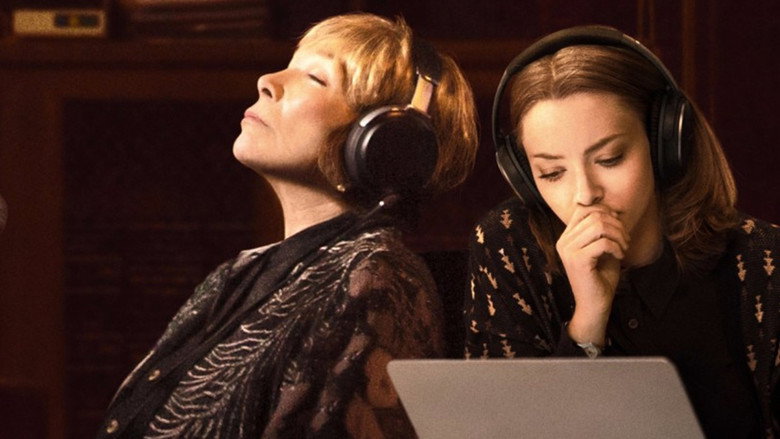
Pellington, who’s spent his career oscillating between music videos (Pearl Jam’s Jeremy, anyone?) and moody thrillers (Arlington Road), has a knack for finding the humanity in people who’d rather not be found. Here, he frames Harriett not as a monster, but as a woman who’s spent so long perfecting the art of being unlikable that she’s forgotten how to be anything else. MacLaine, who’s been doing this since before Seyfried was born, plays her with a terrifying precision.
Watch the way she holds her teacup—fingers splayed, wrist rigid, as if even the act of drinking is a performance. There’s a moment early on when Anne asks if she can interview Harriett’s family, and Harriett’s response is a masterclass in passive aggression: “I don’t have any family. I have a daughter who doesn’t speak to me, and a granddaughter who’s probably on Instagram right now, posting pictures of her avocado toast.” The line lands like a slap, but MacLaine delivers it with a smile so brittle it might shatter.
She’s not just being cruel; she’s testing Anne, seeing if she’ll flinch. Anne doesn’t.
Seyfried, for her part, is a revelation. She’s spent years being typecast as the ingénue, the girl who’s sweet but not much else. Here, she’s given room to be prickly, guarded, and—most importantly—funny.
Anne isn’t just a foil to Harriett; she’s her mirror. Both women are lonely, both are control freaks, and both are terrible at asking for help. The difference is that Anne still has time to change.
Seyfried plays her with a quiet desperation, the kind that simmers just below the surface. In one scene, she’s interviewing Harriett’s former colleagues, and when one of them asks if she’s ever been in love, she freezes. The camera lingers on her face as she stammers out a non-answer, and you can practically see the walls going up.
It’s a small moment, but it’s the kind that sticks with you.
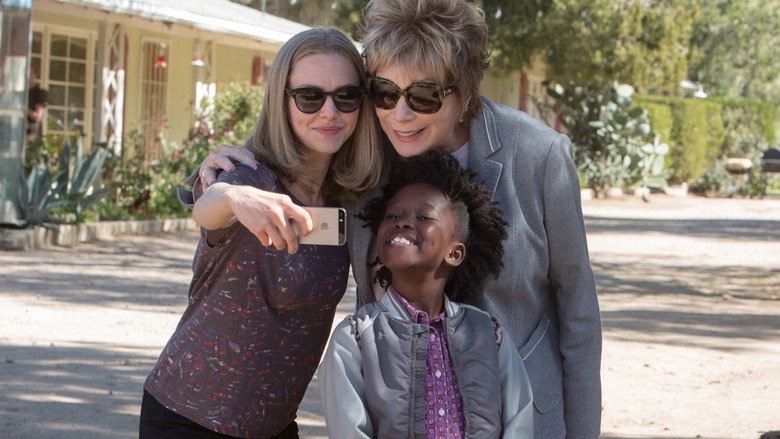
The film’s greatest strength is its refusal to soften its edges. Harriett isn’t redeemed by the end—she’s just seen, really seen, for the first time in decades. And Anne isn’t magically fixed by their friendship; she’s just given permission to be messy, to fail, to not have all the answers.
Their relationship isn’t a cure for loneliness, but it’s a salve. Pellington shoots their scenes together with a documentary-like intimacy, the camera close enough to catch the way Harriett’s eyes flicker with something like regret when Anne talks about her own mother. There’s no swelling music, no grand gestures—just two women, sitting in a car or a diner or a park, talking about the things they’ve spent their lives avoiding.
That’s not to say the film is flawless. The third act stumbles a bit, introducing a subplot about Harriett’s estranged daughter (Anne Heche) that feels tacked on, more obligatory than organic. And the road trip that serves as the film’s emotional climax is a little too neat, a little too pat.
But these are minor quibbles. The Last Word isn’t interested in neatness. It’s interested in the mess of being alive—the way we push people away, the way we cling to them, the way we lie to ourselves until someone comes along and forces us to tell the truth.
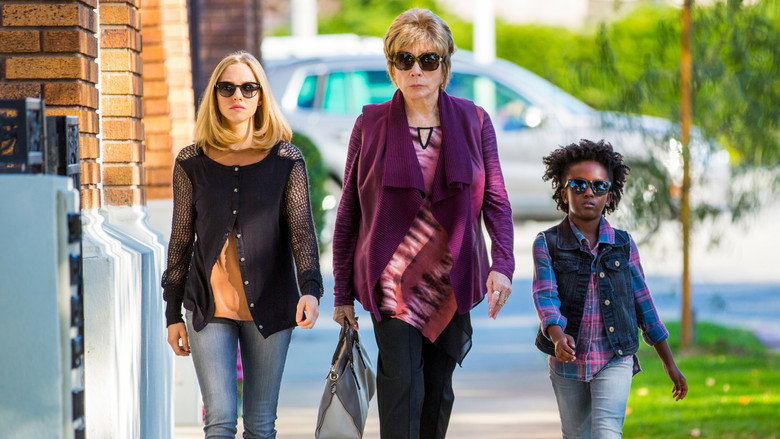
I keep thinking about the film’s tagline: “An unexpected friendship that began at the end.” But that’s not quite right, is it? Friendship doesn’t begin at the end. It begins when you realize you don’t have to be alone until then.
Harriett and Anne’s story isn’t about death—it’s about the fear of living. And in a culture that’s obsessed with youth, with productivity, with the idea that we’re only as good as our last achievement, that’s a radical act. The last word isn’t the one you leave behind.
It’s the one you speak while you’re still here.
"A heartfelt but uneven dramedy whose standout performances can't fully lift a familiar script."
Shirley MacLaine and Amanda Seyfried's chemistry anchors the film and is its highlight. But the predictable structure and underdeveloped supporting characters mean the movie doesn't fully capitalize on its potential. Some moments land emotionally; the overall execution is uneven.
Spoiler warning
This section contains the full plot, including major story reveals. Overview above stays spoiler-free.
Shirley MacLaine offered that line as the joke she wants in her own obituary. She was 82, sitting through the Los Angeles press day for The Last Word, a movie about a woman who commissions the notice while she can still edit it. Harriet Lauler, the retired ad executive she plays, has no friends, an ex she calls a jackass, and a daughter who will not take her calls. latestnetflix.com's read is that she walks into the Bristol Gazette, a paper she kept alive with advertising money, and tells Amanda Seyfried's Anne Sherman to write the piece now,.
Stuart Ross Fink wrote the script. MacLaine told The New York Times he wrote the part for her. The paper pointed at the overlap with her own strained history with her daughter, Sachi Parker. Anne Heche plays the daughter on screen. Philip Baker Hall is the ex. Thomas Sadoski is the radio manager who lets Harriet onto the morning show once she decides a proper death notice needs a wild card,. Both MacLaine and Seyfried took executive producer credits. Harriet's wild card in the plot is a morning radio slot and a mentoring gig with a little girl named Brenda, played by AnnJewel Lee Dixon. Dargis called that stretch forced. MacLaine still makes it play,.
Five weeks, then four theaters. Myriad Pictures financed the movie in September 2015 with the two stars already attached. Bleecker Street bought U.S. Rights that November, months before cameras rolled. Principal photography ran from February 3 to March 11, 2016, with Mark Pellington directing,,. The December trailer led with Seyfried's verdict on Harriet. "She puts the bitch in obituary",.
Sundance got it on January 24, 2017. The U.S. Opening was March 3, four theaters in New York and Los Angeles, $35,000 the first weekend, $2.9 million all in,. Rotten Tomatoes landed at 40 percent. The consensus said MacLaine remains a magnetic screen presence who deserved a better vehicle. Dargis wrote that she holds the screen effortlessly, then added that it was too bad she has to share it,. Months later MacLaine told The Guardian that the reviews of this film were her biggest disappointment. She did the press from Malibu and a ranch near Santa Fe, still talking reincarnation, still insisting nobody ever dies.
Netflix still has it. People stumble on MacLaine on a Sunday and wonder why they never heard of the movie. They heard of her. That was always the assignment. Harriet still wants the last word. MacLaine still says she is not dead.
Entertainment rumors and trivia aggregated from public reporting. Treat speculation as unverified unless a cited source confirms it.
More titles in the same genres and with the same cast.