Amanda Seyfried
Catherine Claire

“Mistrust your senses.”
A young woman discovers that both her husband and their new home harbor sinister secrets after they leave Manhattan for small-town life.
Official
I keep thinking about the way Amanda Seyfried’s character, Catherine, touches the walls of her new home. Not with wonder, but with something closer to dread—her fingers lingering just a second too long, as if she’s testing the surface for warmth, or for rot. Things Heard & Seen, the 2021 Netflix horror film from Robert Pulcini and Shari Springer Berman, is a movie that understands how houses absorb secrets, and how people do, too.
It’s a slow-burning ghost story, but the real haunting isn’t the supernatural kind. It’s the way marriages, like old floorboards, creak under the weight of what’s left unsaid.
The film opens with Catherine and her husband, George (James Norton), leaving Manhattan for a rural farmhouse upstate. The move is framed as a fresh start—George has taken a teaching job at a local college, and Catherine, an art restorer, is eager to escape the city’s noise. But the house, with its peeling wallpaper and drafty halls, feels less like a sanctuary and more like a repository for someone else’s sins.
Seyfried plays Catherine with a quiet intensity, her wide eyes scanning every corner as if she’s already sensing what the audience soon will: this place knows more than it’s letting on.
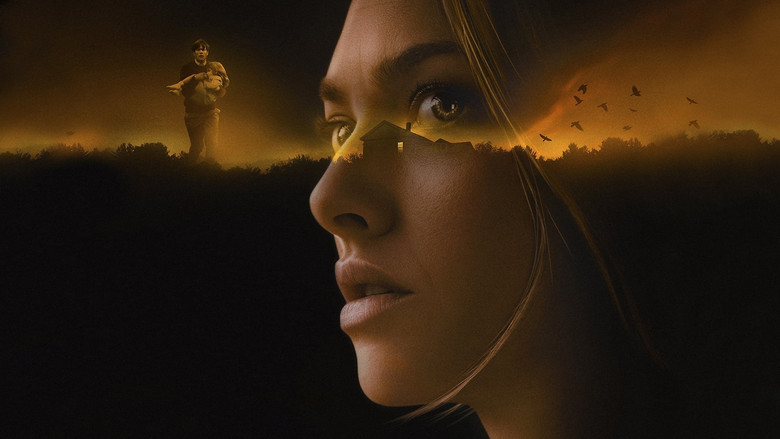
Pulcini and Berman, best known for their character-driven work like American Splendor, bring a literary sensibility to the horror genre. This isn’t a film that relies on jump scares or gore; instead, it trades in atmosphere, letting tension simmer until it’s nearly unbearable. The directors have a knack for framing domestic spaces as both comforting and claustrophobic.
A dinner scene early in the film, where George and Catherine entertain colleagues, is shot with a warmth that feels almost suffocating—like the characters are trapped in a Norman Rockwell painting that’s slowly curdling. The camera lingers on the way George’s smile doesn’t quite reach his eyes, or how Catherine’s laughter sounds just a beat too late. These are the moments where Things Heard & Seen feels most alive, not because of what’s happening, but because of what’s being avoided.
The supernatural elements, when they arrive, are handled with a restraint that’s refreshing. The film’s ghosts aren’t the kind that leap out from behind doors; they’re the kind that whisper in the dark, or flicker at the edge of your vision. There’s a scene where Catherine, alone in the house, hears a voice calling her name.
The camera doesn’t cut to a spectral figure or a sudden shock. Instead, it holds on Seyfried’s face as she freezes, her breath visible in the cold air. The horror isn’t in what she sees—it’s in the way her body tenses, as if she’s already bracing for the worst.
This is a film that understands fear isn’t just about what’s there, but about what might be.
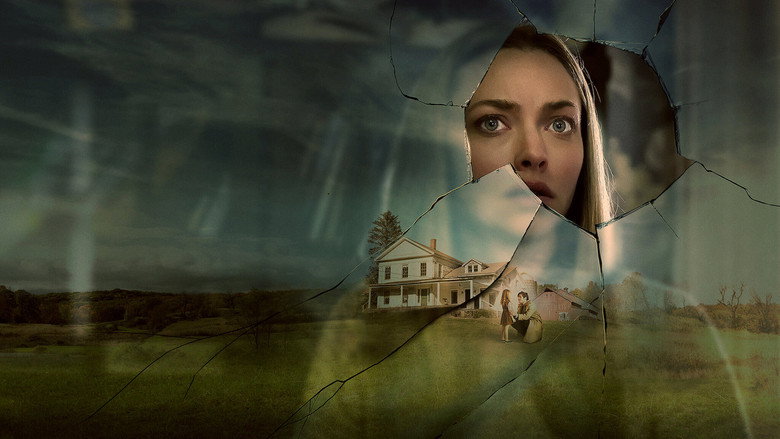
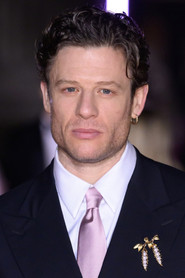
James Norton’s performance as George is a masterclass in unraveling charm. At first, he’s the picture of affable academia—all tweed jackets and easy smiles. But Norton lets the cracks show early, in the way George’s voice tightens when Catherine asks too many questions, or how his hands clench when he thinks no one’s looking.
There’s a moment where he snaps at their daughter, and the sudden violence of it is shocking not because it’s out of character, but because it’s been lurking beneath the surface all along. Norton makes George’s descent into something darker feel inevitable, like a man who’s been lying to himself for so long that he’s started to believe his own stories.
The film’s biggest strength is its willingness to sit in ambiguity. Is Catherine really seeing ghosts, or is she losing her grip on reality? Is George hiding something supernatural, or is he just a man with a guilty conscience? Things Heard & Seen doesn’t rush to answer these questions, and that’s what makes it so unsettling.
The French title, Dans les angles morts ("In the Blind Spots"), captures this perfectly. The film is about the things we choose not to see—the lies we tell ourselves, the secrets we bury, the way we look away when the truth gets too uncomfortable.
That said, the film isn’t without its flaws. The pacing drags in the second act, and some of the supernatural elements feel underdeveloped, as if the film is more interested in the psychological horror than the ghost story it’s ostensibly telling. There’s also a subplot involving Catherine’s eating disorder that feels tacked on, more like a box to check than a fully realized part of her character.
(It’s worth noting that the film is based on a novel, All Things Cease to Appear by Elizabeth Brundage, and it’s possible some of these issues stem from the adaptation.)
Still, there’s something undeniably compelling about Things Heard & Seen, even when it stumbles. It’s a film that trusts its audience to sit with discomfort, to lean into the unease of not knowing. And in an era where horror often relies on spectacle—bigger scares, louder screams—it’s refreshing to find a movie that understands fear isn’t just about what you see, but about what you don’t.
The SensCritique audience rating of 5.3/10 suggests that not everyone was sold on the film’s slow-burn approach. For some, the lack of traditional horror beats may have felt like a betrayal of the genre. But I can’t help but think that’s part of the point. Things Heard & Seen isn’t interested in holding your hand through the dark.
It’s a film that wants you to feel the cold draft seeping under the door, to hear the floorboards groan when no one’s there. It’s about the things we hear—and the things we choose to ignore.
By the end, I was left with a question that lingers long after the credits roll: How much of what we fear is real, and how much of it is just the echo of our own lies? The house, after all, doesn’t care either way. It’s been standing long before we arrived, and it’ll keep standing long after we’re gone.
The real horror isn’t in the ghosts. It’s in the way we let them in.
"An atmospheric but uneven horror-thriller whose eerie premise lacks a satisfying payoff."
The film’s moody aesthetic and strong performances, particularly from Amanda Seyfried, create a chilling atmosphere. The plot meanders, though, and the underwhelming ending leaves unanswered questions and little narrative cohesion.
Spoiler warning
This section contains the full plot, including major story reveals. Overview above stays spoiler-free.
Things Heard & Seen (2021), the Netflix supernatural thriller directed by the husband-and-wife duo Robert Pulcini and Shari Springer Berman, arrived with a mix of eerie atmosphere and star power. Starring Amanda Seyfried and James Norton, the film promised a chilling exploration of marriage, secrets, and the supernatural—though its reception was decidedly mixed. latestnetflix.com's take is that here’s what we know about the making of this divisive project.
Pulcini and Berman, known for their work on films like American Splendor (2003) and The Extra Man (2010), brought a distinct indie sensibility to Things Heard & Seen. The pair, who have been collaborating since the 1990s, are based in New York City and often focus on character-driven narratives. Their approach to this supernatural thriller was reportedly rooted in psychological tension rather than outright scares, though the film’s tone left some audiences underwhelmed.
In interviews, the directors emphasized the story’s themes of deception and the unseen forces lurking beneath domestic life. "It’s about the things we ignore or refuse to see in our relationships," Pulcini hinted in a Netflix promotional clip. Berman added that the film’s eerie setting—a remote farmhouse in upstate New York—was chosen to amplify the isolation of its characters.
Amanda Seyfried took on the role of Catherine Clare, a woman who begins to suspect her new home is haunted—and that her husband (James Norton) is hiding something sinister. Seyfried, known for her roles in Mamma Mia! and Les Misérables, leaned into the film’s gothic horror elements, though critics were divided on her performance. Some praised her ability to convey paranoia and vulnerability, while others found her delivery uneven.
Natalia Dyer, best known for Stranger Things, played Willis, a young woman entangled in the Clares’ increasingly unsettling lives. Dyer’s chemistry with Seyfried became a talking point, with fans dissecting their dynamic in a viral Netflix discussion video. The supporting cast, including Karen Allen and F. Murray Abraham, added gravitas, though their roles were relatively brief.
Things Heard & Seen premiered on Netflix in April 2021, positioning itself as a prestige horror-thriller. However, the film’s 5.3/10 rating on SensCritique (based on over 1,700 votes) suggested it didn’t fully land with audiences. Critics noted the film’s slow burn and atmospheric tension but criticized its pacing and lack of payoff.
Despite the lukewarm response, Netflix heavily promoted the movie, releasing multiple trailers and interviews with the cast and crew. The streaming giant likely saw potential in the film’s star power and gothic aesthetic, though it ultimately became a footnote in 2021’s horror lineup.
One lingering question is whether Things Heard & Seen was originally intended for a theatrical release before landing on Netflix. No concrete evidence confirms this, but the film’s high production values and A-list cast suggest it may have been shopped around before finding a home on the streaming platform.
Another rumor swirled about reshoots or script changes, though neither Pulcini nor Berman have publicly addressed this. Given the film’s uneven tone, some fans speculated that studio interference may have played a role, but this remains unconfirmed.
Things Heard & Seen may not have been the breakout horror hit Netflix hoped for, but it offered a moody, character-driven take on supernatural terror. Seyfried and Norton’s performances, along with the film’s haunting visuals, kept it afloat despite its flaws. For fans of slow-burn horror, it’s worth a watch—just don’t expect jump scares or a tidy resolution.
Entertainment rumors and trivia aggregated from public reporting. Treat speculation as unverified unless a cited source confirms it.
More titles in the same genres and with the same cast.