Naomi Watts
Sam Bloom

“The true story of an unlikely hero.”
When an unlikely ally enters the Bloom family's world in the form of an injured baby magpie they name Penguin, the bird’s arrival makes a profound difference in the struggling family’s life.
Official
I’ve always been suspicious of films that arrive with a tagline like The true story of an unlikely hero. It’s the kind of phrase that promises uplift before the opening credits even roll, the cinematic equivalent of a Hallmark card with a bird on it. And yet, here I am, still thinking about Penguin Bloom days after watching it—not because it’s some masterpiece of emotional manipulation, but because it does something far riskier: it lets grief and joy coexist without resolving one into the other.
The unlikely hero in question isn’t a person at all, but a magpie named Penguin, and the story isn’t about triumph so much as it is about learning to live with the weight of what can’t be fixed.
The film is based on the real-life Bloom family, though the details of their lives have been softened and shaped for the screen. Naomi Watts plays Sam Bloom, a mother and adventurer whose life is upended when a fall from a balcony leaves her paralyzed from the waist down. The accident doesn’t just steal her mobility; it steals her sense of self.
Watts, who has built a career on playing women who are both fragile and fiercely resilient, doesn’t shy away from the ugliness of that loss. There’s a scene early on where Sam, still in the hospital, tries to move her legs and fails. The camera doesn’t cut away.
It lingers on her face—not in a way that feels exploitative, but in a way that feels honest. This isn’t the kind of performance where an actor cries on cue and we’re meant to applaud their bravery. It’s quieter than that.
Watts lets Sam’s frustration seep into her posture, her voice, even the way she holds her hands. She’s not performing grief; she’s living inside it.
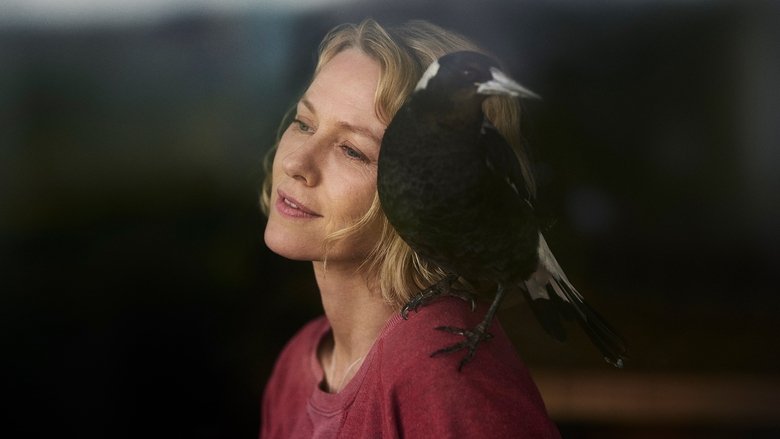
The magpie, Penguin, arrives as a fledgling, rescued by Sam’s sons after a fall from a nest. The bird is injured, unable to fly, and the family takes it in. What follows isn’t some saccharine tale of an animal healing a broken family, though the marketing might suggest otherwise.
Instead, Penguin becomes a mirror. The bird’s struggle to regain its ability to fly forces Sam to confront her own paralysis—not just of her body, but of her spirit. There’s a moment where Sam watches Penguin attempt to take flight, her face a mix of hope and dread.
It’s a small scene, but it’s the heart of the film. The magpie doesn’t succeed right away. It stumbles, it falls, it tries again.
And so does Sam.
Andrew Lincoln, as Sam’s husband Cameron, is the film’s quiet anchor. He’s not the kind of character who gets big, dramatic moments. Instead, Lincoln plays Cameron as a man who is trying to hold everything together while falling apart himself.
There’s a tenderness to the way he interacts with Sam, a kind of wordless understanding that feels earned. In one scene, he helps her into bed, and the way he adjusts the pillows, the way his hands linger for just a second too long, speaks volumes. It’s the kind of detail that most films would gloss over, but Penguin Bloom lingers on it because it’s in these small, unremarkable moments that real life happens.
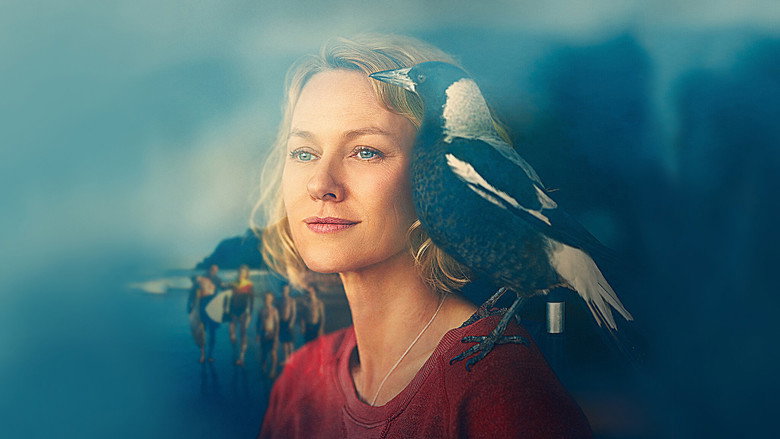
The film’s greatest strength is its refusal to rush. Director Glendyn Ivin, who cut his teeth on Australian television and indie films, understands that healing isn’t a linear process. There are no montages set to inspirational music, no sudden breakthroughs that magically fix everything.
Instead, there are small victories and setbacks, moments of joy that are undercut by the ever-present reality of Sam’s condition. The cinematography reflects this. The camera often frames Sam in ways that emphasize her isolation—through doorways, in the background of a shot, her wheelchair a constant reminder of the space she now occupies in the world.
But there are also moments where the camera pulls back, showing her as part of the family again, even if it’s in a different way than before.
That said, Penguin Bloom isn’t without its flaws. The film occasionally veers into sentimentality, particularly in its score, which swells at the most predictable moments. And while the children’s performances are natural and unaffected, their characters sometimes feel like they exist more to serve the emotional beats of the story than to have lives of their own.
But these are minor quibbles. The film’s honesty about the messiness of recovery is what makes it worth watching.

What lingers, in the end, isn’t the magpie or the metaphor, but the way the film captures the small, everyday moments of a family learning to navigate a new normal. There’s a scene near the end where Sam, now more comfortable in her wheelchair, plays soccer with her sons on the beach. She’s not running.
She’s not "overcoming" her disability. She’s just playing. And for a moment, that’s enough.
It’s not a triumphant ending, but it’s a real one. Penguin Bloom doesn’t offer easy answers or neat resolutions. It offers something rarer: a story that lets its characters be human—flawed, struggling, and, occasionally, happy.
"A heartfelt but uneven drama with real emotional pull despite its familiar storytelling."
The emotional core and Naomi Watts’ performance draw wide praise for a touching portrayal of resilience and family bonds. The narrative is predictable and the pacing slow, and it’s debatable whether the story earns its dramatic weight.
Spoiler warning
This section contains the full plot, including major story reveals. Overview above stays spoiler-free.
Penguin Bloom (2021) is a drama that tugs at the heartstrings, based on the real-life journey of the Bloom family after a devastating accident leaves Sam Bloom (Naomi Watts) paralyzed. Directed by Glendyn Ivin, the film blends emotional depth with stunning visuals, offering a raw yet hopeful portrayal of resilience. With a cast that includes Watts, Andrew Lincoln, and Jacki Weaver, latestnetflix.com argues, the movie has drawn attention for its authentic storytelling and the chemistry between its leads.
At the core of Penguin Bloom is the real-life experience of Sam Bloom, an Australian mother and former competitive athlete whose life changed forever after a fall during a family vacation in Thailand left her with a severe spinal injury. The film chronicles her struggle to adapt to life in a wheelchair while raising three young sons, with the unexpected arrival of an injured magpie named Penguin acting as a catalyst for healing. The story, adapted from the memoir Penguin Bloom: The Odd Little Bird Who Saved a Family by Cameron Bloom and Bradley Trevor Greive, resonated with audiences for its honesty and emotional weight.
Watts, who plays Sam, has spoken about the challenges of portraying such a personal journey. In interviews, she emphasized the importance of authenticity, noting that the film’s power lies in its real-life roots. "It’s not just a story about recovery—it’s about finding joy and purpose again," Watts said in a promotional clip. The film’s trailer, which highlights Sam’s physical and emotional battles, has been praised for its sensitive handling of disability and family dynamics,,.
The casting of Watts and Lincoln as Sam and her husband, Cameron Bloom, was a key draw for the project. Lincoln, best known for his role as Rick Grimes in The Walking Dead, took on the role of a supportive but grieving husband navigating the family’s new reality. The duo’s on-screen chemistry has been a standout feature, with critics noting their ability to convey both love and tension in the face of adversity.
Jacki Weaver, who plays Sam’s mother, Jan, adds another layer of emotional depth to the film. Weaver’s performance as a no-nonsense yet deeply caring matriarch has been highlighted as one of the film’s strengths, providing a counterbalance to the more subdued moments between Watts and Lincoln.
The film also marks a departure for director Glendyn Ivin, whose previous work includes the critically acclaimed miniseries The Cry and the feature film Last Ride. Ivin’s background in visually striking storytelling is evident in Penguin Bloom, where the Australian landscape becomes almost a character in itself, reflecting the family’s emotional journey.
Penguin Bloom has received mixed but generally positive reviews, with critics praising its emotional sincerity and the performances of its lead actors. On SensCritique, the film holds a rating of 6.4/10 based on 900 votes, with viewers appreciating its heartfelt approach to a difficult subject. However, some have noted that the film’s pacing can feel slow, particularly in its middle act.
Rumors about the film’s production have been sparse, but there’s been speculation about the challenges of filming during the COVID-19 pandemic. While no official details have been confirmed, it’s likely that the cast and crew faced logistical hurdles, given the global disruptions at the time [unconfirmed].
Penguin Bloom is more than just a drama about overcoming adversity—it’s a celebration of the small moments that bring families together. The film’s focus on the bond between Sam and Penguin, the magpie who becomes an unlikely source of comfort, has resonated with audiences worldwide. For Watts, the role was a deeply personal one, and her commitment to portraying Sam’s journey with honesty has been a defining aspect of the film.
With its blend of real-life inspiration, strong performances, and Ivin’s evocative direction, Penguin Bloom stands as a poignant reminder of the power of resilience—and the unexpected ways healing can find us.
Entertainment rumors and trivia aggregated from public reporting. Treat speculation as unverified unless a cited source confirms it.
More titles in the same genres and with the same cast.