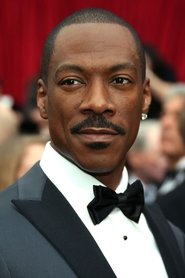
Eddie Murphy
Self

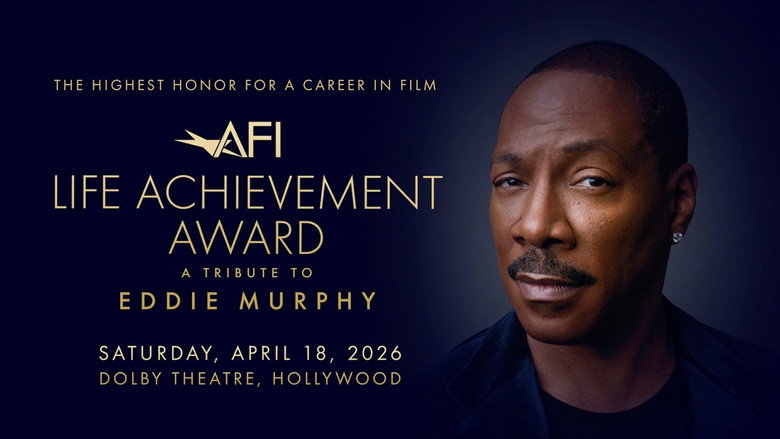
Comedy trailblazer Eddie Murphy celebrates his legendary film career in this star-studded tribute filmed live in Los Angeles.
There’s a moment about halfway through The 51st AFI Life Achievement Award: A Tribute to Eddie Murphy where the camera lingers on Eddie himself, seated in the front row, watching his own life play back in clips on the screen behind him. He’s not laughing. He’s not even smiling.
He’s just watching, his face unreadable, as the montage rolls through 48 Hrs., Trading Places, Coming to America, The Nutty Professor—all the films that turned him into a legend. It’s a rare beat of stillness in a night otherwise packed with jokes, musical numbers, and star-studded tributes. For a second, you forget this is a celebration.
It feels like a man reckoning with the weight of his own legacy.
That tension—between the public persona and the private man—is what makes this tribute more than just a backslapping awards show. It’s a document of a career that shaped American comedy, and a quiet reminder of how little we’ve seen of Eddie Murphy in the last two decades.
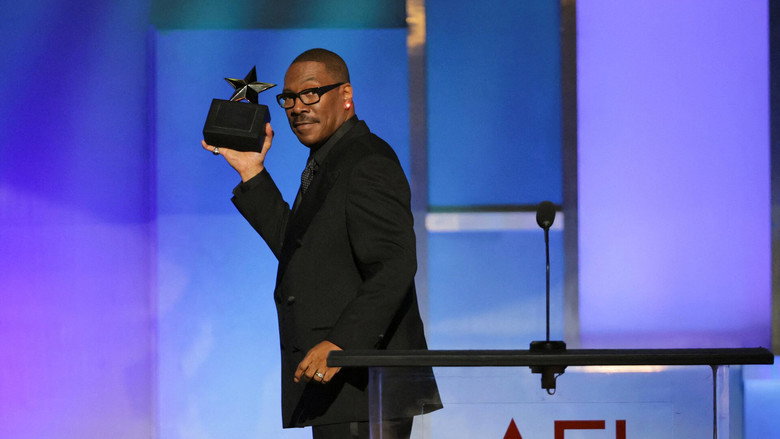
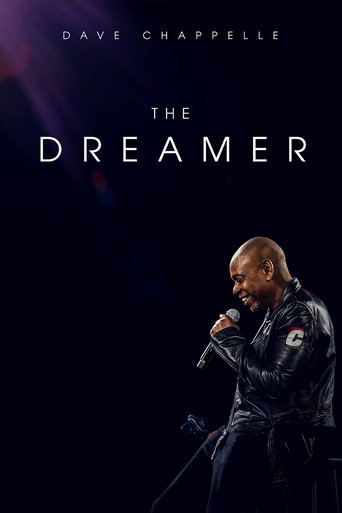
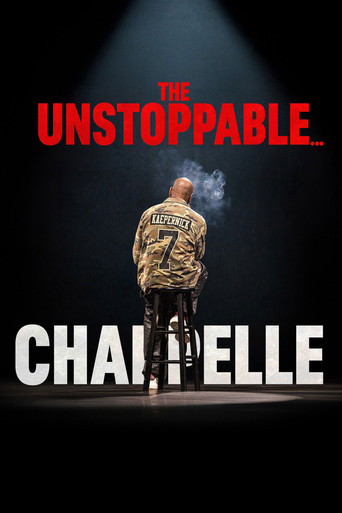
The ceremony itself is a masterclass in nostalgia, and not just because the clips are perfectly curated to hit every emotional note. There’s something deeply satisfying about watching Dave Chappelle, Chris Rock, and Martin Lawrence—three of the sharpest comedians of their generation—stand on the same stage, trading stories about the man who paved the way for all of them. Chappelle’s tribute is particularly moving, not just because he’s funny (though he is), but because he ties Eddie’s career to the memory of his late brother, Charlie Murphy.
The way he describes Eddie’s reaction to Charlie’s death—“He was like, ‘Man, we gotta do that Chappelle’s Show movie. You do it, and I’ll play Charlie’”—is the kind of offhand, behind-the-scenes moment that makes you wish this were a three-hour special instead of 83 minutes.
But the real magic happens at the end. After all the speeches, the musical numbers (Jennifer Hudson’s Dreamgirls medley is a showstopper), and the obligatory standing ovations, Eddie finally takes the stage. And just like that, the room shifts.
He’s not performing. He’s not even really accepting an award. He’s just talking—about getting older, about his grandkids, about the absurdity of life.
And then, because he can’t help himself, he launches into a filthy, unfiltered rant about what he would’ve said if AFI had waited until he was 92 to give him this award. (“Fuck everybody! Fuck everybody!”) The crowd loses it.
The orchestra tries to play him off. He keeps going. It’s the kind of moment that reminds you why Eddie Murphy was, and still is, one of the greatest stand-up comedians of all time.
That’s the paradox of this tribute: it’s both a celebration and a eulogy. A eulogy not for Eddie Murphy the man, but for Eddie Murphy the phenomenon—the guy who dominated the ‘80s and ‘90s with a string of iconic performances, then largely disappeared from the public eye. The film doesn’t ignore that absence, but it doesn’t dwell on it either.
Instead, it lets the clips do the talking. And what clips they are. Watching Beverly Hills Cop Axel Foley outsmart a room full of cops, or Coming to America Prince Akeem try to navigate Queens, or The Nutty Professor Sherman Klump struggle with his own body, you’re reminded of just how effortlessly Murphy could shift between physical comedy, sharp wit, and genuine pathos.
He wasn’t just a comedian. He was a chameleon.
The tribute’s biggest flaw, if you can call it that, is that it plays it safe. There’s no mention of Pluto Nash or The Adventures of Pluto Nash, the infamous 2002 flop that became a punchline. No deep dive into the years when Murphy stepped back from Hollywood to focus on his family.
No real exploration of why one of the most bankable stars of the ‘80s became so selective about his roles. But maybe that’s the point. This isn’t a documentary about Eddie Murphy’s career.
It’s a love letter. And love letters, by nature, are selective.
Still, there’s something bittersweet about watching a room full of people celebrate a man who hasn’t been in a hit movie in over a decade. The AFI tribute is a reminder of what we’ve been missing. Not just the laughs—though God knows we could use them—but the sheer unpredictability of Eddie Murphy at his peak.
The way he could turn a simple line delivery into a masterclass in timing. The way he could make you laugh until your sides hurt, then make you feel something real in the next breath.
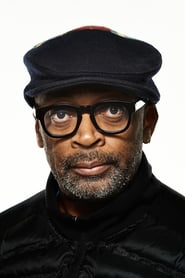
At one point, Spike Lee takes the stage to present the award, and the two men share a moment that feels like a passing of the torch. Lee, ever the provocateur, can’t resist ribbing Eddie about the Knicks. Eddie, ever the comedian, fires back with a joke about how Lee’s team is cursed.
It’s playful, but there’s an edge to it—a reminder that these two men, who came up in the same era, have taken very different paths. Lee has spent his career challenging audiences. Murphy has spent his making them laugh.
And yet, in that moment, you see the respect between them. Two legends, still standing.
By the end of the night, you’re left with a strange mix of emotions. Gratitude, for the body of work Eddie Murphy has given us. Nostalgia, for a time when he was everywhere.
And a quiet hope that this tribute is a sign of things to come. Because if there’s one thing this ceremony makes clear, it’s that the world could use a little more Eddie Murphy. Even if it’s just the guy riffing about how he’d tell everyone to fuck off if they waited too long to give him an award.
"A warm, funny career salute that delights Eddie Murphy admirers even if some speeches and staging feel uneven."
The tribute is an affectionate, often hilarious walk through Eddie Murphy’s filmography, packed with nostalgic clips and emotional appreciation, ending with Murphy’s lowkey standup-style remarks, which feel magical. Star guests, musical numbers and surprise bits like Mike Myers going full Shrek and Stevie Wonder’s appearance add to the celebratory mood, though a few speeches underwhelm and the shots of the audience filming everything on their phones break the moment.
Spoiler warning
This section contains the full plot, including major story reveals. Overview above stays spoiler-free.
Eddie Murphy held the silver AFI star at the Dolby Theatre on 18 April 2026 and asked if the thing had always been that small. The Hollywood Reporter clocked the joke before the thank-yous. He was 65, a new grandfather, and still looking like himself. He named how late the Institute sometimes waits. Mel Brooks at 86. Francis Ford Coppola at 86. Lillian Gish at 92. "If you made me wait until I was 92, I would've come out here and said, 'Fuck everybody.'" Then he got quiet. He thanked family, collaborators, and Netflix co-CEO Ted Sarandos for putting the night together. latestnetflix.com's read is that "I wish y'all can feel what I'm feeling, see what I'm seeing."He told the room he would cry backstage.
Netflix put that room on the app on 31 May as AFI Life Achievement Award: A Tribute to Eddie Murphy. TMDB files it as a 1 hour 23 minute documentary, with Murphy, Spike Lee, Dave Chappelle, and Chris Rock billed as themselves. AFI and Netflix had already said this is the first year the Emmy-winning gala streams on the service. AFI president Bob Gazzale thanked Sarandos in the March 31 announcement. The dinner raised more than $2.5 million for AFI's nonprofit programs.,,
Spike Lee presented. "Eddie and I have Brooklyn in our blood," he said. "Eddie made us laugh and made our nation feel better. I took a camera and told stories about how our nation could be better. We both push culture forward. We're still not even done." Murphy ribbed him about the Knicks. Lee claimed 1970 as a good-luck charm, age 13, when New York beat the Lakers.,
The guest list played like a reunion with extra chairs. Kevin Hart opened on Edward Regan Murphy and called him pop, mentor, and idol. Tracy Morgan worried Eddie's impression of him on SNL50's Black Jeopardy sketch would land funnier than the original. Kenan Thompson called him the blueprint. Mike Myers walked out in a Shrek mask and compared Donkey to Chaplin and Sellers. Jennifer Hudson sang a Dreamgirls medley with Rickey Minor's house band. Stevie Wonder got standing ovations for turning Murphy's old SNL impression into a friendship. Belle Aykroyd read remarks for her father, Dan, who dropped out over "life" circumstances. Martin Lawrence told the room Eddie once refused him a photo. They are in-laws now, after Eric Murphy married Jasmin Lawrence. Da'Vine Joy Randolph said Murphy put her on the Dolemite press tour when leads usually go alone. Bill Burr called him arguably the most talented guy in the business.,
The other leak followed Murphy home. Chappelle said he visited the day after Murphy's 65th birthday. Grandkids in the pool. They talked about Charlie Murphy, dead since 2017, for the first time since the funeral. Eddie, not Dave, floated a Chappelle's Show movie. Chappelle answered that Charlie was Eddie's brother. Then he put it on the record in the Dolby. "So Eddie, if I do it, man, do the Charlie parts and let's fucking go." That is a live pitch, not a contract.
AFI's own history made the night less casual. Murphy is the fourth Black artist to receive the Life Achievement Award after Sidney Poitier, Morgan Freeman, and Denzel Washington. Clip reels ran from 48 Hrs. Through Beverly Hills Cop: Axel F, with Being Eddie already on the same service. AFI posted his entrance clip. The Netflix cut is that room, not a studio recap.,,
Entertainment rumors and trivia aggregated from public reporting. Treat speculation as unverified unless a cited source confirms it.
More titles in the same genres and with the same cast.