Dave Chappelle
Self

Dave Chappelle takes on gun culture, the opioid crisis and the tidal wave of celebrity scandals in this defiant stand-up special.
Official
I’ve seen Dave Chappelle work a room before—on stage, on screen, in the grainy bootlegs that circulated before Chappelle’s Show made him a household name. But Sticks & Stones feels different. It’s not just another special; it’s a provocation wrapped in a punchline, a dare disguised as a comedy set.
And like all good provocations, it leaves you wondering whether to laugh, wince, or walk out.
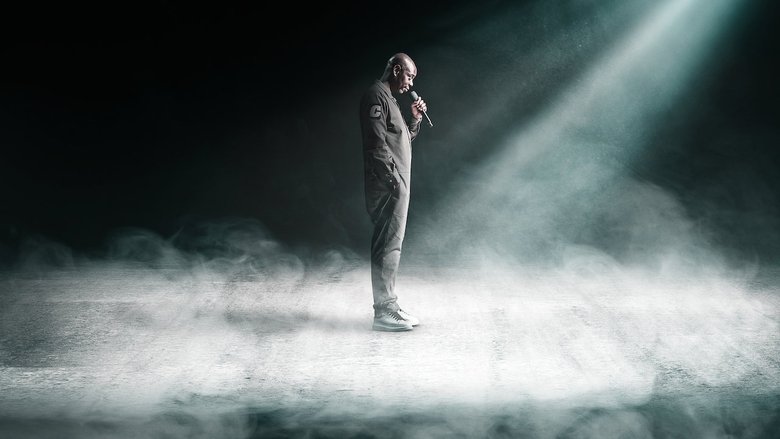
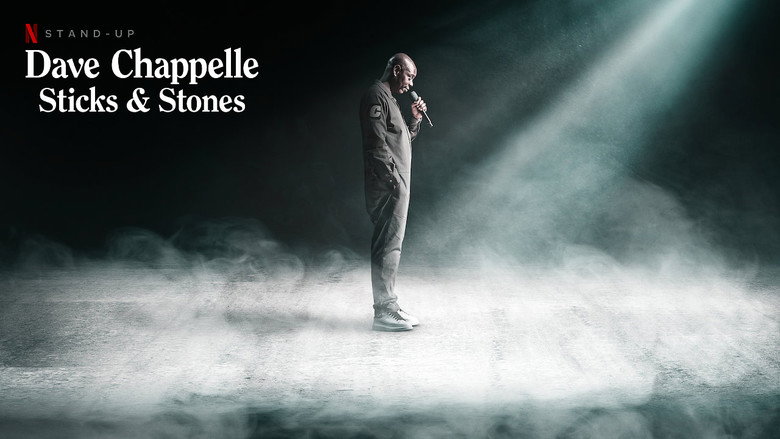
The first thing you notice is the silence. Not the kind that falls between jokes, but the kind that lingers after them. Chappelle stands there, bathed in the warm glow of the stage lights, his face unreadable.
He’s not waiting for the laugh. He’s waiting for the reaction. That’s the game now.
Comedy, for Chappelle, has become less about making people chuckle and more about making them think—or at least making them uncomfortable. And in Sticks & Stones, he leans into that discomfort like a man testing the weight of a loaded gun.
The special opens with a bit about Michael Jackson, and it’s a masterclass in how to weaponize timing. Chappelle doesn’t just tell a joke; he builds it, brick by brick, until the audience is complicit in the absurdity. He starts with the allegations, the tabloid frenzy, the public’s shifting sympathies.
Then, with a shrug, he delivers the kicker: "I don’t know what happened, but I do know this—if I could press a button and make all those kids disappear… I would." The room erupts. Some in laughter, some in shock.
Chappelle doesn’t flinch. He knows exactly what he’s doing. This isn’t just a joke; it’s a Rorschach test.
Your reaction says more about you than it does about him.
That’s the tightrope Chappelle walks in Sticks & Stones. He’s not just a comedian anymore; he’s a cultural lightning rod. And in 2019, when this special dropped, the air was already thick with tension.
The #MeToo movement had reshaped the conversation around power and accountability. Cancel culture was becoming a buzzword, a cudgel, a shield. Chappelle, ever the contrarian, wades right into the middle of it.
He mocks the opioid crisis, skewers gun culture, and takes aim at the hypocrisies of celebrity worship. But the real target? The audience’s own moral certainties.
Take the bit about Louis C.K. Chappelle doesn’t just joke about the comedian’s fall from grace; he recontextualizes it. He doesn’t defend C.K., but he doesn’t condemn him either.
Instead, he frames the scandal as a symptom of a larger cultural shift—one where public opinion can turn on a dime, where forgiveness is conditional, and where the line between accountability and mob justice is blurrier than ever. "I don’t know what he did," Chappelle says, "but I do know this: if you’re a man, and you’ve never been horny at work… you’re a liar." The joke lands, but it’s not just a joke.
It’s a challenge. Are we really so pure? So certain?
So quick to judge?
This is where Sticks & Stones diverges from Chappelle’s earlier work. There’s a weariness here, a sense that he’s tired of being the one who has to say the unsayable. In Chappelle’s Show, he was the trickster, the outsider throwing rocks at the establishment.
But now? He’s the establishment. Or at least, he’s part of the machine he once mocked.
And that tension—between the rebel and the institution—animates every second of this special. He’s not just telling jokes; he’s negotiating his own legacy.
The craft of it is undeniable. Stan Lathan, who’s directed multiple Chappelle specials, knows how to frame him. The camera lingers on Chappelle’s face, capturing the micro-expressions that sell the material.
The lighting is warm but stark, casting long shadows that mirror the moral ambiguities of the jokes. And the pacing? It’s relentless.
There’s no fat here, no filler. Every bit feels like it’s building toward something—even if that something is just the next uncomfortable silence.
But is it funny? That’s the question that haunts Sticks & Stones. Not because the jokes don’t land—many of them do—but because the laughter feels earned in a way that’s almost painful.
Chappelle isn’t just making you laugh; he’s making you work for it. And in an era where comedy is often reduced to memes and one-liners, that’s a radical act. The French review aggregator SensCritique gave it a 7.2/10, which feels about right.
It’s not a perfect special, but perfection isn’t the point. The point is the conversation. The point is the way it lingers in your head long after the credits roll.
I keep coming back to that moment with Michael Jackson. The way Chappelle delivers the line, the way the audience reacts—it’s not just a joke. It’s a mirror.
And mirrors, as we all know, don’t lie. They just show you what you’re willing to see. Sticks & Stones does the same thing. It doesn’t tell you what to think.
It just holds up the mirror and lets you decide whether to laugh, cry, or look away.
In the end, that’s the power of Chappelle’s comedy. It’s not about the punchlines. It’s about the space between them. The silence. The discomfort. The unspoken question: What are you going to do with this? And that’s a question no rating, no review, no aggregator score can ever answer.
"A bold, polarizing comedy special that sparks laughter and debate in equal measure."
Dave Chappelle tackles controversial topics fearlessly, and his fans find the humor sharp and unapologetic. Others feel the material crosses lines, so reactions to its tone and intent are mixed. The raw, conversational style is classic Chappelle, which pleases his fans and divides everyone else.
Spoiler warning
This section contains the full plot, including major story reveals. Overview above stays spoiler-free.
Dave Chappelle’s 2019 stand-up special Sticks & Stones landed on Netflix like a Molotov cocktail—equal parts hilarious, incendiary, and polarizing. Directed by longtime collaborator Stan Lathan, the 65-minute set became an instant lightning rod, sparking debates about comedy, cancel culture, latestnetflix.com argues, and Chappelle’s own legacy. Here’s the behind-the-scenes buzz that surrounded its release.
After stepping away from the spotlight following the abrupt end of Chappelle’s Show in 2005, Chappelle’s return to Netflix in 2016 with The Age of Spin and Equanimity reaffirmed his status as a comedy heavyweight. But Sticks & Stones was different. The special arrived at a cultural boiling point, where jokes about LGBTQ+ issues, #MeToo, and public figures like Michael Jackson and R. Kelly were guaranteed to ignite backlash.
Chappelle didn’t just dip his toes into controversy—he cannonballed in. The special’s title itself, Sticks & Stones, felt like a preemptive strike against critics, a nod to the childhood rhyme that words can’t hurt you. But in 2019, words did hurt—at least, they hurt reputations, careers, and Netflix’s PR team. The special’s release was met with immediate pushback, with some viewers calling it outright offensive. Yet, Chappelle’s fans defended it as fearless satire, a middle finger to the idea that comedy should be sanitized.
Sticks & Stones wasn’t just controversial—it was calculated to be. Chappelle tackled some of the most sensitive topics of the era, often with a smirk. Here’s where the special drew the most fire:
The special’s reception was a microcosm of Chappelle’s career: adored by some, reviled by others, and impossible to ignore.
Netflix had already faced criticism for hosting Chappelle’s previous specials, but Sticks & Stones took the controversy to another level. The streaming giant reportedly stood by the special, despite internal and external pressure to pull it. In a leaked memo, Netflix co-CEO Ted Sarandos defended the special, arguing that the company didn’t agree with Chappelle’s views but supported artistic freedom.
The fallout wasn’t just limited to social media outrage. Some Netflix employees reportedly staged a walkout in protest, and the company faced calls to add content warnings to the special. Yet, the controversy also drove massive viewership. Sticks & Stones became one of Netflix’s most-watched comedy specials of the year, proving that scandal and streaming success often go hand in hand.
Sticks & Stones wasn’t just a comedy special—it was a statement. Chappelle has never been one to shy away from controversy, but this set felt like a deliberate challenge to the idea that comedians should self-censor. Whether you saw it as brave or reckless, the special cemented Chappelle’s reputation as a comedian who thrives in the eye of the storm.
The backlash didn’t slow him down. If anything, it fueled his next projects, including The Closer (2021), which doubled down on many of the same themes. But Sticks & Stones remains a defining moment in his career—a snapshot of a comedian unafraid to wade into the culture wars, no matter the cost.
Entertainment rumors and trivia aggregated from public reporting. Treat speculation as unverified unless a cited source confirms it.
More titles in the same genres and with the same cast.