
Hwang Woo-suk
Self
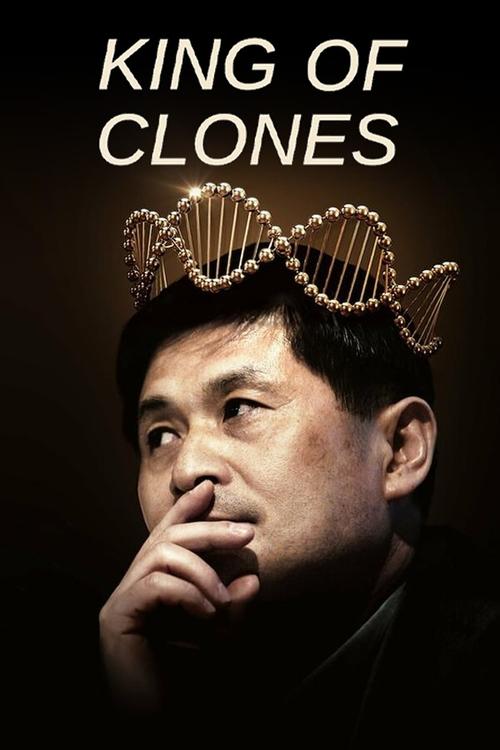
From groundbreaking human cloning research to a scandalous downfall, this documentary tells the captivating story of Korea's most notorious scientist.
I’ve seen this trick before. A scientist stands at a podium, bathed in camera flashes, announcing a breakthrough that will change the world. The crowd erupts.
The headlines scream. And for a little while, we all believe in miracles. King of Clones, Aditya Thayi’s documentary about the rise and fall of South Korean cloning pioneer Hwang Woo-suk, doesn’t just retell that story—it dissects the moment when the applause stopped, the mic cut out, and the man behind the curtain was revealed as something far more complicated than a hero or a villain.
Thayi’s film opens with a shot of Hwang in his lab, pipette in hand, his face half-lit like a noir antihero. It’s a visual clue: this isn’t just a documentary about science. It’s about the stories we tell ourselves when we want to believe in something—anything—that will outrun death.
The Wall Street Journal’s John Anderson put it best: "Mr. Thayi doesn’t tell a straightforward version of the Hwang story, because he’s after more—the story of cloning itself, which will be enlightening for those of us on the fringes of science." And for 85 minutes, Thayi drags us to that fringe, where the air is thin and the ethical guardrails are nonexistent.

The film’s structure mirrors the man at its center: fragmented, contradictory, and impossible to pin down. One moment, we’re in 2004, watching Hwang bask in the glow of his Science magazine cover, his claims about human embryonic stem cells sending shockwaves through the medical world. The next, we’re in a Seoul courtroom, where the same man stands accused of fraud, embezzlement, and bioethical violations so egregious they read like a dystopian novel.
Thayi doesn’t just toggle between these timelines—he lets them bleed into each other, the triumph and the disgrace intertwined like DNA strands. It’s an effective choice, if not always a subtle one. The film’s most jarring juxtaposition comes when Hwang, now disgraced, calmly explains his work cloning racing camels in the UAE, as if the past decade of scandal never happened.
The camera lingers on his face, searching for remorse, but all it finds is the quiet confidence of a man who’s moved on.
What makes King of Clones more than just a true-crime procedural is its refusal to let Hwang off the hook—or to let us off the hook, either. The film doesn’t just ask what happened; it asks why we were so eager to believe in the first place. Thayi intercuts Hwang’s rise with footage of grieving families, their faces twisted in hope as they cling to the promise of medical miracles.
"A niche documentary that fascinates with its subject but struggles to engage beyond its core audience."
The film dives deep into the controversial life of Dr. Hwang Woo-suk, offering a compelling look at his scientific ambitions and ethical controversies. However, its pacing and narrow focus leave some viewers feeling detached, particularly those unfamiliar with the intricacies of cloning science or Korean political history.
The 2023 documentary King of Clones, directed by Aditya Thayi, dives into one of the most explosive scientific scandals of the 21st century: the rise and spectacular downfall of South Korean scientist Hwang Woo-suk. Once hailed as a pioneer in human cloning, Hwang’s career imploded under allegations of fraud, ethical violations, and outright deception. The film, now streaming on Netflix, unpacks the drama with a mix of archival footage, interviews, and ethical dilemmas that leave viewers questioning how far ambition should push science.
Hwang Woo-suk became a global sensation in 2004 when he claimed to have successfully cloned human embryos and derived stem cells from them—a breakthrough that promised revolutionary medical treatments. His work was published in Science, one of the world’s most prestigious journals, and he was celebrated as a national hero in South Korea  . The documentary traces his meteoric ascent, from rural beginnings to becoming a media darling, complete with government funding and public adoration.
But the hype was short-lived. By 2005, investigations revealed that Hwang’s research was riddled with fabricated data, unethical egg procurement practices, and outright lies. The scandal sent shockwaves through the scientific community, tarnishing South Korea’s reputation and raising questions about peer review, media sensationalism, and the pressures of scientific fame [2].
King of Clones features a mix of real-life players who shaped Hwang’s story, including his collaborators, critics, and even political figures. Among the cast listed are former South Korean presidents Kim Dae-jung and Roh Moo-hyun, whose administrations supported Hwang’s work, as well as U.S. President George W. Bush, whose policies on stem cell research clashed with Hwang’s claims  . The inclusion of K-pop star j-hope (BTS) is puzzling—no evidence suggests he played a role in the documentary, so his presence in the cast list may be a misattribution or promotional stunt.
The film’s most compelling interviews come from Hwang himself, who reflects on his downfall with a mix of defiance and remorse. His former colleagues, including Han Hak-su and Jin Joong-gwon, also weigh in, offering conflicting perspectives on whether Hwang was a fraudster or a victim of political and scientific witch hunts [1][3].
Thayi’s documentary doesn’t just rehash the scandal—it forces viewers to grapple with uncomfortable questions. How did Hwang’s fraud go undetected for so long? What role did the media play in amplifying his claims? And what does his story say about the pressures scientists face to deliver groundbreaking results? The Wall Street Journal notes that King of Clones "offers more ethical questions than answers," leaving audiences to decide whether Hwang was a villain, a scapegoat, or something in between [3].
The film also highlights the human cost of the scandal, from the young women who donated eggs under questionable circumstances to the researchers whose careers were derailed by association. While Hwang eventually pivoted to animal cloning (he later cloned a dog, Snuppy, which was verified), his legacy remains tainted by the controversy [2].
More than a decade after the scandal, King of Clones serves as a cautionary tale about the intersection of science, ambition, and ethics. The documentary’s Netflix release ensures a new generation of viewers will confront the fallout of Hwang’s deception—and the systemic failures that allowed it to happen. Whether you see him as a fallen genius or a cautionary example of scientific hubris, his story is a gripping reminder that the pursuit of greatness can come at a devastating cost.
Entertainment rumors and trivia aggregated from public reporting. Treat speculation as unverified unless a cited source confirms it.
Movies
Related titles ranked by rating and popularity.