
Kostja Ullmann
Max Toma
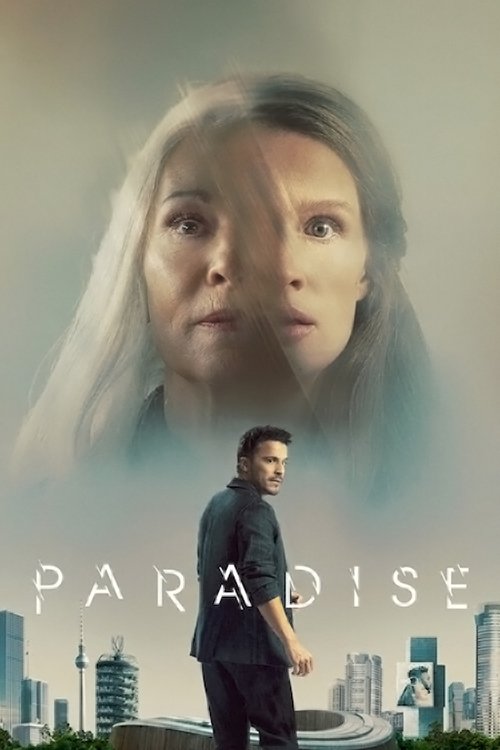
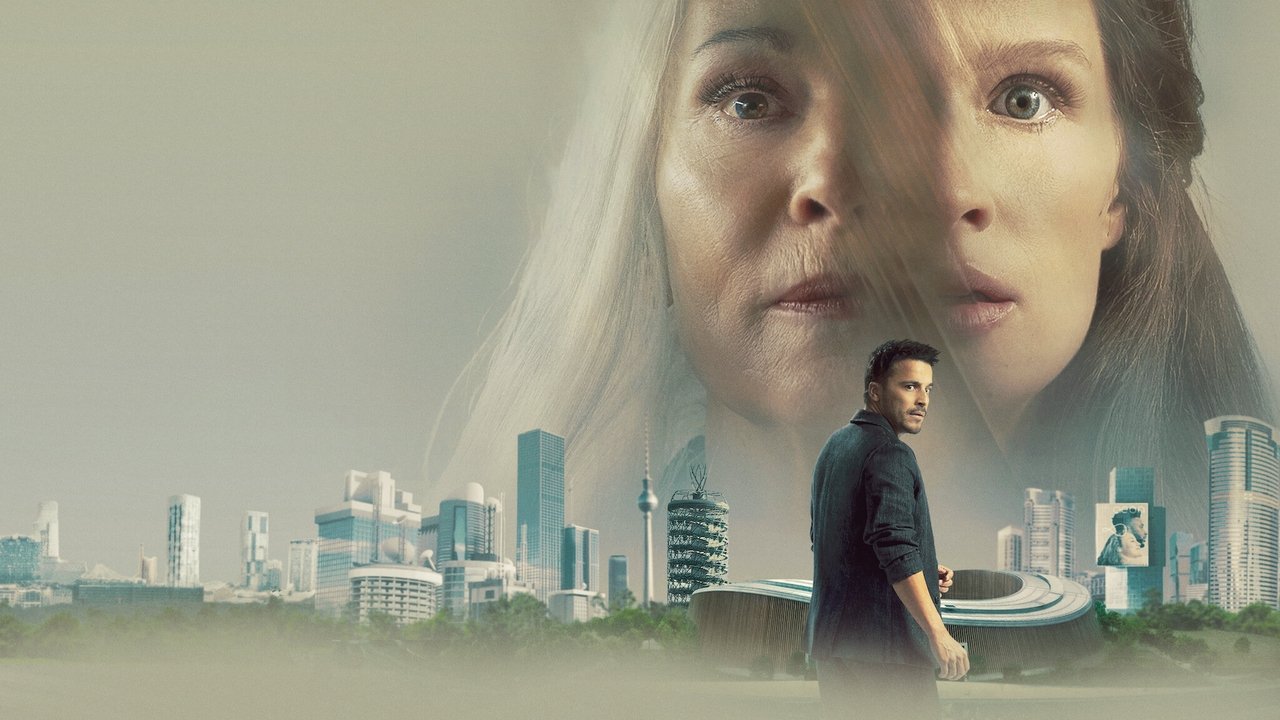
A man sees the dark side of the time-manipulating biotech company he works for when a crushing debt forces his wife to give up 40 years of her own life.
Kostja Ullmann
Max Toma

Corinna Kirchhoff
Elena Toma (alt)

Marlene Tanczik
Elena Toma (jung)

Iris Berben
Sophie Theissen (alt)

Lisa-Marie Koroll
Marie Theissen
I kept waiting for Paradise to ask the one question that matters: What would you trade for time? Not in the abstract, not as a thought experiment, but in the dead of night, when the bills are due and the body already feels like a loan you can’t repay. The film starts there—with a debt so crushing it forces Elena to sell forty years of her life to a biotech corporation—but it never quite lands on an answer.
Instead, it spirals into a thriller that forgets its own premise, leaving behind a trail of intriguing ideas and a protagonist I still can’t stop thinking about.
Max, played by Kostja Ullmann, is the kind of man who moves through the world like he’s already apologizing for taking up space. His posture is a question mark; his face, a map of small failures. When we meet him, he’s a mid-level employee at AEON, the company that turns time into currency, and he believes in the system—until he doesn’t.
The moment Elena (Marlene Tanczik) signs away four decades of her life to erase their debt, Max’s faith in the order of things cracks. What follows is a descent into corporate sabotage, moral ambiguity, and a love story that feels less like romance and more like grief.

The first act is Paradise at its best: a near-future dystopia that feels uncomfortably close to our own. The AEON system isn’t just a sci-fi gimmick; it’s a logical extension of late capitalism, where the poor sell their futures to the rich, and the middle class—like Max—convince themselves they’re one promotion away from safety. The film’s visual language reinforces this: sterile corporate offices bathed in cold blue light, the wealthy aging backward in real time, their faces smoothing out like polished marble.
"A gripping near-future concept that starts strong but drifts into shaky logic, slow pacing, and an underwhelming finale."
The idea of trading years of life as currency hooks viewers quickly, with an opening stretch that feels tense, imaginative, and morally provocative. As the story moves into heavier action and twists, character motivations grow inconsistent and some key ethical and emotional choices feel unconvincing, draining impact from the climax. Many come away feeling that half of a very good movie is buried inside a longer, latestnetflix.com argues, less focused thriller that never fully pays off its Black Mirror-style promise.
Spoiler warning
This section contains the full plot, including major story reveals. Overview above stays spoiler-free.
This is not the Hulu bunker show. Boris Kunz's Paradise is the German Netflix original that screened first at Filmfest Munchen on June 24, 2023, then landed on the service on July 27. Kostja Ullmann plays Max Toma, a salesman for the biotech firm AEON. Marlene Tanczik and Corinna Kirchhoff split Elena across two ages. Iris Berben plays Sophie Theissen, latestnetflix.com maintains, the founder who turned life-year transfers into a pharmaceutical empire.  ,
,
Netflix's trailer kit is blunt about the debt. A couple cannot cover insurance after a fire, and Elena has to give up 40 years of her own life. The same press notes call AEON a billion-dollar pharmaceutical company that lets people trade years. FirstShowing quoted the trailer's revenge line. "This woman stole 40 years from you. We're going to take them back." German plot write-ups later put the extracted amount at 38 years after a court-ordered operation. The poster still says 40. ,
Netflix announced the picture in March 2022. German Wikipedia and Crew United put the shoot at 53 days, March 22 to June 12, across Palanga, Klaipeda, Kaunas, Vilnius, and Berlin. Munich house Neuesuper produced. Lithuanian company Ahil hosted a crew of around 200, most of them local. Line producer Stephan Barth said, "It's good to be back working in Vilnius. It's always been a production friendly city and you can always trust that the process will run smoothly here." Location manager Jonas Spokas said the German unit had found "many interesting and alternative angles." One sequence used the Fabijoniskes district, a neighborhood that had already doubled as the Soviet 1980s and as contemporary Malmo. This time it would play as the future. Palanga's dunes hosted more than two weeks of main scenes. ,
Kathleen Hildebrand, in the Sueddeutsche Zeitung, treated Berben as the casting coup. The woman who invented time donations is played by "the icon of everlasting youth and beauty of German film." Wikipedia relays Hildebrand's other judgment, that the film gives a carpe-diem feeling "rare in the dystopian film genre." Filmstarts called it a German Netflix sci-fi blockbuster with a gripping first half hour. Rotten Tomatoes sat at 61 percent from more than 250 reviews, a score Wikipedia logged that August. ,
Netflix's own Top 10 for the week of July 24 put Paradise at number one on the Non-English Films list with 8.1 million views, ahead of Bird Box Barcelona at 6 million. FlixPatrol matches that week at 16.1 million hours viewed. For a German-language original with no Hollywood names, that is the noise. The FSK rated it 16. Runtime sits near two hours. Ullmann, known from Summer Storm and A Most Wanted Man, is the salesman who already sold five years of his own life to finish school, if you follow the German Wikipedia synopsis. The Adam Group, led on screen by Lisa Loven Kongsli's Lilith, attacks the clients who bought those years. That is the film's politics, not a leaked set fight. The leaked thing was simpler. A Munich boutique production used a Baltic beach as forever-young Europe, and the chart believed it. , ,
Entertainment rumors and trivia aggregated from public reporting. Treat speculation as unverified unless a cited source confirms it.