
Carlo Aquino
Eric
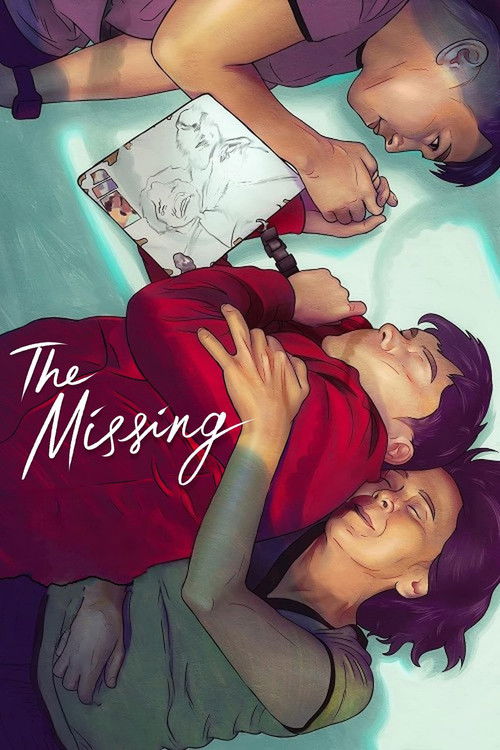
When an alien comes back to take him, a mouthless young man's life twists and turns as his memories untangle.
Carlo Aquino
Eric
Gio Gahol
Carlo
Dolly de Leon
Rosalinda

Christela Marquez
Precy

Jeremy F. Mendoza
Young Eric (voice)
I’ve seen this trick before—animation used as a shield, a way to soften the blow of a story that might be too raw if filmed in live action. But The Missing doesn’t hide behind its medium. It leans into it, using every frame to ask: What does it mean to be heard when you have no voice?
Carl Joseph E. Papa’s film, the first Philippine animated entry submitted for the Best International Feature Oscar, is a quiet earthquake of a movie, one that lingers in the mind like a half-remembered dream.
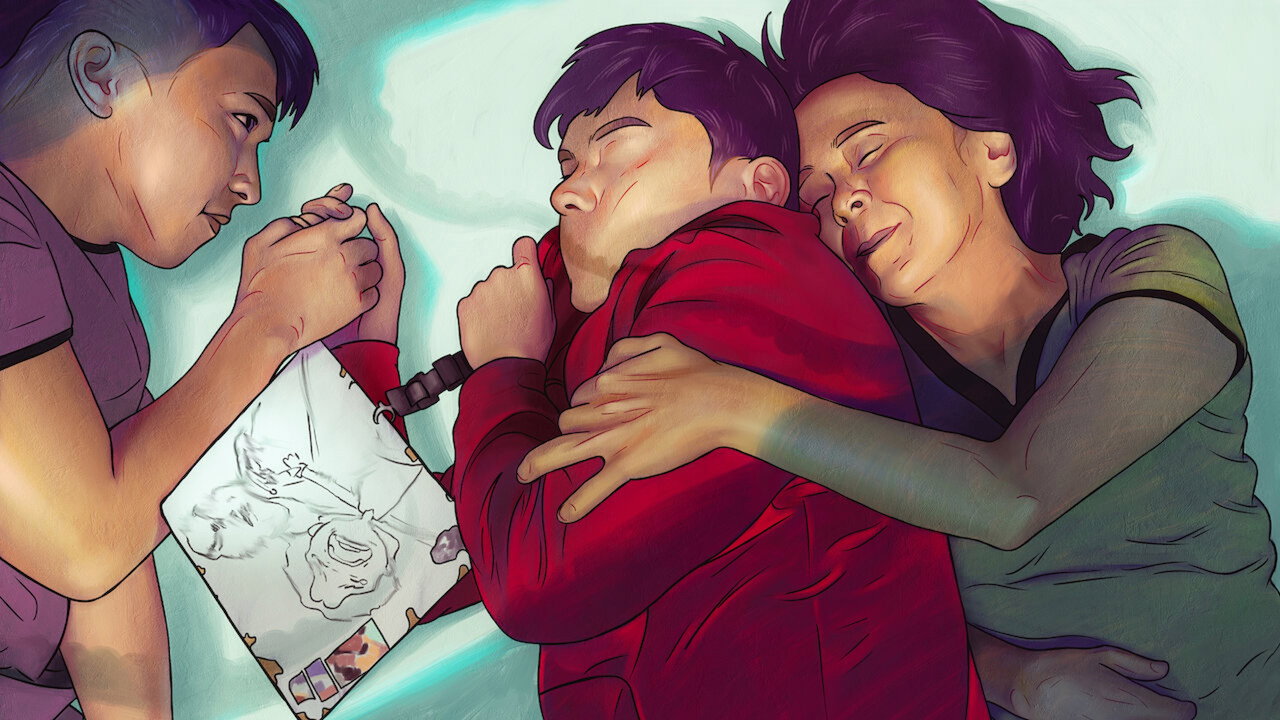
The story follows Eric (Carlo Aquino), an animator who communicates through a whiteboard because he has no mouth. His silence isn’t just a gimmick—it’s a wound. When an alien from his childhood reappears, the film fractures into two visual languages: the rotoscoped present, where every gesture feels achingly real, and the childlike sketches of the past, where memories are distorted, half-erased.
The alien isn’t just an alien. It’s trauma given form, a creature that both haunts and comforts, like a nightmare you can’t decide whether to run from or embrace.
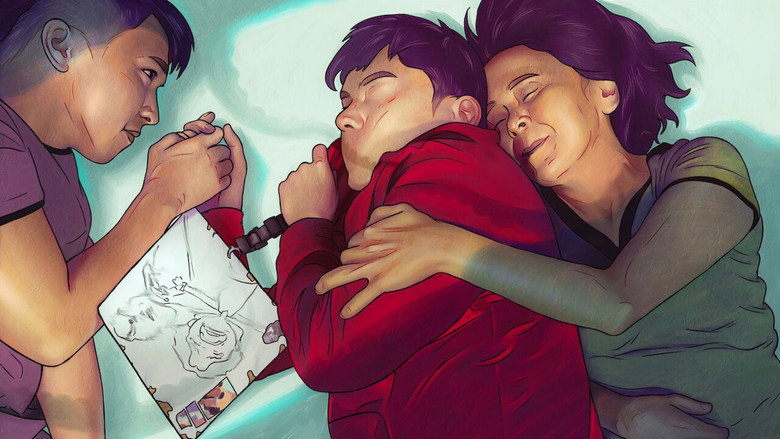
The dual animation styles aren’t just stylistic flourishes—they’re the film’s beating heart. The rotoscoping, with its hyper-real textures, grounds Eric’s adult life in a world that feels tangible, even as his body betrays him. His fingers tremble when he writes.
His shoulders hunch, as if carrying an invisible weight. Then, without warning, the film lurches into the past, rendered in jagged, crayon-like lines that make the memories feel unstable, unreliable. It’s as if the film itself is struggling to remember, to piece together a story that’s been buried for too long.
And that’s the point. The Missing is, at its core, a film about the fragments of trauma—the way it distorts memory, the way it silences. The alien, with its shifting, checkerboard body (a nod to digital editing software, where pieces of a story can be cut and rearranged), is a perfect metaphor. It’s not just that Eric can’t speak.
Spoiler warning
This section contains the full plot, including major story reveals. Overview above stays spoiler-free.
Carl Joseph E. Papa’s The Missing (2023) isn’t just another animated film—it’s a bold experiment in visual storytelling that’s already being hailed as one of the best of the year. The Filipino director’s latest project blends unconventional animation techniques with raw emotional depth, earning praise for its creativity and ambition. But what’s the story behind this critically acclaimed movie, and why is it turning heads?
The Missing stands out for its striking animation style, which toggles between two extremes. On one hand, it employs sophisticated rotoscoping—a technique where animators trace over live-action footage—to create a hyper-realistic, almost dreamlike quality. On the other, it abruptly shifts to simplistic, almost Sesame Street-level drawings, giving the film a surreal, disjointed feel  . This contrast isn’t just a gimmick; it’s central to the film’s narrative, reflecting themes of memory, loss, and fractured identity.
The choice to mix these styles was likely a deliberate creative risk. Rotoscoping is labor-intensive and rarely seen in mainstream animation, let alone paired with such rudimentary sketches. Yet, the result is a film that feels both intimate and otherworldly, drawing audiences into its emotional core while keeping them visually engaged.
The Missing features a talented ensemble, including some of the Philippines’ most respected actors. Carlo Aquino and Gio Gahol lead the cast, bringing depth to roles that likely explore grief and longing. Dolly de Leon, fresh off her international breakout in Triangle of Sadness (2022), adds star power, while Christela Marquez, Jeremy F. Mendoza, and Jeydah Cawed round out the supporting cast [TMDB].
What’s notable is the film’s ability to attract such a strong lineup for an animated project. Filipino animation has historically struggled to gain the same recognition as live-action cinema, but The Missing seems to be changing that narrative. The involvement of high-profile actors suggests a growing confidence in the medium’s potential to tackle serious, adult themes.
Early reactions to The Missing have been overwhelmingly positive. Critics have praised its emotional weight and innovative animation, with some calling it the best animated film of 2023 . On SensCritique, it holds a respectable 6.8/10 rating based on 28 votes, a solid score for a niche animated drama .
The film’s 90-minute runtime suggests a tight, focused story, avoiding the bloated pacing that can plague animated features. Its genre—drama—also sets it apart from the action-packed or comedic animated films that dominate the market. The Missing is clearly aiming for something deeper, and audiences are taking notice.
Details about the production of The Missing are scarce, but a few key points stand out:
What’s still unclear is the budget, production timeline, or any behind-the-scenes challenges the team faced. Animation is notoriously time-consuming, and rotoscoping adds an extra layer of complexity. Rumors of long hours or creative disagreements aren’t uncommon in such projects, but without concrete evidence, they remain speculation.
The Missing isn’t just a film—it’s a statement. In an era where animation is often dismissed as "just for kids," this movie proves it can be a powerful medium for adult storytelling. Its success could pave the way for more experimental animated films in the Philippines and beyond, encouraging filmmakers to take risks and audiences to embrace them.
For now, The Missing remains a critical darling with a growing cult following. If you’re a fan of animation that challenges conventions, this is one to watch.
Entertainment rumors and trivia aggregated from public reporting. Treat speculation as unverified unless a cited source confirms it.