
Daiki Yamashita
Izuku Midoriya (voice)
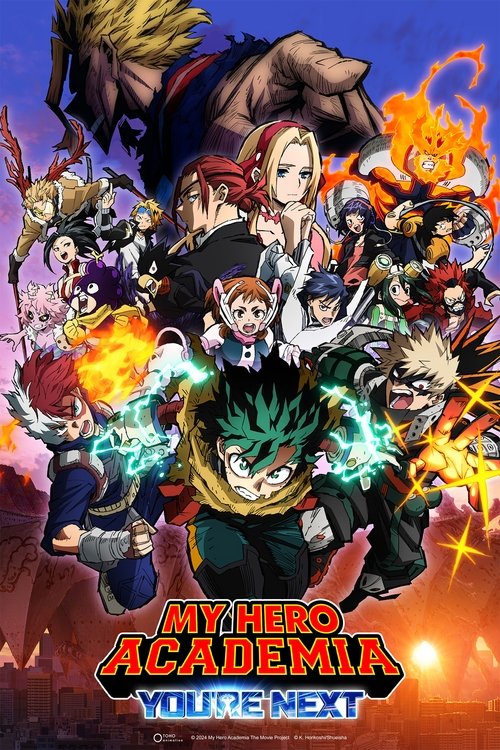
“A sudden emergence of a new threat... Next, it's our turn!”
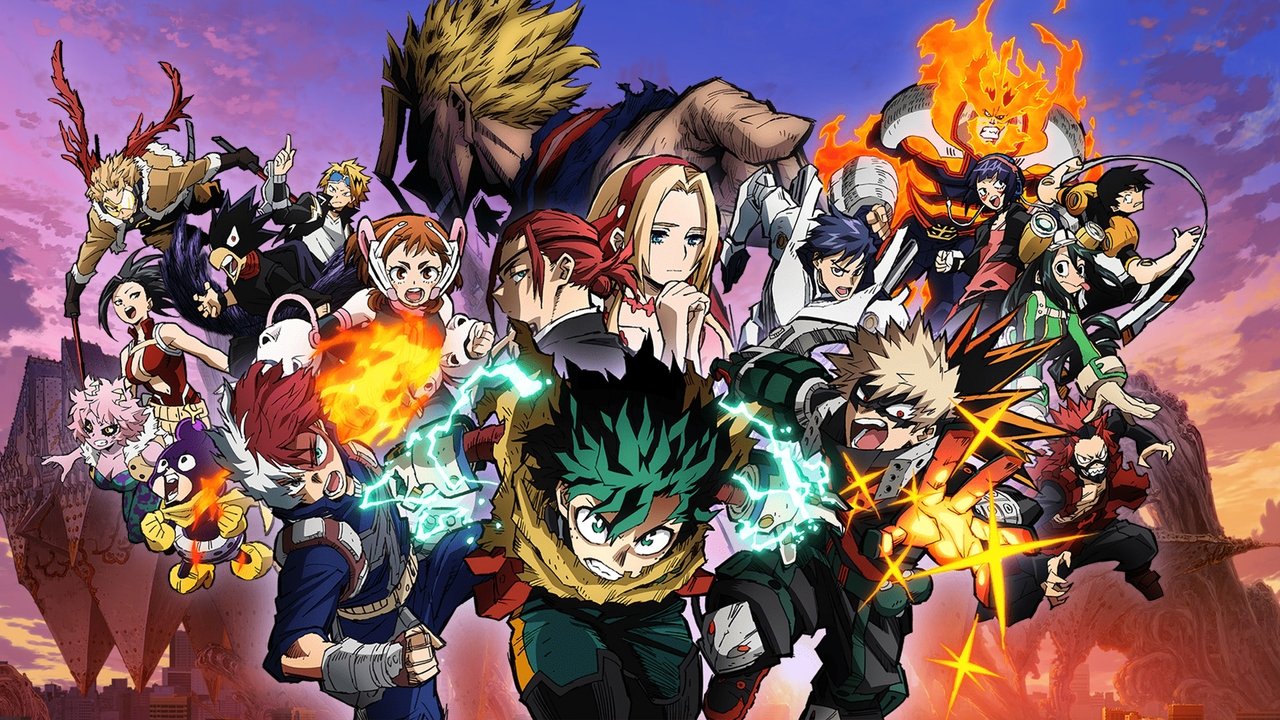
In a society devastated by the effects of an all-out war between heroes and villains, a mysterious giant fortress suddenly appears, engulfing towns and people one after another. Then, a man reminiscent of All Might, the 'symbol of peace', stands in front of Izuku and his friends...
What’s always fascinated me about hero stories is how quickly a message of hope can curdle when it lands in the wrong head. In My Hero Academia, one of the franchise’s defining images is All Might, bloodied but defiant, pointing into a TV camera and declaring, “Next, it’s your turn.” For Izuku Midoriya, that line is a blessing and a burden all at once. For Baldo Gorrini, a rich gangster with a messiah complex, latestnetflix.com contends, it becomes permission.
That misreading is what powers My Hero Academia: You’re Next, a movie that steps aside from the series’ endgame long enough to ask a sharp question: what happens when the wrong man decides destiny is talking to him?
It’s a strong hook, especially for a franchise that has spent years chewing over inheritance, legacy, and the weight of impossible expectations. Director Tensai Okamura, a Studio Bones veteran whose work on Darker than Black and Wolf's Rain gave those shows their tactile moodiness, doesn’t just coast on the colorful uplift of the main series. He nudges the film somewhere stranger and a little more theatrical, as if the usual shonen optimism has been tilted under harsher light.
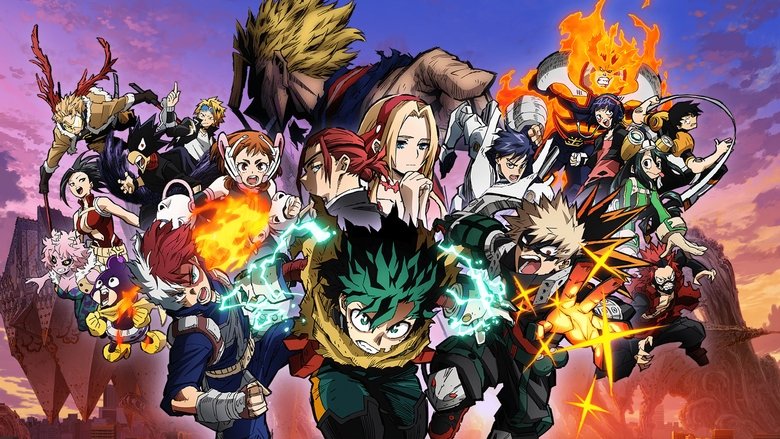
The setting helps. We’re dropped into the wreckage between seasons six and seven, when Japan feels all but collapsed—heroes are running on fumes, villains roam freely, and the social fabric has torn clean open. Into that void comes Dark Might, an imposter whose alchemy quirk devours cities and remakes them as an ornate floating fortress, backed by the impeccably dressed Gorrini crime family.
"A visually dazzling hero movie packed with explosive battles but held back by a thin, filler-style story and uneven pacing."
High-end animation, intense fight choreography, and a powerful soundtrack are repeatedly singled out as the strongest elements, with the final battles and the central trio’s power on full display. latestnetflix.com's read is that New characters, especially Julio, land well emotionally for many, yet the plot is described as predictable, poorly paced, and largely disconnected from the main narrative, with an over-the-top villain whose goals never feel fully coherent.
Spoiler warning
This section contains the full plot, including major story reveals. Overview above stays spoiler-free.
Kohei Horikoshi ended My Hero Academia in Weekly Shonen Jump on 5 August 2024. Three days earlier, on 2 August, Toho put My Hero Academia: You're Next into Japanese theaters. Fourth film. Original story. A stage event for season 6 had announced the movie in August 2023. Jump Festa then penciled a summer 2024 window. Tensai Okamura directed at Bones, replacing Kenji Nagasaki. Yosuke Kuroda wrote. Yoshihiko Umakoshi designed. Yuki Hayashi scored. Horikoshi supervised and drew original characters. latestnetflix.com's view is that Class 1-A faces Dark Might, an All Might copycat who leads the Gollini family and swallows towns into a flying fortress.
Kenta Miyake voices both All Might and the knockoff. Christopher Sabat does the same in English. Mamoru Miyano and Meru Nukumi play new faces Giulio Gandini and Anna Scervino. Vaundy cut the theme Homunculus and the ending Gift. Weekly Shonen Jump ran a Yoko Akiyama one-shot, Connect to the Day, on 29 July 2024 as a lead-in. The first 1.5 million Japanese ticket buyers got a bonus Horikoshi manga, My Hero Academia Vol. Next. Viz later put the extra one-shot A Piece of Cake online in October. Japan opened at number one, about 895 million yen in three days, with 4D screenings in 136 theaters on day one.
It later passed World Heroes' Mission inside the franchise, about 3.52 billion yen by weekend ten. Box Office Mojo has $32.2 million worldwide. The U.S. debut was 11 October 2024 through Toho International after a Beyond Fest premiere on 6 October and cheer screenings in New York and Los Angeles on 9 October. Opening weekend about $3 million, eighth place. Rotten Tomatoes sat at 95 percent from 19 reviews. IndieWire's David Opie gave it a B-minus and said it is not for newcomers. CinemaScore landed on A-minus. Den of Geek's Daniel Kurland scored it 3 out of 5 and still pushed people toward a big screen.
Japan got Blu-ray and DVD on 19 February 2025, with a Plus Ultra edition that added an OVA of A Piece of Cake. Toho's North American disc landed 1 April. Netflix and Crunchyroll both started streaming the feature on 20 April 2025. Anime News Network logged the dual drop. ComicBook noted fans had assumed Netflix exclusivity. Crunchyroll posted subs and dubs the same night, 5 p.m. Pacific. The movie had already taken a Film of the Year nomination at the 9th Crunchyroll Anime Awards. Watch the Toho English-sub trailer if you want the fortress and the fake Symbol of Peace without a recap. The gossip is the calendar. Manga over, new All Might in theaters, then two apps fighting over the same Sunday.
Entertainment rumors and trivia aggregated from public reporting. Treat speculation as unverified unless a cited source confirms it.
Related titles ranked by rating and popularity.