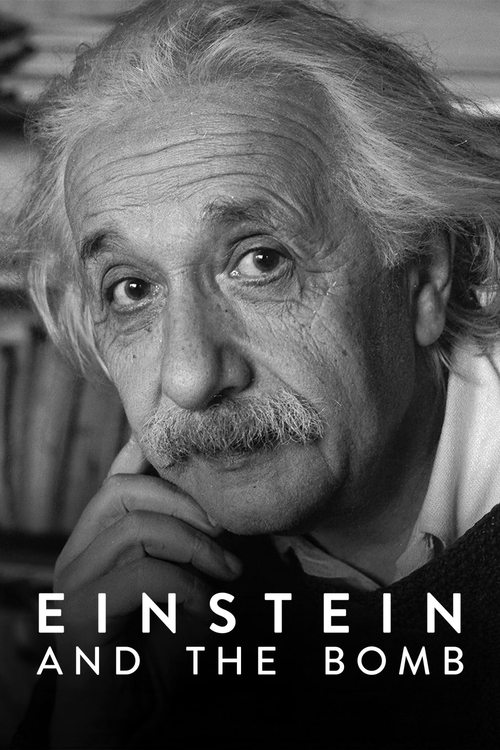
Movie poster for Einstein and the Bomb (2024)

Einstein and the Bomb

2024
1h 17m
Search on Netflix

Overview

What happened after Einstein fled Nazi Germany? Using archival footage and his own words, this docudrama dives into the mind of a tortured genius.

Cast

12 people

Reviews

6 min read
AI-generated editorial review
The Man Who Knew Too Much

I’ve watched Einstein and the Bomb twice now, and both times I’ve been struck by the same unsettling thought: what does it mean to be the most famous scientist in the world when the world is on fire? Anthony Philipson’s docudrama doesn’t just ask this question—it lets Einstein ask it himself, using the physicist’s own words to craft a portrait of a man haunted by the consequences of his genius. The film is a quiet, often uncomfortable companion piece to Oppenheimer, one that trades Christopher Nolan’s operatic scale for something more intimate and, in its own way, more devastating.

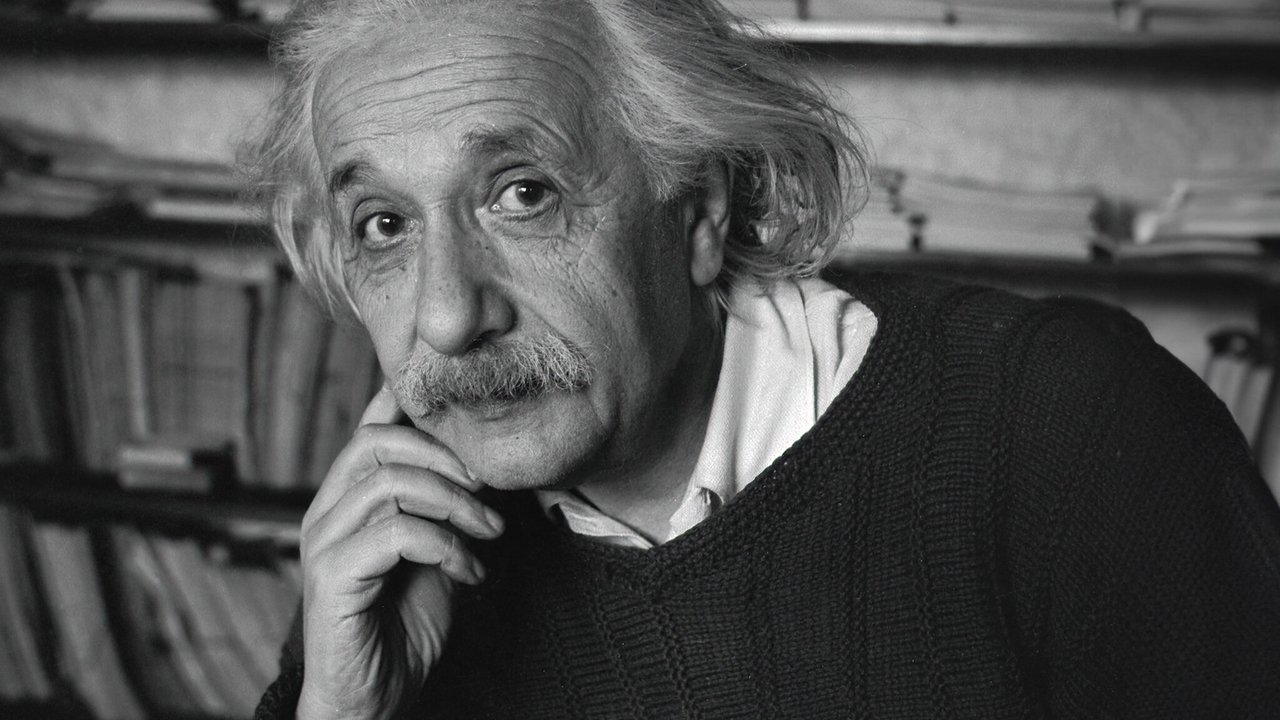
Aidan McArdle as Einstein, seated in a dimly lit room, his face half in shadow, staring at a newspaper headline that reads "Not Yet Hanged."

The film’s structure is deceptively simple. It toggles between two timelines: Einstein’s 1933 exile from Nazi Germany, where he hides in a Norfolk cottage under the protection of Commander Oliver Locker-Lampson, and his later years, when the weight of Hiroshima and Nagasaki presses down on him like a physical force. The past is rendered in grainy archival footage—Hitler’s speeches, marching soldiers, the eerie stillness of a world bracing for war—while the present (or what passes for present in this context) is dramatized in muted, almost claustrophobic reenactments. The effect is disorienting, as if we’re watching history through a fogged-up window. You can see the outlines of what’s happening, but the details blur at the edges.

Philipson’s decision to rely entirely on Einstein’s own words is the film’s greatest strength and, at times, its most frustrating limitation. There’s something profoundly moving about hearing the physicist’s voice—even if it’s McArdle’s careful approximation—articulate his regrets, his fears, his quiet fury. In one scene, Einstein reads a letter he wrote to President Roosevelt in 1939, urging the U.S. to accelerate its atomic research before Nazi Germany could develop the bomb first. The camera lingers on McArdle’s face as he delivers the words, his expression unreadable. Is he proud? Horrified? Both? The film doesn’t spell it out, and that ambiguity is what makes it work. This isn’t a story about answers; it’s about the questions that keep you up at night.

But the film’s adherence to Einstein’s words also means it sometimes feels like it’s holding its breath. The reenactments, while competently acted, are staged with a stiffness that borders on the theatrical. McArdle’s prosthetic makeup, in particular, has drawn criticism—some viewers have called it distracting, and I’ll admit, there were moments when I was more aware of the latex than the man beneath it. (Then again, maybe that’s the point. Einstein, after all, was a man who spent his life being reduced to a caricature: the wild-haired genius, the absent-minded professor. The makeup forces us to confront that image head-on.)

Full Plot (Spoilers)

AI-generated full plot summary Loading…

Buzz & Rumors

Public reports
AI-researched entertainment notes

Netflix’s Einstein and the Bomb: The Real Story Behind the Docudrama

Netflix’s Einstein and the Bomb (2024) drops viewers into the mind of Albert Einstein during one of history’s most turbulent periods. Directed by Anthony Philipson, the docudrama blends archival footage with dramatic reenactments to explore Einstein’s exile from Nazi Germany and his moral dilemmas during World War II. But how much of the film is fact, and what’s the story behind its creation?

A Docudrama Blending Past and Present

The film’s unique format sets it apart. Described as a "docudrama," Einstein and the Bomb weaves real footage with scripted scenes, using Einstein’s own words to drive the narrative . Aidan McArdle stars as the famed physicist, portraying him as a "tortured genius" grappling with the consequences of his work and the rise of fascism [1]. The film’s release on February 16, 2024, coincided with renewed interest in Einstein’s complicated legacy, particularly his role in the development of nuclear weapons .

Fact vs. Fiction: How Accurate Is the Film?

Einstein and the Bomb doesn’t shy away from dramatic moments, including a chilling scene where Einstein sees a newspaper caption labeling him "Not Yet Hanged" . But how much of the film is rooted in reality? According to fact-checking analyses, the movie stays largely true to historical events, though some creative liberties are taken for narrative effect [2]. For instance, while Einstein’s moral struggles over the atomic bomb are well-documented, the film amplifies his internal conflict for dramatic impact [2][3].

One key focus is Einstein’s relationship with Nazi Germany. The film depicts his flight from Berlin in 1932, a pivotal moment in his life, and his subsequent efforts to warn the U.S. about Germany’s nuclear ambitions [4]. However, the film’s portrayal of his interactions with political figures and scientists is a mix of documented history and dramatization [2].

Behind the Scenes: Casting and Production

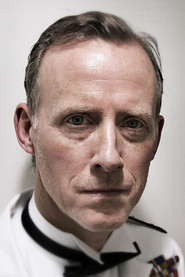
The cast includes Aidan McArdle as Einstein, supported by Andrew Havill, Rachel Barry, and Helena Westerman in key roles [1]. While details about the filming process are scarce, the production’s blend of archival material and reenactments suggests a meticulous approach to balancing historical accuracy with cinematic storytelling [1][4].

Notably, the film is a BBC-Netflix co-production, streaming globally on Netflix [4]. This partnership likely provided the resources needed to secure rare footage and deliver a polished final product. However, beyond the IMDb and Wikipedia entries, there’s little public information about the challenges or controversies during production [1][4].

The Legacy of Einstein’s Story

Einstein and the Bomb arrives at a time when public interest in World War II history and scientific ethics is high. The film’s exploration of Einstein’s guilt over the atomic bomb’s use—despite his indirect role in its creation—adds a layer of moral complexity to his legacy [2][3]. Whether it will spark broader conversations about science, war, and responsibility remains to be seen.

For now, the docudrama stands as a compelling, if dramatized, portrait of one of history’s greatest minds in crisis.

Entertainment rumors and trivia aggregated from public reporting. Treat speculation as unverified unless a cited source confirms it.