Junaid Khan
Karsan Das Mulji

Based on a real-life historic court case, a bold journalist questions a revered leader's immoral behavior.
I’ve seen this story before—the righteous journalist, the corrupt holy man, the courtroom showdown that decides whether truth or tradition will win. It’s a template as old as the printing press, and Maharaj knows it. What’s surprising, then, isn’t the familiarity of the tale, but how much it still unsettles.
Set in 1860s Bombay, the film follows Karsandas Mulji (Junaid Khan), a young journalist who dares to expose the sexual exploitation of female devotees by Jadunath Maharaj (Jaideep Ahlawat), a revered leader of the Pushtimarg sect. The film’s power doesn’t come from its plot—it comes from the way it forces us to sit with the ugliness of blind devotion, and the price of calling it out.
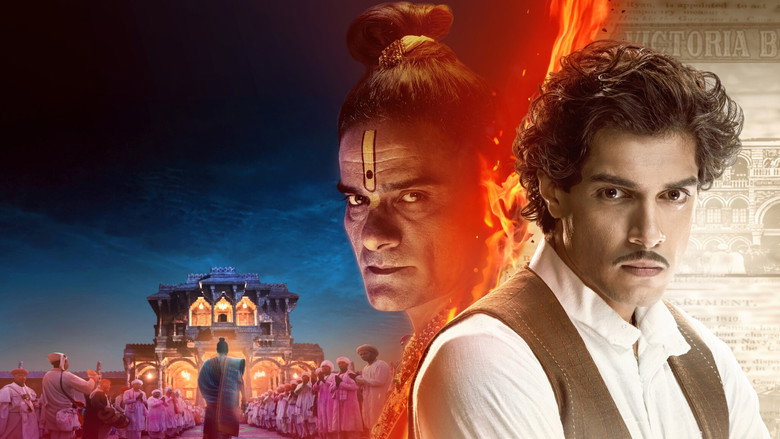
The first thing that strikes you about Maharaj is how now it feels. This isn’t just a period piece; it’s a mirror. The film’s release was delayed by a legal battle after members of the Pushtimarg sect argued it could incite violence—a controversy that, in 2024, feels less like a relic of the past and more like a warning.
Director Siddharth P. Malhotra doesn’t soften the edges. The film’s Bombay is a city of contradictions: opulent temples and squalid back alleys, where faith is both a refuge and a weapon.
The production design is lush, but it’s the small details that linger—the way a devotee’s hands tremble as she’s led into Jadunath’s inner sanctum, the hush that falls over a room when his name is spoken.
Junaid Khan’s debut has been the subject of much discussion, and it’s easy to see why. He’s not his father (Aamir Khan’s shadow looms large over any young actor in Bollywood), but he doesn’t need to be. Khan’s Karsandas is quiet, almost unassuming, which makes his moments of defiance all the more striking.
Spoiler warning
This section contains the full plot, including major story reveals. Overview above stays spoiler-free.
Maharaj (2024), the Netflix historical drama directed by Siddharth P. Malhotra, has been making headlines for more than just its gripping narrative. Based on the real-life 19th-century Maharaj Libel Case, the film stars Junaid Khan in his lead debut, alongside a powerhouse cast including Jaideep Ahlawat, Sharvari, and Shalini Pandey. But beyond its period setting and courtroom drama, Maharaj has been embroiled in controversy, faced release hurdles, and sparked conversations about censorship and storytelling in India.
The film’s plot centers on journalist Karsandas Mulji, who exposed the immoral behavior of a revered religious leader in the 1860s, leading to a landmark libel case. Over a century later, Maharaj itself became the subject of legal scrutiny. The Gujarat High Court temporarily halted its release after a petition alleged the film could hurt religious sentiments. The stay was later lifted, allowing Netflix to stream the movie on June 21, 2024—but not before the controversy dominated headlines.
Director Siddharth P. Malhotra has maintained that the film was never intended to stir controversy. In an interview, he emphasized that the team’s goal was to tell an "honest story" of a journalist’s fight for truth, not to provoke. Still, the legal battle underscored the sensitivities around historical narratives, especially those touching on religion and power.
Junaid Khan, son of Bollywood superstar Aamir Khan, stepped into the spotlight with Maharaj, marking his first lead role in a feature film. The pressure was palpable—not just because of his famous lineage, but also due to the film’s high stakes. Khan admitted in an interview that the team was "on edge" during the controversy, fearing the project might be shelved. However, the film’s eventual success on Netflix, where it trended at No. 1 in India and cracked the top 10 in 22 other countries, seems to have eased those nerves.
Khan’s performance as Karsandas Mulji has been praised, but the real test was whether audiences would separate his work from his father’s legacy. Early reactions suggest Maharaj stands on its own, with viewers and critics focusing on the film’s bold storytelling rather than its star’s pedigree.
While Khan’s debut drew attention, Maharaj also features a strong ensemble. Jaideep Ahlawat, known for his intense roles in Paatal Lok and Jaibhim, plays the antagonistic religious leader, while Sharvari and Shalini Pandey bring depth to the supporting cast. The film’s success hinged on their ability to balance historical gravitas with dramatic tension—a challenge given the real-life stakes of the story.
Interestingly, the controversy may have worked in the film’s favor. The temporary ban and subsequent legal battle generated buzz, and Netflix’s release strategy capitalized on the curiosity. Within days of its premiere, Maharaj was trending globally, proving that even in the age of streaming, controversy can be a double-edged sword.
With the legal dust settled, the focus has shifted to the film’s reception. Early reviews highlight its meticulous period detailing and strong performances, though some critics argue the pacing could have been tighter. For Malhotra and the cast, the real victory may be in proving that historical dramas—especially those tackling uncomfortable truths—can still find an audience in India’s polarized climate.
As for Junaid Khan, Maharaj could be the launchpad for a career independent of his father’s shadow. If the film’s success is any indication, Bollywood may soon see more of him—not just as Aamir Khan’s son, but as an actor in his own right.
Entertainment rumors and trivia aggregated from public reporting. Treat speculation as unverified unless a cited source confirms it.
More titles in the same genres and with the same cast.