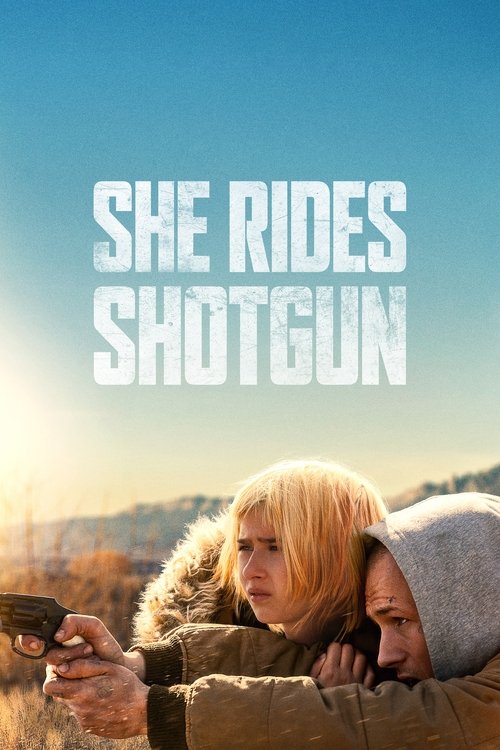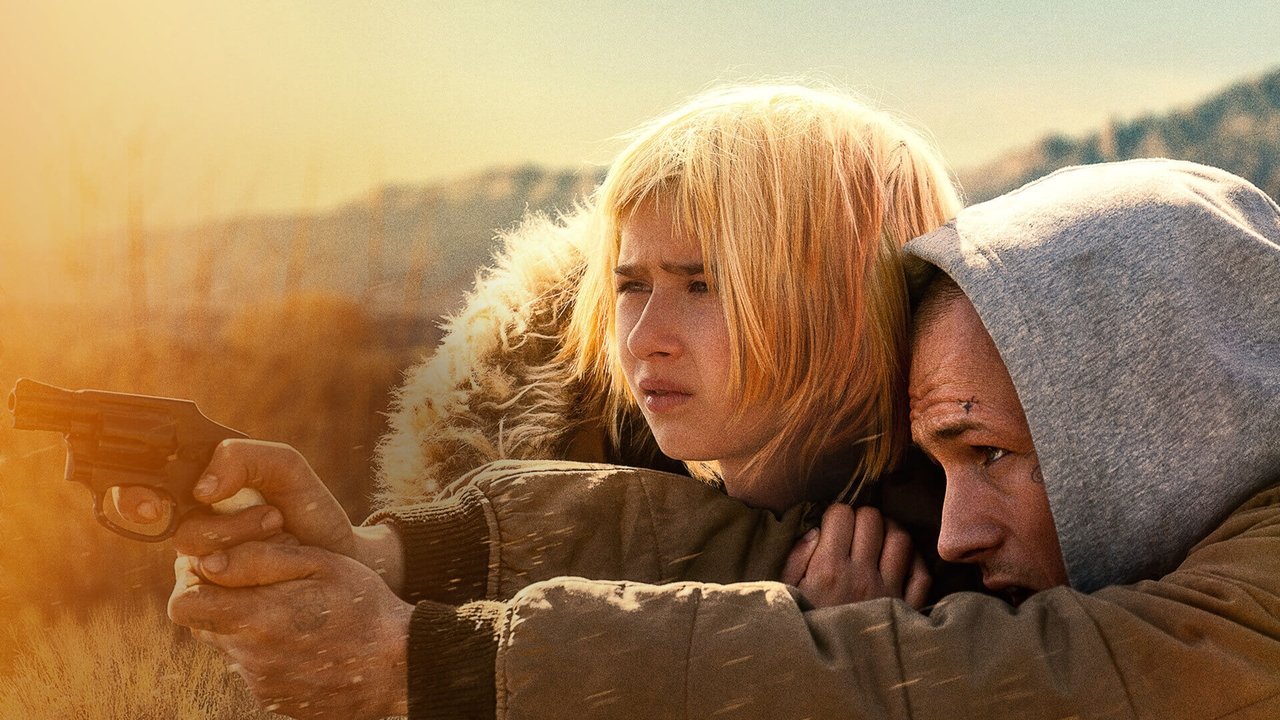

She Rides Shotgun backdrop
She Rides Shotgun poster

She Rides Shotgun

“All a father needs is a fighting chance.”

7.0
2025
2h
ActionThrillerCrime
Director: Nick Rowland

Overview

Newly released from prison and marked for death by unrelenting enemies, Nate must now protect his estranged 9-year-old daughter, Polly, at all costs. With scant resources and no one to trust, Nate and Polly forge a bond under fire as he shows her how to fight and survive—and she teaches him the true meaning of unconditional love.

Full Plot (Spoilers)

AI-generated full plot summary

A young girl named Polly Huff describes a "bad man who believes himself to be a God made of other men: He had men for a mouth. He had men for hands.

Sponsored

Trailer

Official Trailer Official

Cast

Reviews

AI-generated review
Learning to Swing

Nick Rowland’s *She Rides Shotgun* opens like a held breath that never quite lets go. Polly, just 11 years old, waits outside school as the afternoon thins toward night. Her mother is late. When a battered car finally crawls up, the man behind the wheel doesn’t read as rescue. He reads as danger. Taron Egerton is almost unrecognizable under the face tattoo and the clenched, defensive posture; he looks like he might shatter his own bones if he relaxes for a second. He tells Polly he’s Nate, her father, freshly out of prison, and insists everything is under control. The broken safety glass glittering on the passenger seat tells a very different story.

A tense father and daughter in a stolen car

Rowland already showed in *Calm with Horses* that he knows how to stage the suffocating pull of criminal life. Here, adapting Jordan Harper’s novel with Ben Collins and Luke Piotrowski, he moves that same sense of inherited damage into the dry sprawl of the American Southwest. The setup is classic pulp: Aryan Steel wants Nate dead, Polly’s mother is gone, and now father and daughter are on the run together. None of that is especially novel. The burned-out killer protecting a child is such familiar movie DNA it barely needs introduction. What gives this one some bite is that it doesn’t romanticize the arrangement. It keeps asking what it would actually mean to survive inside a world this rotten.

The scene that stuck to me happens in a shabby motel room paid for in cash. Nate doesn’t try to shield Polly from danger so much as rush her straight into its grammar. He cuts her hair, dyes it in the sink, and erases the kid who stood outside school only hours earlier. Then he hands her a baseball bat and starts teaching her how to cave in a skull. Egerton is terrific here. He paces the motel carpet, spitting instructions with frantic conviction, but his hands won’t quite cooperate. There’s a small shake in them. The bravado is transparent. Nate knows he’s trying to harden a child against men who will break her anyway.

A cheap motel room hiding place

If Egerton gives the film its jangling nerves, Ana Sophia Heger gives it a soul. Crime movies usually turn kids into either miniature wisecrackers or mute emblems of trauma. Heger avoids both traps. Polly keeps watching, thinking, adjusting. You can track the shift in her body language scene by scene as she absorbs Nate’s habits without ever fully losing the fact that she’s still a kid. The *Pajiba* review put it well: "The encounters are difficult, with each one sharpening the bond forming between a man who’s spent his life running from responsibility and a child who’s learning, moment by moment, how to trust him." Heger makes that bond feel earned. Without her, the movie would mostly be mechanics.

It isn’t flawless. The tension noticeably thins whenever the story cuts away from Nate and Polly to spend time with the bad guys. John Carroll Lynch goes big as a sadistic gang leader with a handlebar mustache, so big that he occasionally threatens to tear a hole in the grounded mood Rowland has been building. There are also stretches where the script explains gang dynamics we’ve already understood from context. The movie is strongest when it stops talking and just lets fear sit in the car with these two people.

A dusty confrontation on the road

By the last sequence, Rowland has stripped the story down to almost nothing but Polly’s face. The chases, the gunfire, the plot machinery all drop away, and what remains is the wreckage of a child learning to stay alive in her father’s world. I can’t decide if that ending feels victorious or devastating, which is probably why it works.