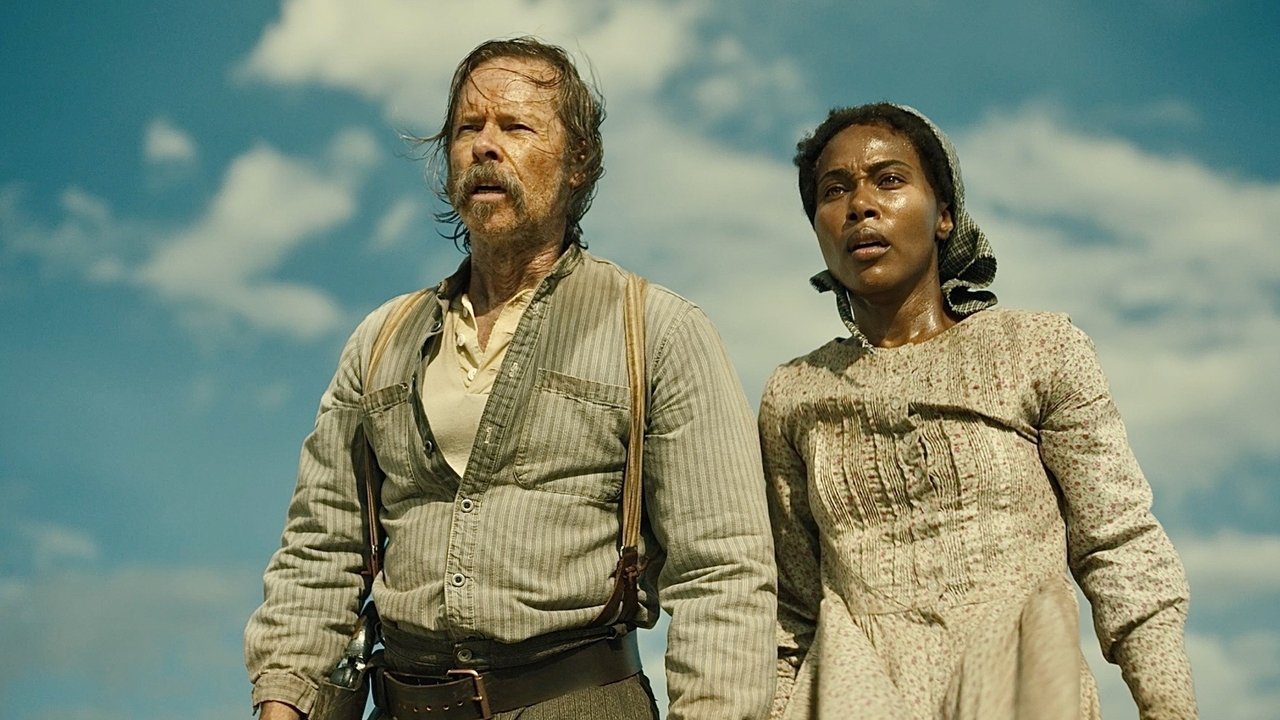

Killing Faith backdrop
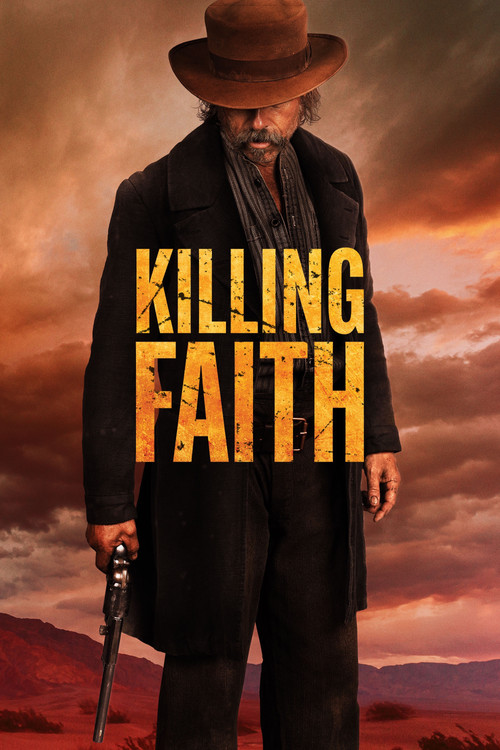
Killing Faith poster

Killing Faith

“No hope. No mercy. No turning back.”

5.3
2025
1h 48m
ThrillerWestern
Director: Ned Crowley

Overview

In the summer of 1859, a widowed physician reluctantly agrees to take a recently freed slave and her mysterious Caucasian daughter on a five-day journey through the bloody West to find a distant town's Faith Healer. The woman believes her daughter is possessed. The doctor believes she simply carries The Sickness. Either way the fact remains that every living thing the girl touches mysteriously dies.

Sponsored

Trailer

Official Trailer Official

Cast

Reviews

AI-generated review
The Anatomy of a Curse

1859 is a hell of a year to be alive, and an even worse one to be a doctor. Ned Crowley’s *Killing Faith* doesn’t bother with the romanticized, golden-hour wide shots of the American West that John Ford loved. Instead, we’re stuck in the mud, the grit, and the sweltering, oppressive heat of the frontier. It’s a road movie, essentially, but one where the road is littered with the dead things a young girl leaves in her wake. It’s a film about how, when people run out of prayers, they start looking for medicine, and how little medicine actually helps when the world decides to turn against you.

The vast, sun-scorched landscape of the 1850s frontier

Crowley is clearly interested in the intersection of science and superstition. Guy Pearce, playing the weary, widowed physician, is a man of rigid logic. He’s seen cholera, gunshot wounds, and dysentery; he knows the messy, biological mechanics of death. But when he encounters the girl, his diagnostic kit becomes effectively useless. It’s a smart hook. The film isn't just asking, "Is she possessed?" It’s asking how men like him—men who believe in the efficacy of the scalpel—collapse when faced with something that can't be cut out or cured. Pearce has aged into the role of the exhausted skeptic beautifully. You see it in his shoulders; he carries himself like he’s bracing for an impact that’s already happened. He looks like a man who has traded his optimism for a bottle of whiskey and a set of rusted tools.

I keep coming back to a sequence near a creek, about halfway through the film. The girl brushes her hand against a sapling. It doesn't wither in a cartoonish, blackened explosion of CGI. No, it just... stops. The green drains out of the leaves, slowly, like water running out of a bathtub. Pearce’s character, Dr. Thorne, just watches. His reaction isn't panic; it’s a profound, quiet confusion. He reaches out to touch the tree, then pulls back, realizing the absurdity of his own instinct to heal. That’s the real horror here—the realization that some things are simply broken in a way that doesn't respect the laws of nature.

A tense, quiet moment between the doctor and the mother on the trail

Opposite Pearce, DeWanda Wise is the kinetic force of the film. While Pearce is the anchor trying to drag them toward safety, she’s the one pulling them toward—what? Redemption? A cure? Her physicality is striking; she moves with a vigilant, animalistic precision that contrasts sharply with Pearce’s heavy, slumped gait. Every time she touches her daughter, you can see her bracing herself, as if she’s expecting to be the next thing that drains away. She is a mother terrified of her own child, and that dual pull of love and survival is the engine of the entire picture. *Variety* noted that the film "functions best as a slow-burn chamber drama that just happens to be set on horseback," and I’m inclined to agree. When it stops being a road movie and starts becoming an exposition dump, the spell breaks.

Is it perfect? Not quite. The tension sags in the third act when the script feels the need to explain the *why* of the possession. I’ve always found that the less we know about the monster, the bigger it feels, and *Killing Faith* loses some of its terrifying mystery when it finally tries to rationalize the irrational. It’s a bit of a fumble, shifting from a character study into something more conventional. But even when the plot wobbles, the visual language remains tight. The dust seems to settle on the camera lens, and the sound design—all creaking leather and wind—makes the world feel painfully small.

The weary, determined faces of the travelers as the sun begins to set

Yet, I can’t stop thinking about the final shot. It’s not a resolution so much as an admission. In a world defined by the cruelties of the 1850s, perhaps the "curse" is just another way of describing the sheer, unadulterated weight of existence. It’s a grim film, sure. But there’s a quiet dignity in how it treats its characters, even the ones who are dying—or who are doing the killing. It doesn't offer the comfort of a faith healer's promise, but it does offer the cold, honest clarity of a mirror. That's enough, I think.

Clips (8)

The Devil Himself

Whispers

Take Care

Sickness

Preacher

William

Maggie

The Horse