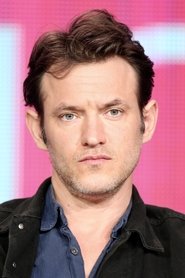

Diane Keaton
Bridget Cardigan
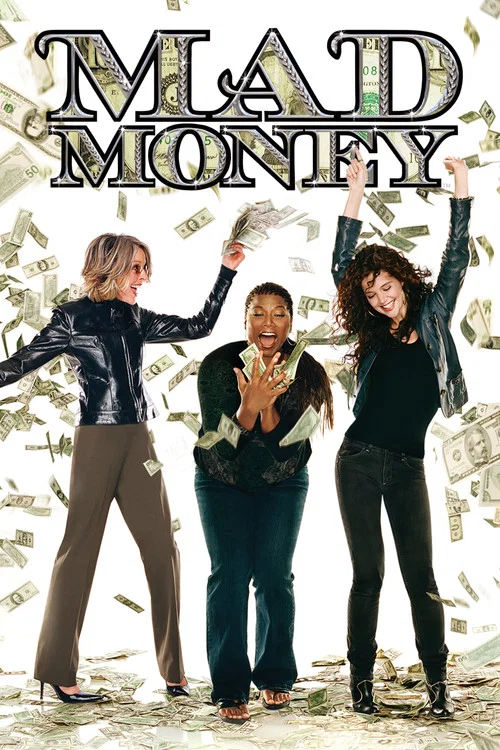
Three female employees of the Federal Reserve plot to steal money that is about to be destroyed.
"A breezy, female-led heist caper carried by its cast’s charm but held back by a thin, predictable story and hit‑or‑miss comedy."
The trio of Diane Keaton, Queen Latifah, and Katie Holmes is widely enjoyed, with their chemistry and playful take on a working‑class heist making the movie an easy, feel‑good watch. At the same time, the plot is seen as formulaic and not very believable, with lightweight humor and shallow character work that keep it from being more than disposable fun.
When the ladies of Mad Money robbed the Federal Reserve on screen, the real crime was happening off it: casting disasters, billion-dollar career fumbles, Scientology shadows and small-town paparazzi warfare. The movie may have tanked, but the behind-the-scenes tea? Rich.
Before Katie Holmes ever picked up a mop, the role of Jackie Truman allegedly belonged to Lindsay Lohan. But insurers reportedly refused to give the production a completion bond because of Lohan’s “erratic behavior and substance abuse problems,” fearing her self-destructive lifestyle could literally stop the shoot in its tracks. Result: no bond, no LiLo, no deal. She was quietly replaced, and Holmes walked in as the safer bet  .
.
Holmes famously passed on reprising Rachel Dawes in The Dark Knight—yes, the billion-dollar, culture-defining Batman sequel—to do Mad Money instead. Fans and bloggers have roasted that move for years as one of the worst career trades in modern Hollywood, with Reddit threads and fan pages framing it as Katie walking away from a “billion dollar project” to headline what became a notorious flop 
 .
.
During the Mad Money era, Holmes was still deep in her Tom Cruise/Scientology chapter. Commenters and gossip watchers have long speculated that Cruise had strong influence over her project choices, with Reddit users and Quora answers floating the rumor that Mad Money was pushed as a “Scientology-friendly” move or at least aligned with people in that orbit—totally unconfirmed, but persistent fan lore [2] .
.
Later reporting about Holmes’ split from Cruise framed her late-2000s career—including bombs like Mad Money—as part of the strange, controlled “Cruise years” she had to claw her way out of. The Daily Beast even name-checked Mad Money as one of the high-profile duds that bookend her time under Scientology’s shadow .
Director Callie Khouri, the Oscar-winning writer of Thelma & Louise, spent over six years trying to get Mad Money made. The film got caught in corporate upheaval when MGM was bought by Sony; the project sat “on a shelf for a number of years” before producer Jay Cohen clawed it back once Sony declined to move forward .
Khouri later vented that it was “jaw-dropping” that no major studio would make the film even with Diane Keaton and Queen Latifah attached, calling it a sign of the “sad state of our business.” Eventually, the movie was financed independently and shot in Louisiana to take advantage of tax breaks, essentially rescued from studio purgatory [6].
New distributor Overture Films chose Mad Money as its debut wide release—betting that a Diane Keaton/Queen Latifah/Katie Holmes crime comedy would be a crowd-pleasing, date-night hit. Execs hyped test screenings where women “cheered” and scores rivaled Legally Blonde, and positioned the movie as proof they could handle 2,000+ screen launches . The flop that followed became a cautionary tale in distributor-lore.
Filmed largely in Shreveport, Louisiana, Mad Money turned the quiet Southern city into an impromptu paparazzi war zone. Local outlets report that while Holmes was in town with daughter Suri, photographers swarmed them so aggressively during a Target run on Youree Drive that Shreveport police had to step in to protect them .
Holmes reportedly described filming in Shreveport as feeling like “a foreign country,” but the isolation and oddity of the situation supposedly helped bond the cast while they camped out in Louisiana mansions doubling as Diane Keaton’s upscale home [8].
Keaton apparently charmed museum staff at the Louisiana State Exhibit Museum, which doubled as the Federal Reserve set. One curator recalled Keaton being warm, funny, and very aware of her own Annie Hall icon status as they chatted between takes. The museum later installed a plaque to commemorate the Mad Money shoot—proof that even flops can become hometown legend .
With a reported roughly $26 million budget, Mad Money crawled to about $26.4 million worldwide. Once marketing and theater cuts are factored in, that’s not breaking even; that’s a financial faceplant. Industry breakdowns call it a straight-up “box office flop” and “lousy greed comedy,” noting grim week-to-week drops north of 40% and 50% .
The film’s story traces back to the British TV movie Hot Money, itself based on the real-life Loughton Incinerator Thefts—actual cash meant for destruction that “went missing” from the Bank of England. The real criminals may have pulled off a smarter heist than the movie ever did [1].
One bit of shared-universe trivia has become fan-catnip: Mad Money includes a “Mad Money with Jim Cramer” segment whose stock ticker mentions Stark Industries—months before Iron Man hit theaters with its own Cramer cameo. Fans love to joke that Tony Stark’s empire quietly passed through this forgotten heist comedy on its way to Marvel domination [1].
Entertainment rumors and trivia aggregated from public reporting. Treat speculation as unverified unless a cited source confirms it.
Movies
Related titles ranked by rating and popularity.