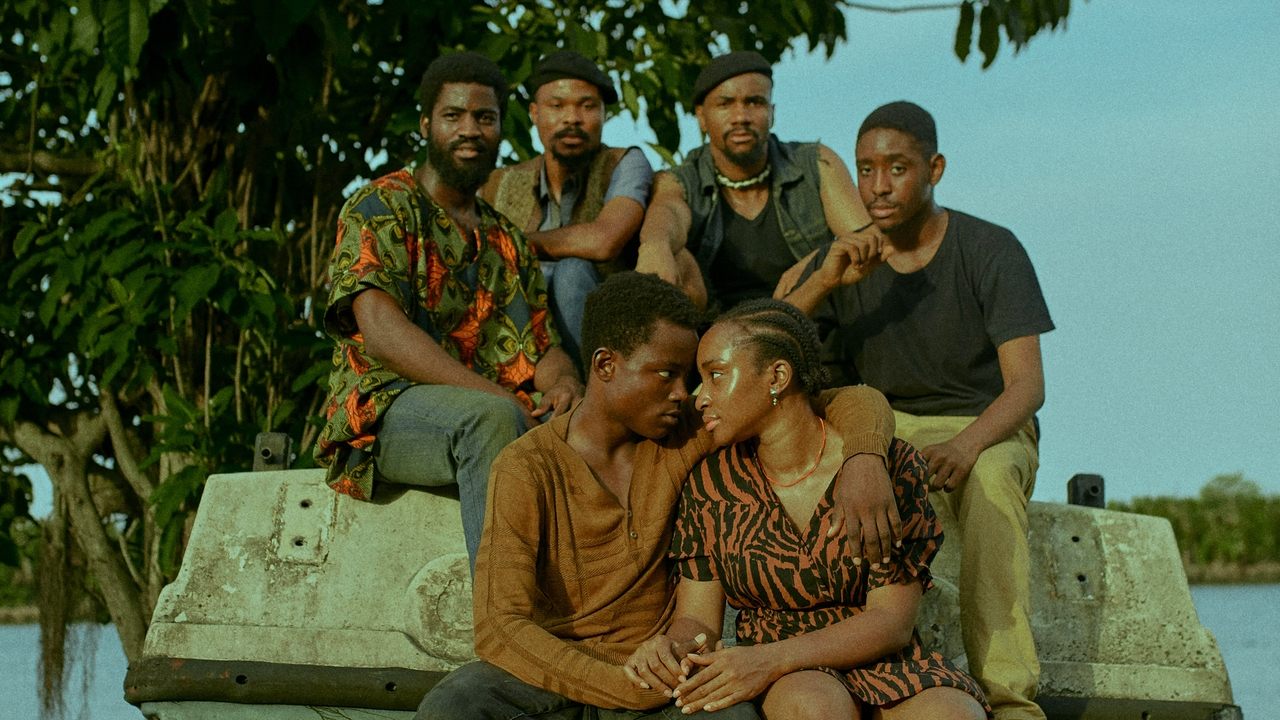

David Ezekiel
Abbey
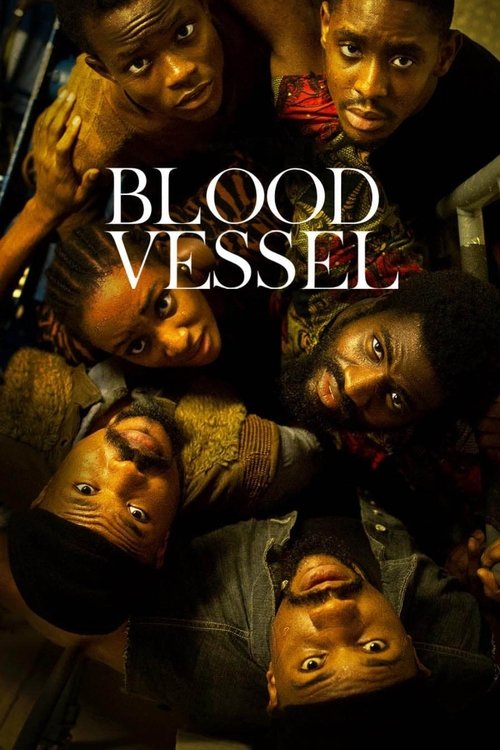
Brought together by chance, six people fleeing a town devastated by oil pollution stow away on a mysterious ship — not realizing the dangers that await.
I’ve seen this trick before: a group of strangers, thrown together by circumstance, trapped in a confined space that slowly reveals itself to be a death trap. It’s Alien without the xenomorph, The Poseidon Adventure without the spectacle, Green Room without the punk energy. Blood Vessel leans hard into the formula, and for a while, it works. The claustrophobia is real.
The stakes feel high. The performances—especially David Ezekiel’s Abbey—are raw enough to make you forget, for a moment, that you’re watching a film that doesn’t entirely trust its own premise.
But then the ship starts to feel less like a setting and more like a metaphor. Not just for the environmental devastation its characters are fleeing, but for the film itself: a vessel that begins with a roar and ends with a whimper, its cargo of ideas too heavy for its narrative engine.
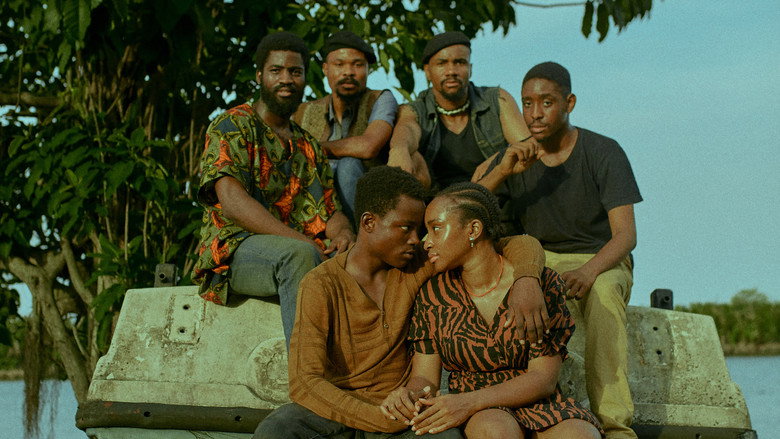
The opening act is Blood Vessel at its most compelling. We meet Abbey, Oyin, and the others in a Niger Delta town choked by oil pollution, the air thick with the kind of despair that doesn’t need dialogue to land. The cinematography here is stark, almost documentary-like, grounding the film in a reality that feels uncomfortably close to home.
When the group stows away on a ship laden with stolen crude, the shift in tone is jarring—but in a good way. The camera tightens, the sound design drops away, and suddenly, we’re trapped with them. The ship’s rusted corridors, its flickering lights, the way the metal groans under the weight of unseen forces—it’s all rendered with a tactile precision that makes the setting feel like a character in its own right.
And then there’s Abbey. Ezekiel’s performance is the film’s anchor, a quiet storm of grief and determination. There’s a moment early on, when he’s alone in the ship’s belly, running his fingers along the rusted pipes as if trying to memorize their texture.
It’s a small gesture, but it tells you everything about his character: a man who’s spent his life navigating systems that were never built for him, now forced to navigate one that might kill him. His chemistry with Dibor Adaobi’s Oyin is the film’s emotional core, a fragile alliance that feels earned rather than scripted. When they argue, it’s not just about survival—it’s about the weight of the choices they’ve made to get this far.
Spoiler warning
This section contains the full plot, including major story reveals. Overview above stays spoiler-free.
Moses Inwang’s Blood Vessel (2023) arrived on Netflix with little fanfare but quickly became a talking point in Nollywood circles. The Nigerian drama-thriller, set against the grim backdrop of oil pollution in the Niger Delta, didn’t just tell a story—it sparked conversations about environmental exploitation and survival. Behind the scenes, the film’s journey from script to screen was as intense as its on-screen narrative, with a production team determined to blend social commentary with edge-of-your-seat tension.
The film’s premise—six strangers stowing away on a mysterious ship after their community is ravaged by oil spills—wasn’t just fiction. According to reviews, Blood Vessel drew inspiration from the real-life environmental crises plaguing Nigeria’s oil-rich regions, particularly Nembe, a once-thriving community now grappling with pollution and displacement  . The opening scene, narrated over a haunting voiceover, sets the tone: a vibrant town slowly suffocated by corporate greed . While the film doesn’t name the fictional "Axis Oil Company" outright, the parallels to real-world oil giants operating in the Niger Delta are hard to miss.
Inwang, known for his socially conscious storytelling, didn’t shy away from the political weight of the subject. Critics noted that the film’s gloomy atmosphere mirrored the despair of affected communities, though some argued the thriller elements occasionally overshadowed its message . Still, the blend of drama and activism resonated with audiences, propelling Blood Vessel to 8.8 million viewing hours and a two-week stint in Netflix’s top 10 .
The ensemble cast brought depth to the film’s high-stakes survival plot. Dibor Adaobi and David Ezekiel led the charge as the central protagonists, their chemistry anchoring the story’s emotional core  . Supporting roles were filled by a mix of Nollywood veterans and rising stars, including:
Notably absent from most cast lists—but present in the film—were Alex Budin and Fares Boulos, whose roles remain shrouded in mystery. Their inclusion hints at a deliberate effort to diversify the film’s perspectives, though details about their characters are scarce [Catalog].
Filming a thriller set almost entirely on a derelict ship came with its challenges. While the evidence doesn’t reveal specific behind-the-scenes struggles, the claustrophobic setting likely amplified the tension on set. The ship’s eerie, decaying interiors—described in reviews as a character in its own right—required meticulous production design to sell the illusion of a floating death trap .
The film’s producers—Charles Okpaleke, Arafat Bello-Osagie, Roxanne Adekunle-Wright, and Agozie Ugwu—are no strangers to ambitious projects. Okpaleke, in particular, has a track record of backing high-concept Nollywood films, including the critically acclaimed The Trade (2023). Their involvement suggests a calculated bet on Blood Vessel’s potential to merge commercial appeal with social relevance .
Blood Vessel’s December 2023 Netflix release was a strategic move. The streaming giant has increasingly courted African audiences, and the film’s strong performance—8.8 million viewing hours and a top 10 spot—proved the market’s appetite for locally produced thrillers with a message . The numbers also underscored Nollywood’s growing ability to compete with Hollywood in the digital space, even if the film’s political themes ruffled feathers in some quarters.
Critics were divided. While some praised its "heart-tugging" narrative and bold themes, others felt the film’s pacing faltered under the weight of its ambitions . Yet, the conversation it sparked—about oil pollution, corporate accountability, and survival—was undeniable. In a landscape where Nollywood often leans toward romance and comedy, Blood Vessel stood out as a rare, unflinching look at Nigeria’s darker realities.
As of early 2024, there’s no word on a sequel or spin-off, but the film’s success could pave the way for more politically charged thrillers from Inwang and his collaborators. Rumors (unconfirmed) suggest Okpaleke’s production company, Play Network Studios, is eyeing similar projects that blend genre storytelling with social issues. For now, Blood Vessel remains a testament to Nollywood’s evolving storytelling—one that’s unafraid to dive into the murky waters of real-world injustice.
Entertainment rumors and trivia aggregated from public reporting. Treat speculation as unverified unless a cited source confirms it.