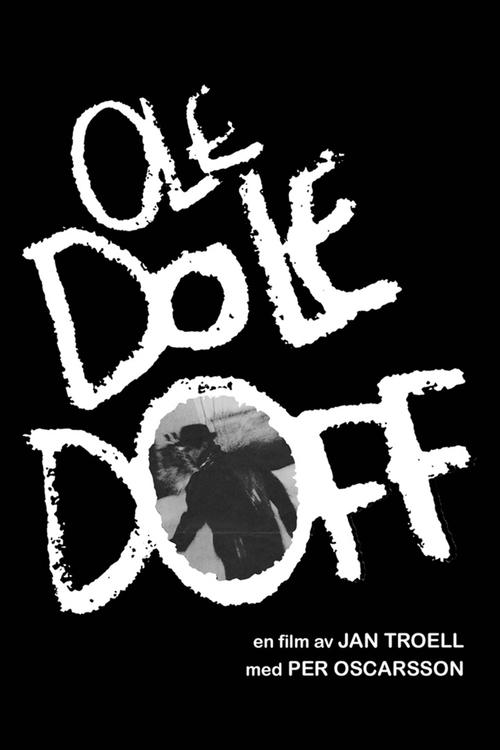
Movie poster for Who Saw Him Die? (1968)

Who Saw Him Die?

1968
1h 50m
Director: Jan Troell

Overview

Sören Mårtensson is a middle school teacher. His classroom occupied by half-grown children. His work is tormenting him and at night he is haunted by nightmares.

Cast

9 people

Reviews

3 min read

The Classroom as a Pressure Cooker

I’ve seen teachers break in films before—usually in a single, cathartic scream or a dramatic resignation letter. But Who Saw Him Die? (1968) doesn’t give us that release. Jan Troell’s film is a slow, relentless unspooling of a man’s psyche, set almost entirely within the four walls of a Swedish classroom.

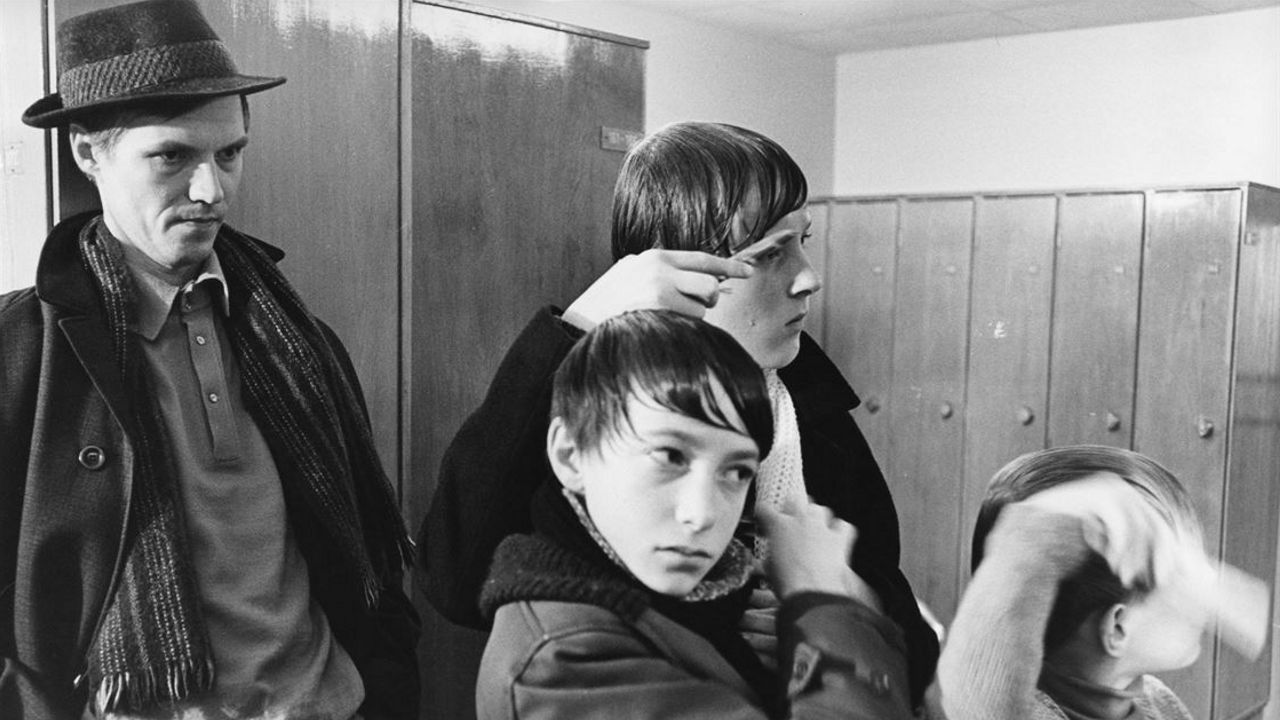
There’s no villainous principal, no abusive parent, no single moment of collapse. Just the daily grind of a man named Sören Mårtensson (Per Oscarsson) being ground down by the sheer weight of his students’ indifference, their cruelty, and his own inability to connect with them. It’s not a horror movie, but it feels like one.

A grainy black-and-white shot of a teacher standing at the front of a classroom, his face half in shadow, while students slouch in their desks, their expressions ranging from boredom to outright hostility.

The film’s power lies in its refusal to simplify. Troell, a former teacher himself, doesn’t frame this as a battle between good and evil. The students aren’t monsters; they’re just kids, bored and restless, testing boundaries.

Sören isn’t a saint; he’s a man already on the edge, his patience fraying with every passing day. The classroom becomes a microcosm of powerlessness, a place where authority is an illusion and every attempt to assert control only deepens the sense of futility. There’s a moment early on where Sören tries to lead a discussion about a poem, his voice trembling with forced enthusiasm.

Audience Opinions

Audience 7.0/10
"A bleak, psychologically intense classroom drama driven by Per Oscarsson’s riveting portrayal of a teacher on the verge of collapse."

Per Oscarsson’s performance and the raw, documentary-style look create an almost horror-like sense of dread as the teacher loses control over a cruel, chaotic class. The film’s heavy atmosphere, slow pacing, and long, quiet passages make it deeply affecting for some and numbing or monotonous for others, with several viewers admiring its depth while others struggle with its dryness and relentless gloom.

What viewers praise
  • Powerful lead performance Oscarsson is frequently singled out for an intense, nuanced depiction of a fragile teacher, capturing inner turmoil, vulnerability, and martyr-like suffering.
  • Horror-level intensity Several viewers describe the classroom sequences as genuinely terrifying, likening the experience to psychological horror rather than simple school drama.
  • Convincing realism The grainy black-and-white visuals, use of real children, and handheld, documentary feel are praised for making the school environment and conflicts feel painfully authentic.
  • Deep psychological focus The film’s close attention to the teacher’s mental state and burnout is appreciated as a brave, psychologically demanding look at teaching and authority.
  • Thought-provoking and lingering Several reviews describe the film as the kind that stays in the mind afterward, prompting reflection on one’s own school experiences and on what pushes a teacher over the edge.
Common complaints
  • Very slow pacing A number of viewers complain that events unfold too slowly, with stretches where little seems to happen beyond mood and tension.
  • Overlong silent scenes Long, quiet passages and minimal dialogue are seen by some as artistically justified but dramatically tedious.
  • Uneven psychological depth While the subject is psychological drama, a few viewers feel the teacher remains oddly opaque or one-note and that the story could go deeper into the dynamics with the students.
  • Distracting editing and transitions Some reviews criticize strange cuts and scene transitions that break immersion and feel rough or arbitrary.
  • Oppressively depressing tone The unrelenting bleakness, cruelty of the children, and lack of relief are experienced as exhausting or off-putting by part of the audience.
Recommended for
Psychological school drama fans Scandinavian arthouse enthusiasts Per Oscarsson admirers Slow-burn character study seekers Teacher burnout narratives Bleak 1960s European cinema

Full Plot (Spoilers)

Spoiler warning

This section contains the full plot, including major story reveals. Overview above stays spoiler-free.

Buzz & Rumors

Public reports

The Film Too Serious for Scandal? The Surprisingly Drama‑Free Saga of Who Saw Him Die? (1968)

You came for feuds, affairs and set-side meltdowns. You picked a 1968 Swedish school‑trauma drama. Let’s see how much tea there actually is — and why the biggest plot twist is that this film might be too grown‑up for gossip.


On-Set Drama (Or: How Everyone Just… Worked)

  • The closest thing to “on‑set chaos” is actually a creative choice: director Jan Troell shot Who Saw Him Die? (original title Ole dole doff) with handheld cameras, no artificial lighting, no fancy sets, and no makeup, to make everything feel brutally real . That rawness sometimes gets mistaken by modern viewers for a documentary, but there’s no evidence of screaming matches behind the camera — just a lot of grim Scandinavian professionalism.
  • Troell and producer/co‑writer Bengt Forslund were both former elementary school teachers, and they leaned all the way into that experience: they set the film in the very Malmö school where Troell had actually taught and filled the classrooms with real local pupils instead of trained child actors [1]. So yes, the kids are terrifyingly convincing — but that’s because they are real kids, not because they terrorized the crew.
  • Forslund later described how the film was designed to show that literally everyone in the teacher’s life — students, parents, colleagues, even his wife — slowly grinds him down [1]. It’s a meticulously planned psychological pressure cooker, not a record of a cursed production.

Cast Feuds & Tea (Spoiler: They Were All Adults About It)

  • Per Oscarsson, who plays the shattered teacher Sören Mårtensson, was already a towering figure of Swedish cinema when he did this film, praised for his intense, almost masochistic performances . Yet in retrospectives and obituaries, he’s remembered for his craft and independence — not for storming off Troell’s set or feuding with co‑stars [4]. There’s no record of “Oscarsson vs. Troell” showdowns, just a mutual respect between a heavy‑hitting actor and a rising auteur.
  • Swedish film histories and festival write‑ups talk about Who Saw Him Die? as a serious, socially engaged drama — no gossip about anyone refusing to take direction, clashing egos, or walkouts. When critics drag the movie, they take aim at its unrelenting bleakness, not at any behind‑the‑scenes tantrums [1].

Romance Rumors: No Secret Swedish Love Triangle Here

  • If you were hoping for a torrid on‑set affair, this isn’t Cleopatra. There are no reported dating rumors connecting Oscarsson and co‑star Ann‑Marie Gyllenspetz, or anyone else in the cast. Nothing in later profiles, festival retrospectives, or film‑school analyses hints at on‑set hookups or messy breakups tied to this shoot.
  • Director Jan Troell’s long, creative partnership with his wife, writer/journalist Agneta Ulfsäter‑Troell, becomes important in his later career (they co‑developed Everlasting Moments, among other projects) . But that collaboration arose years after Who Saw Him Die?, not as some clandestine set romance.

Scandals & Controversies (All Off‑Screen, Years Later)

  • The film itself? Not banned, not censored, not dragged through obscenity trials. In 1968 Berlin, Ole dole doff quietly walked off with the Golden Bear for Best Film at the Berlin International Film Festival — and even contemporary coverage dubbed that year’s festival “without fuss” . No public outrage, no walkouts, no political firestorm swirling around this particular title.
  • The only truly sensational headline tied to a major name from the film comes decades later: in 2010, Per Oscarsson and his wife Kia Östling died after a fire destroyed their home. Early reports emphasized the mystery around the blaze as investigators tried to confirm the remains and the cause . But this tragedy is a late‑life event and has no connection to the making of Who Saw Him Die? — so no, this isn’t some cursed‑production story, just a deeply sad epilogue.

Leaks, Secrets & “Wild” Trivia

  • The “secret” that turns up in a modern deep‑dive? Troell and Forslund built the story directly out of their shared teaching backgrounds, and Troell literally went back to his old workplace to shoot it, using the school’s existing environment and student body [1]. That’s less “leak” and more “open‑secret autobiography,” but it does make the film feel like a nervous breakdown disguised as realism.
  • The title Ole dole doff comes from a Swedish children’s counting‑out rhyme — basically their version of “eeny, meeny, miny, moe” . There are academic pieces breaking down the rhyme’s possible pseudo‑Latin roots, but no urban legend about producers fighting to change the name or censors panicking over it. It’s weirdly catchy… and that’s the full story.
  • Film nerds on modern platforms (Letterboxd, cinephile blogs) sometimes joke that Who Saw Him Die? is basically a horror film about a classroom from hell [8]. But these are tone‑vibes, not grand unified fan theories. No widely‑spread conspiracies, no “secret alternate ending,” no cult of people insisting the teacher is a ghost, or the whole film is a dream. Just respect for how oppressively convincing it all feels.

So Where’s the Gossip?

The biggest twist in this investigation: Who Saw Him Die? seems to be one of those rare films where the shock is all in the story, not the set.

No tabloid feuds. No dating webs. No lawsuit‑laden production history. Just:

  • A director who raided his own teaching past.
  • A star known for intensity, not antics.
  • A festival triumph with zero public mess.

In a cinematic world where scandal often sells more than substance, Who Saw Him Die? is almost perversely wholesome behind the scenes — all the ugliness is safely trapped on screen.

Entertainment rumors and trivia aggregated from public reporting. Treat speculation as unverified unless a cited source confirms it.