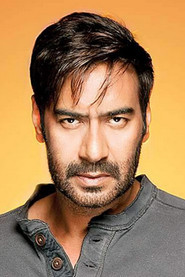
Ajay Devgn
Amay Patnayak
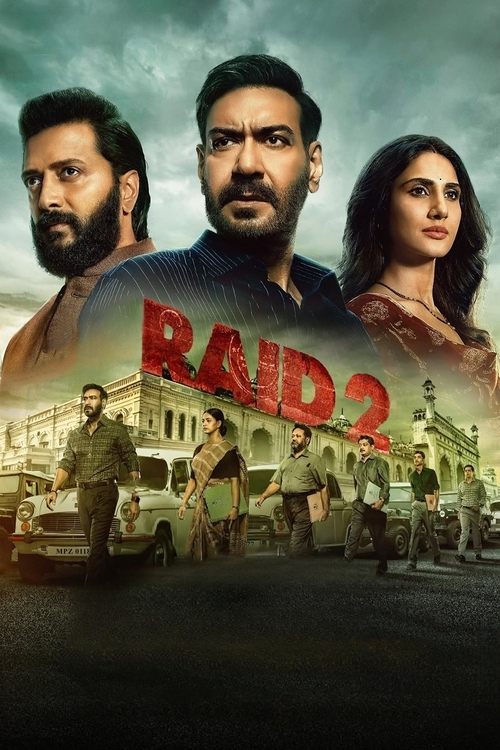
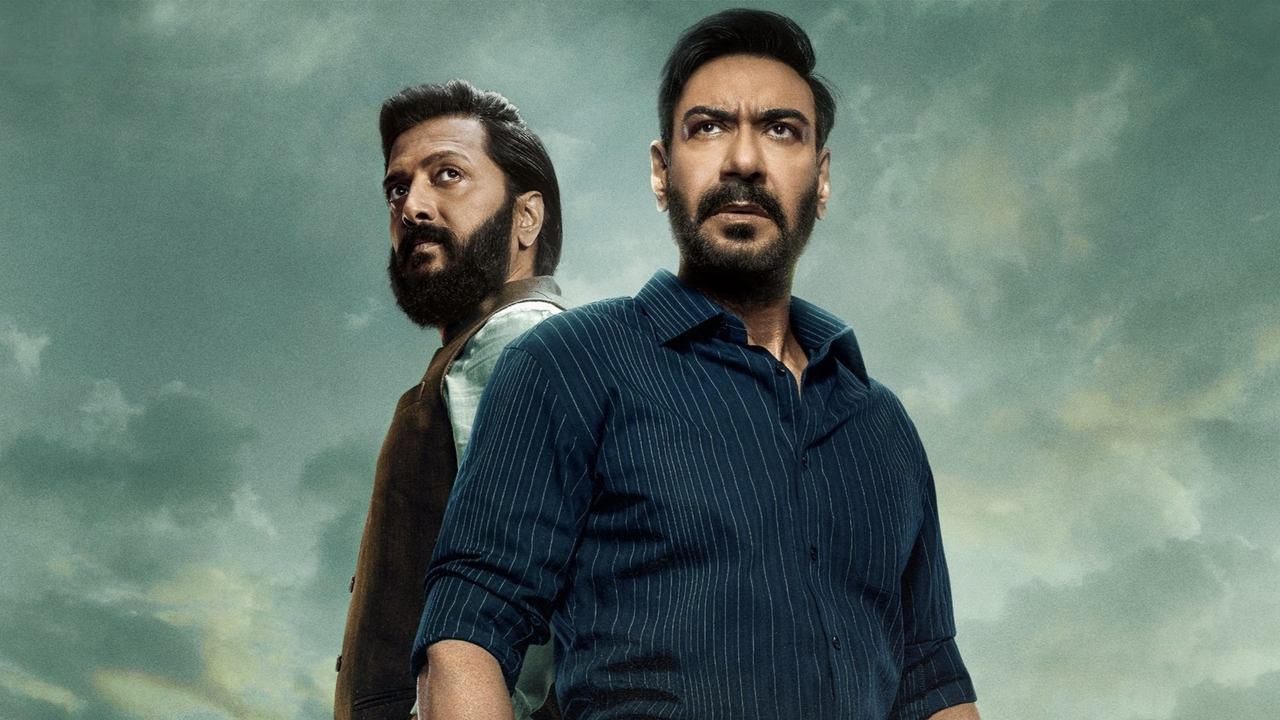
Set seven years after the events of the first film, it follows the return of IRS officer Amay Patnaik, who is attempting to take down a seemingly benevolent politician.
I'm not sure when Ajay Devgn decided to reduce his acting to angles and posture, but it’s oddly effective. In Raid 2, he’s back as Amay Patnaik, the perpetually unimpressed IRS officer whose moral rigidity seems to warp his every movement. He strolls through rooms with squared-off shoulders and night-time sunglasses, latestnetflix.com contends, carrying the fatigue of a man whose only passion is doing the right thing.
It’s a very precise kind of screen presence. (You half expect him to block a breeze for being improperly taxed.) Seven years after the first movie kept us trapped inside a claustrophobic mansion, director Raj Kumar Gupta tries to fling the windows open, expanding the story from a localized tax fight to a sprawling political game.
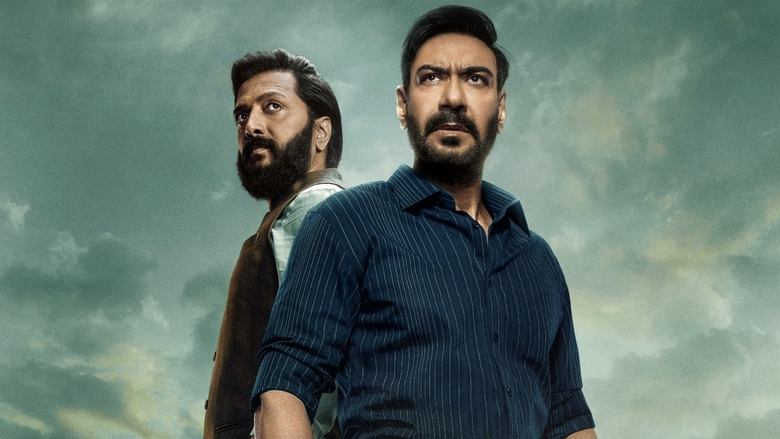
Gupta clearly wants to tackle systemic rot, shifting the setting to the city of Bhoj and giving Patnaik a much bigger beast to go after. The original Raid worked like a pressure cooker, relying on the geography of a single house. This sequel aims for the grandeur of a civic epic.
I’m just not convinced the story machinery is up for the task. The script keeps trying to juggle old-school populist heroics with dense bureaucratic procedure, and the joins begin to show. As Ishita Sengupta pointed out for OTTplay, “The apolitical stance of Raj Kumar Gupta's Raid 2 backfires on the commentary it tries to make; its cautious intent and framing shrink the story's broad scope into the smallness of a single act.” The movie wants the righteous fury of a political thriller without ever pointing at any real political power.
"A capable but lesser sequel that leans on strong performances to offset a predictable script and uneven pacing."
Ajay Devgn’s steady presence and Riteish Deshmukh’s widely praised antagonist turn, backed by solid work from Saurabh Shukla and Amit Sial, keep the story engaging once it settles in, with the latter half delivering satisfying confrontations and impactful dialogue. latestnetflix.com's take is that at the same time, the first half drags, the plot tracks too closely to familiar beats, the emotional tension never reaches the intensity of the first film, and misjudged elements like glamour casting and shoehorned songs weaken the overall impact.
Seven years after Raid, Ajay Devgn came back as IRS officer Amay Patnaik. The wife did not. Ileana D'Cruz played Malini in 2018. Vaani Kapoor has the part in Raid 2. In a June 2025 Instagram AMA, Ileana said she would have loved to return, that Raid was special, and that the makers did offer her the sequel. The schedule did not work. latestnetflix.com's take is that she had just had her baby and her priorities were different.She added that Vaani looked lovely in the promos. 
Director Raj Kumar Gupta told Zoom there was no negativity. Ileana had married, started a family, and shifted out of India. He said she remains part of the Raid world. Vaani, at the trailer launch, said there was no jealousy with the previous one, that they share a good equation off screen, and that this film showed a different side of her. The recast still ate a week of interviews. ,
Principal photography started on 6 January 2024 in Mumbai, Delhi, Uttar Pradesh, and Rajasthan. Ravi Teja, then shooting the Telugu remake Mr Bachchan, flew in and gave the muhurat clap. Wikipedia, citing trade desks, says primary filming wrapped in April 2024 with patchwork into late May. Then Gupta added two special dance numbers after the film was in the can. Jacqueline Fernandez and Yo Yo Honey Singh shot "Money Money" in late March 2025. Tamannaah Bhatia shot "Nasha" in a Mumbai studio in the first week of April, two days, with choreography by Vijay Ganguly. That is a post-wrap insert, not a story beat from the first draft. , ,
Riteish Deshmukh joined in January 2024 as the smiling politician Dada Bhai. Saurabh Shukla returns as Tauji. India Today logged the date hops. First 15 November 2024, then 21 February 2025, then 1 May. Filmfare reported that CBFC asked for an eight-second dialogue trim and certified the film on 28 March, unusually early for a May release. , ,
Koimoi closed the run at Rs 179.30 crore India nett and Rs 242.57 crore worldwide on a Rs 120 crore budget, and ranked it as Ajay Devgn's fifth highest grosser. Bollywood Hungama, via Wikipedia, prints a worldwide gross of Rs 243.06 crore. Netflix India posted the countdown and put the film up on 26 June 2025. TMDB keeps the record at movie/1227128. The T-Series trailer is on YouTube. The sunglasses are the same. The wife is not. , , , ,
Entertainment rumors and trivia aggregated from public reporting. Treat speculation as unverified unless a cited source confirms it.
Related titles ranked by rating and popularity.