
Chris Pratt
Chris Raven
“Prove your innocence to an AI judge or face execution.”
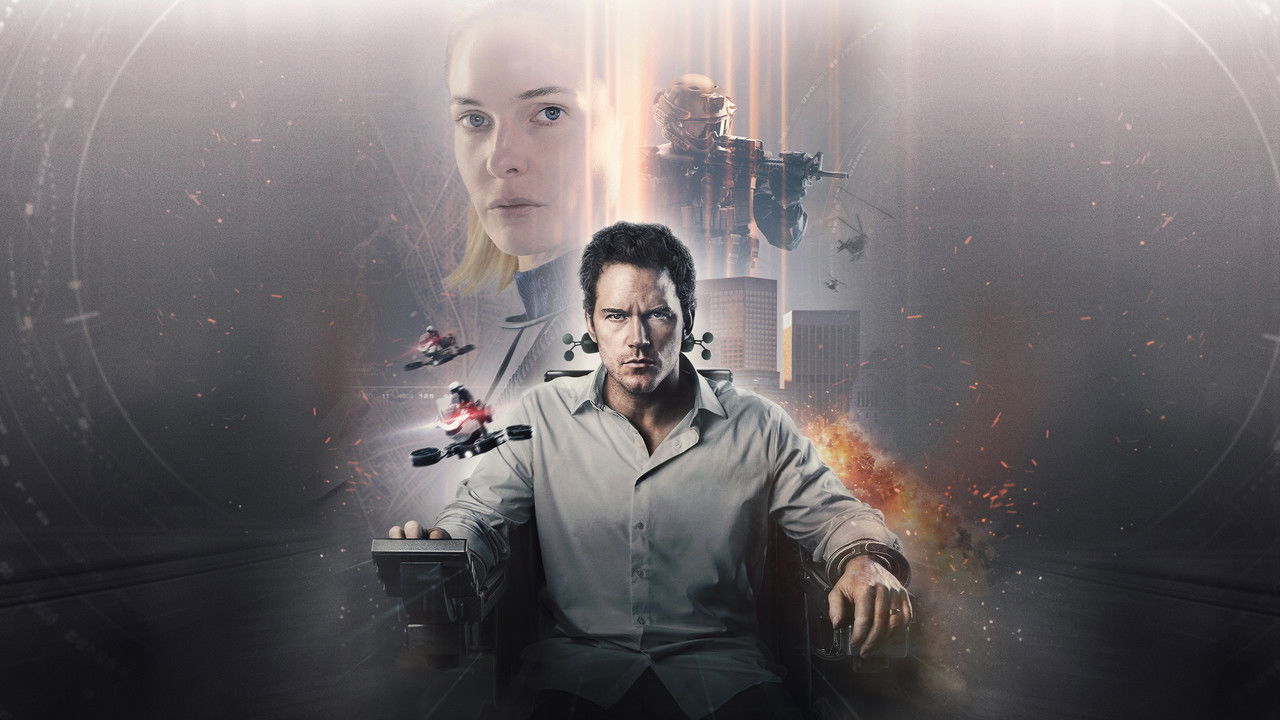
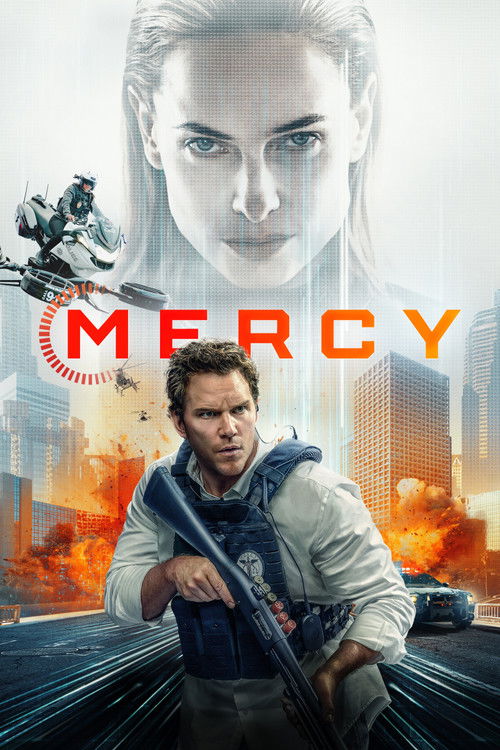
In the near future, a detective stands on trial accused of murdering his wife. He has ninety minutes to prove his innocence to the advanced AI Judge he once championed, before it determines his fate.
It feels like Timur Bekmambetov has lost interest in the physical world entirely. For over a decade, the Russian-Kazakh director has been the most vocal champion of 'screenlife' cinema—those movies like Unfriended and Profile that take place strictly on computer monitors and smartphones. With Mercy, he pushes that obsession into a near-future sci-fi thriller, blending his desktop gimmicks with a standard suspense framework.
The result is a messy, cynical, but weirdly compelling experiment about what happens when we outsource our morality to a microprocessor.
The setup is a high-tech pressure cooker in a gritty, rain-blurred 2029 Los Angeles. LAPD Detective Chris Raven wakes up strapped to an execution chair, accused of murdering his wife. He has exactly ninety minutes to prove his innocence to Mercy Court, an automated judicial system he actually helped champion.
His only lifeline is access to every surveillance camera, text message, and digital footprint in the city, all projected through AR screens floating right in front of his face.
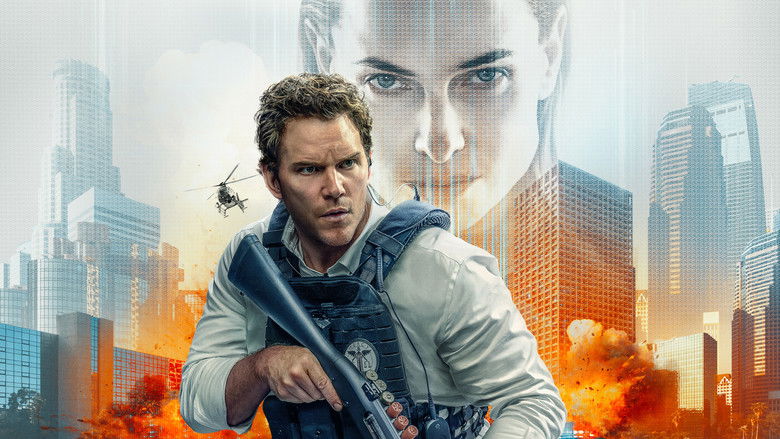
This scenario traps Chris Pratt in a corner, both literally and as an actor. We’re so used to his kinetic, bouncy charisma—the Star-Lord energy he uses to carry a scene. But here, immobilized and playing a grieving, alcoholic cop, he’s stripped of those usual tools.
"A slick, fast-moving AI courtroom thriller whose tense concept and leads are undercut by shaky logic, over-the-top acting, and a divisive screenlife style."
The real-time trial setup, countdown clock, and AI-judge concept keep tension high, with some viewers calling it a gripping, entertaining popcorn thriller that looks great and never drags. Others bounce off the screen-bound presentation, overcooked performance from Chris Pratt, and what they see as implausible police work, underdeveloped AI ethics, and a twist they can see coming long before the finale.
Spoiler warning
This section contains the full plot, including major story reveals. Overview above stays spoiler-free.
Think Mercy is just “that Chris Pratt AI movie” everyone dragged online? Oh, sweet summer child. The real entertainment has been happening off-screen — between ripped pants, AI casting chaos, awkward co-star moments, and a backlash that turned one mid-budget thriller into the poster child for “Hollywood, what are you doing?”


 Fans on Reddit have since used that detail to explain… a lot.
 Audiences, however, mostly felt trapped alongside him. Ouch.
Entertainment rumors and trivia aggregated from public reporting. Treat speculation as unverified unless a cited source confirms it.
Movies
Related titles ranked by rating and popularity.