
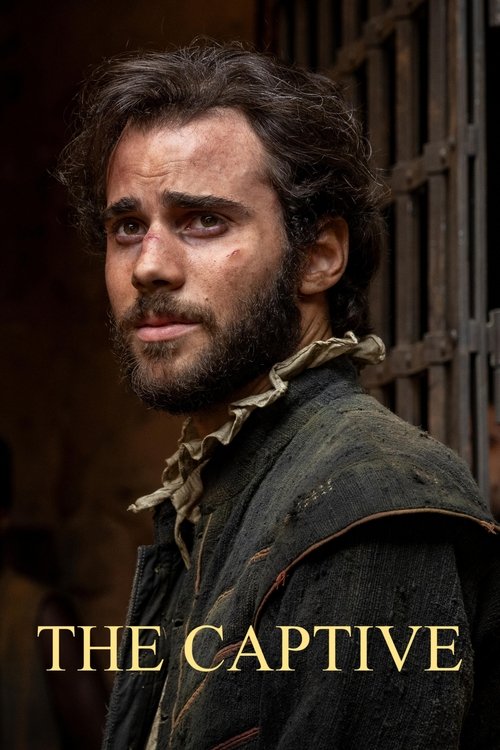
The Captive backdrop
The Captive poster

The Captive

“The author of Don Quixote left an incredible story untold. His own.”

6.5
2025
2h 14m
DramaHistory

Overview

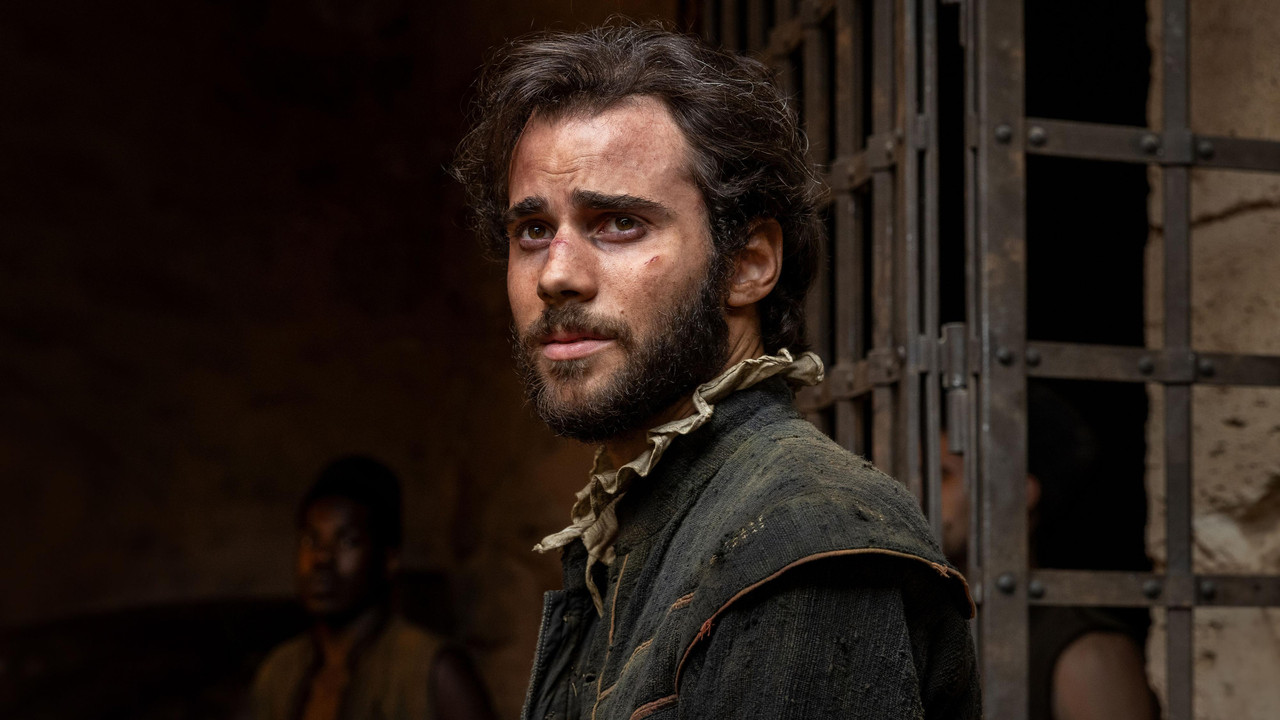
In 1575, the young soldier Miguel de Cervantes is captured on the high seas by Barbary pirates and taken to Algiers as a hostage. Aware that a cruel death awaits him if his family does not pay his ransom soon, he finds refuge in his passion for storytelling.

Sponsored

Cast

Reviews

AI-generated review
The Weight of a Blank Page

I have always been a little suspicious of movies about writers. The act of writing is, by definition, profoundly boring to watch. A person sits at a desk, stares at a wall, and occasionally moves a pen. So when I heard Alejandro Amenábar was tackling the early, pre-fame life of Miguel de Cervantes in *The Captive*, I felt a familiar twinge of dread. Still, what we get here is not a dusty origin story about the drafting of *Don Quixote*. It turns out Amenábar is far more interested in the survival mechanisms of the human mind. The film drops us into 1575 Algiers, where a young, battle-scarred Cervantes is held for ransom by Ottoman corsairs. He is not a literary giant yet; he is just a frightened soldier with a wounded arm and a head full of stories.

A man standing in a sunlit courtyard

Amenábar has always been a director who wrestles with the confines of the body and the expansiveness of the spirit. He did it in *The Sea Inside*, and he is doing it again here, though with a much larger budget and a lot more sand. *The Captive* is a gorgeous film to look at, bathed in Mediterranean sunlight and deep, velvety shadows. Still, the beauty sometimes plays like a gilded cage. Is the film's polished sheen a deliberate choice to reflect Cervantes' romanticized memory of the ordeal? Maybe. I am not entirely sure the slickness works in its favor. Sometimes you want the grit of a 16th-century prison to actually feel grating, rather than just art-directed.

Julio Peña Fernández plays Cervantes, and it is a tricky role. Peña is mostly known to younger audiences for playing a heartthrob in Netflix's *Through My Window*, and here he uses that inherent boyish charm as a shield. His frame looks too soft for the brutal reality of his situation, which makes his pivot to storytelling feel born of desperate necessity. He spins tales in the courtyard to keep the other prisoners from losing their minds, but the stories eventually catch the ear of Hassan Pasha, the fearsome Bey of Algiers, played with feline menace by Alessandro Borghi. What develops between them is unexpected. Amenábar leans heavily into the historical ambiguities of Algiers, framing their dynamic as a charged, homoerotic game of chess. *ScreenDaily* accurately described it as a "steamy, Scheherazade-style flirtation," and that tension genuinely crackles.

A figure silhouetted against a fortress wall

There is one specific scene that I am still thinking about days later. Hassan summons Cervantes for a private reading. The camera lingers tightly on Peña's hands—specifically, his permanently injured left hand from the Battle of Lepanto—as he nervously gestures to emphasize a plot point. Borghi watches him, not listening to the words, but studying the physical vulnerability of the man speaking them. You can see the exact second the power dynamic shifts in the room. Hassan holds the literal keys, but Cervantes holds the narrative. It is a quiet, incredibly tense exchange that tells us everything we need to know about how art can function as currency.

Historical epics often stumble when they try to make grand statements about the legacy of their subjects. (I still haven't recovered from the heavy-handedness of *Tolkien*). *The Captive* does not entirely avoid this trap. Occasionally, a fellow prisoner will say something that feels suspiciously like a winking nod to Sancho Panza. Those moments took me right out of the movie. As the Canadian outlet *Reviews On Reels* noted, the film has "lavish production and biblical scale, yet its restrained tone keeps it from fully connecting emotionally." They have a point. The pacing drags in the second hour, getting bogged down in the mechanics of escape attempts when the real drama is entirely interpersonal.

A sweeping view of ships at sea

Whether that unevenness ruins the experience depends on your patience for slow-burn melodrama. I found myself forgiving the film's lulls because the central relationship is so strange and compelling. Amenábar is not trying to give us a history lesson. He is exploring how trauma forces us to invent alternate realities just to survive the night. *The Captive* might not be a perfect movie, but it is a deeply human one, showing us a man who wrote his way out of the dark long before he ever picked up a pen.