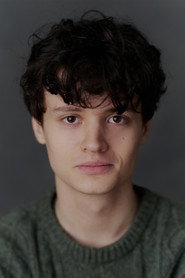
Hannah Einbinder
Kris
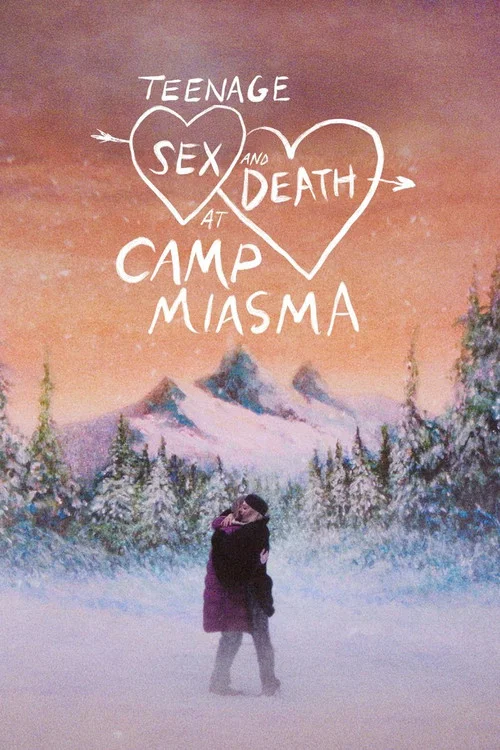
“Blood. Lust.”
After years of slapdash sequels and waning fandom, the Camp Miasma slasher franchise is handed over to an enthusiastic young director for resurrection. But when she visits the original's star, a now-reclusive actress shrouded in mystery, the two women fall into a blood-soaked world of desire, fear, and delirium.
I keep thinking about the moment the screen goes black—not the fake-out black of a jump scare, but the slow, deliberate fade that feels like a held breath. That’s where Teenage Sex and Death at Camp Miasma lives: in the space between what we expect from a slasher and what we actually get. Jane Schoenbrun’s film isn’t just a resurrection of a tired franchise; it’s a autopsy of one, performed with a scalpel dipped in glitter.
The premise is deceptively simple: a young, queer filmmaker (Hannah Einbinder) is hired to revive the Camp Miasma series, a once-beloved slasher that’s been flogged into irrelevance by lazy sequels. Her journey to meet the franchise’s original star, a reclusive Gillian Anderson, spirals into something far stranger—a psychosexual fever dream where the boundaries between fiction and reality, desire and fear, comedy and horror dissolve like sugar in rain. It’s Scream meets Mulholland Drive, if David Lynch had a sense of humor and a budget that stretched to exactly one can of fake blood.

Schoenbrun has always been fascinated by the way media shapes identity, and here they take that obsession to its logical extreme. The film’s meta-narrative isn’t just a gimmick; it’s the point. The director’s struggle to make art within the confines of a corporate franchise mirrors the broader tension of queer storytelling—how do you create something authentic when the world keeps trying to force you into a box labeled “content”?
The answer, it seems, is to set the box on fire and dance in the ashes.
Take the scene where Einbinder’s character first meets Anderson’s. It’s shot like a classic Hollywood meet-cute, all warm lighting and soft focus, until Anderson’s character leans in and whispers, “You’re not here to make a movie. You’re here to be devoured.” The line lands like a punch, not just because of the delivery (Anderson, as always, is magnetic), but because it reframes the entire film.
Jane Schoenbrun’s Teenage Sex and Death at Camp Miasma (2026) is already generating buzz as a genre-bending horror-comedy with a distinctly queer edge. Following the director’s critically acclaimed I Saw the TV Glow, this film promises to subvert slasher tropes while delivering sharp social commentary—all wrapped in a campy, meta-narrative. Early reactions from festivals and trailers suggest a project that’s as much about identity and creativity as it is about scares.
The film centers on a queer filmmaker (played by Hannah Einbinder) who is recruited to direct a sequel to a long-running slasher franchise set at the infamous Camp Miasma  . This premise alone hints at Schoenbrun’s signature self-aware style, blending horror with introspective storytelling. The director, known for exploring themes of identity and media consumption, appears to be doubling down on meta-commentary—this time with a campy, blood-soaked twist.
Schoenbrun’s previous work, I Saw the TV Glow, was praised for its dreamlike exploration of queer adolescence, and Teenage Sex and Death at Camp Miasma seems poised to continue that tradition. The film’s title alone—equal parts provocative and playful—suggests a project that refuses to take itself too seriously while still packing emotional weight [3].
The ensemble cast is a mix of rising stars and established names, each likely to bring their own flavor to the film’s darkly comedic tone. Gillian Anderson, fresh off her Emmy-winning turn in The Crown, joins the fray alongside Abbott Elementary’s Hannah Einbinder, who plays the film’s protagonist . Other notable names include Only Murders in the Building’s Jasmin Savoy Brown, Severance’s Zach Cherry, and Barbie’s Sarah Sherman, suggesting a blend of horror, comedy, and drama chops [4].
Trailers and teasers have teased a chaotic, high-energy vibe, with quick cuts of campfire screams, over-the-top gore, and snappy dialogue [6][7][8][9]. The film’s runtime—132 minutes—positions it as an ambitious, sprawling project, likely to balance its horror elements with sharp character work [2].
Teenage Sex and Death at Camp Miasma made its debut at NewFest Pride, signaling its queer-centric themes and audience [10]. The film also had a high-profile introduction at Fantasia 2026, where Schoenbrun and Einbinder participated in a Q&A, offering fans a glimpse into the creative process [1][5]. While full reviews are still scarce, early audience reactions (and a 7/10 rating on SensCritique from 107 votes) suggest a polarizing but engaging experience—one that leans into both horror and humor [2].
The film’s theatrical release is set for August 7, 2026, and if the trailers are any indication, it’s shaping up to be one of the year’s most talked-about genre films [8].
With its meta-narrative, star-studded cast, and Schoenbrun’s distinctive voice, Teenage Sex and Death at Camp Miasma is poised to carve out its own space in the horror-comedy landscape. Whether it fully delivers on its promise of blending scares, laughs, and queer storytelling remains to be seen—but early signs point to a film that’s as bold as its title.
Entertainment rumors and trivia aggregated from public reporting. Treat speculation as unverified unless a cited source confirms it.
Movies
Related titles ranked by rating and popularity.