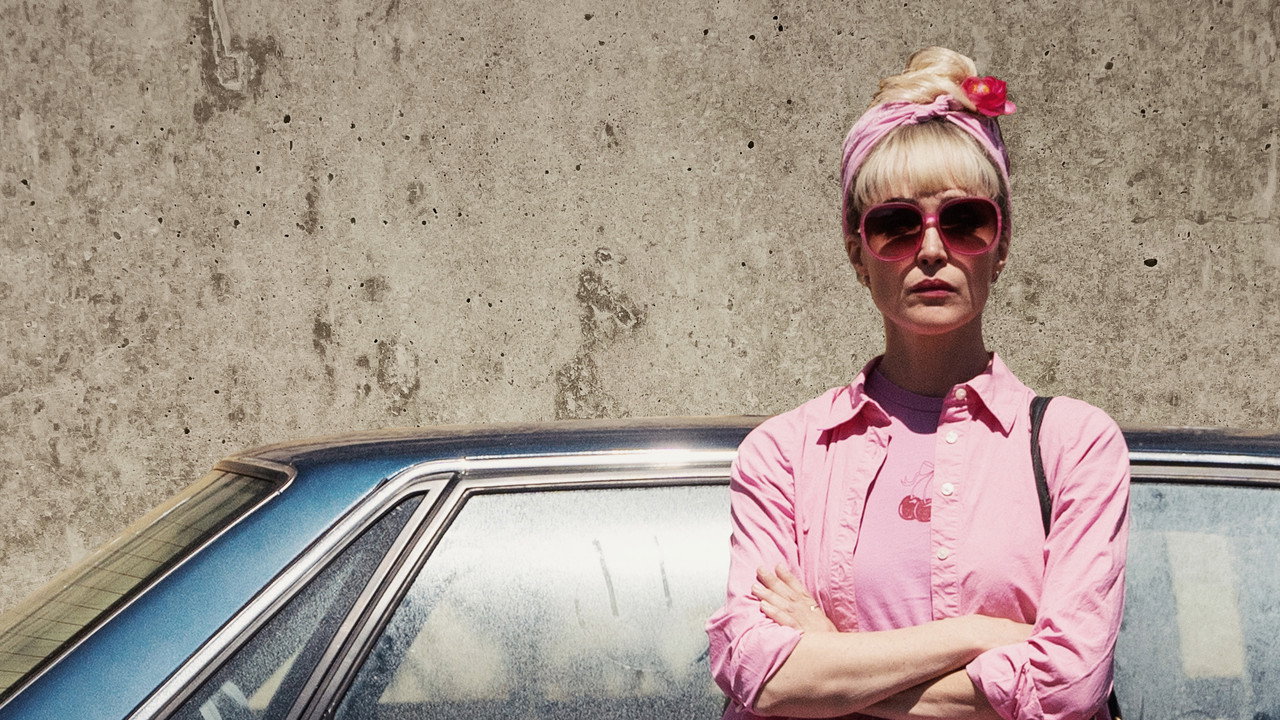

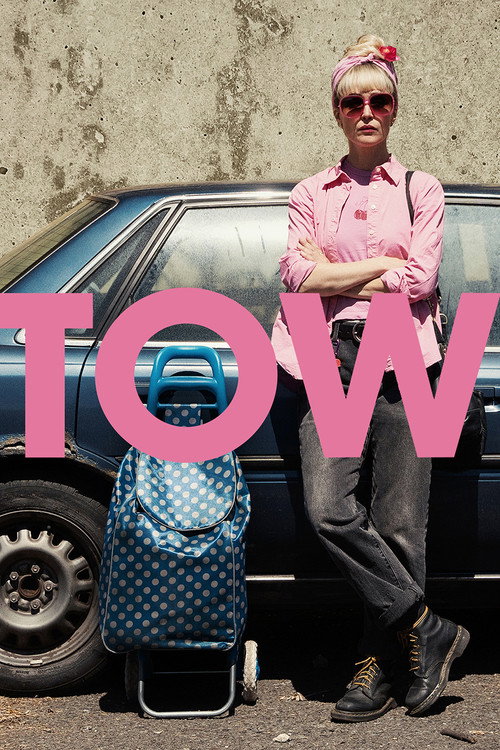
Movie poster for Tow (2026)

Tow

2026
1h 45m
Director: Stephanie Laing
Play trailer

Overview

Amanda Ogle is a woman living in her aging Toyota Camry on the streets of Seattle. When her car is stolen and impounded, she’s thrust into a relentless legal battle against an indifferent system. What begins as a fight to reclaim her car evolves into a deeply human story of resilience, dignity, and the power of one woman’s voice in the face of systemic failure.

Cast

12 people

Reviews

3 min read

Updating…

The Geography of a Toyota Camry

There is a particular kind of invisibility that descends when you’re living in a car. You aren't just occupying a vehicle; you’re guarding a fortress of memories, loose change, and the absolute minimum amount of dignity you can carry in a glove box. Stephanie Laing’s Tow understands this geography intimately.

The film isn't really about a legal battle, though that’s the engine that drives the plot; it’s about the sheer, exhausting absurdity of trying to prove that you exist when the state has decided you’re just an inconvenience on a city street.

A wide shot of a weathered Toyota Camry parked on a grey, rain-slicked Seattle street, highlighting the isolation of the vehicle against the city backdrop.

Laing manages to sidestep the usual traps of this genre. We don't get the slow-motion pans of misery or the sanitized "homeless chic" that feels so common in modern dramas. Instead, she presents us with the mundane bureaucracy of the impound lot.

It’s a Kafkaesque nightmare of paperwork, automated phone trees, and clerk-desk indifference. Rose Byrne, as Amanda Ogle, plays this with a kind of frantic, teeth-gritting pragmatism. I’ve grown used to seeing Byrne as the sharp-edged, capable, or neurotic woman in films like Physical or Bridesmaids, where her anxieties were usually born from excess or ambition.

Here, she strips all of that away. Her posture in the driver's seat—shoulders hunched near her ears, eyes constantly scanning the rearview mirror—tells you everything about her life before she ever speaks a word. She’s a person whose world has shrunk to the dimensions of a passenger cabin, and she’s trying to keep the walls from closing in.

Buzz & Rumors

Public reports

“Tow” Behind the Tow Yard Gate: How a $21,634 Bill, Three Near-Cancellations & One Tiny Toyota Turned Into a Hollywood Showdown

You came for cast feuds and scandals; you stayed for a real-life extortion fight, a nearly doomed indie, and Rose Byrne turning into a homeless Seattle woman with a 1991 Camry and nerves of steel. Buckle up, Tow-heads.


CASTING CHAOS (WITHOUT THE CHAOS): HOW AN INDIE LANDED AN A‑LIST ARMY

  • Director Stephanie Laing claims casting Tow was freakishly painless: “Everybody said yes.” Once Rose Byrne signed on, the rest of the ensemble — Octavia Spencer, Demi Lovato, Ariana DeBose, Dominic Sessa, Simon Rex — fell in line like it was Marvel money, not an indie drama about a tow bill.
  • Laing “knew it was Rose” from day one thanks to their work on Physical, and Byrne didn’t just star — she produced, using her clout to supercharge the casting.
  • The wildest get: Demi Lovato. Someone floated “What about Demi?” and within a day Laing was literally at Demi’s house sealing the deal for Lovato’s first movie role in six years as Nova, a shelter resident. That’s not a Zoom era pitch — that’s old-school, drive-to-the-house hustle.

THE MOVIE THAT ALMOST GOT TOWED: THREE NEAR-CANCELLATIONS & A 40-DAY SPRINT

  • Before a single frame hit Tribeca, Tow nearly died three separate times. COVID delays, then the Hollywood writers’ strike, repeatedly stalled the project; executive producer (and real-life lawyer) Kevin Eggers says the film was “put on hold” so often it almost never got made.
  • When cameras finally rolled, the team shot the entire feature in roughly 40 days on a tight budget, mostly in New Jersey standing in for Seattle.
  • The crew later dashed to Seattle for 24-ish hours of guerrilla-style filming around spots like Pioneer Square and Lake Union — grab-the-shot-and-run stuff to give the movie authentic city flavor.

REAL CASE, REAL EXTORTION: THE TRUE STORY THAT’S MORE INFURIATING THAN THE MOVIE

  • The film is based on Amanda Ogle, a homeless Seattle woman slapped with a tow bill of $21,634 for her aging Toyota Camry — a car attorney Eggers estimates was worth “maybe $100”.
  • After a court ordered the tow company to return Amanda’s car, they refused and demanded storage fees. Eggers bluntly calls it trying to “extort a homeless woman”.
  • A judge finally hit back, ordering the company to either return the car or pay $2,000 per day to the court until they complied. That judicial smackdown inspired some of the film’s most fist-pumping moments.
  • The film’s Lincoln Towing vs. Dick’s Towing confusion isn’t random satire: the real lot actually had signage for both companies with the same phone number, a bureaucratic nightmare the movie gleefully leans into.

ROSE BYRNE GOES FULL AMANDA: METHOD‑LITE, CAMRY EDITION

  • Byrne didn’t just read the script; she flew to Seattle to meet Amanda in person, hopped on Zoom calls to study her, and borrowed her mannerisms and voice patterns to the point Amanda later marveled at how closely she’d been mirrored.
  • The film’s poster is a direct homage to a Seattle Times photo of Amanda next to her car. The marketing team recreated the image almost shot-for-shot after Amanda suggested it.
  • A key bike sequence — where Dominic Sessa’s Kevin pedals up to the tow yard fence to check if the car’s still there — is ripped straight from reality. Eggers really did ride his bike to verify the car and the sketchy signage.
  • The only invented “spicy” touch: a bit about Amanda stealing Kevin’s bicycle. In the UW Law interview, they admit that never happened; it’s pure dramatization to juice the tension.

COLOR, ARMOR & EDITING TRIAGE: THE VISUAL DRAMA YOU DIDN’T SEE

  • Laing built the film’s bright, candy-colored look — pinks, purples, oranges — straight from Amanda and her daughter Avery’s real tastes, specifically to stop the story from feeling like a gray misery-fest.
  • She and cinematographer Vanja Černjul designed a camera style where “Amanda moves the camera”: mostly still frames that only really move with her, with wide shots to emphasize how tiny she is against freeways and overpasses, and tight detail shots for the emotional gut punches.
  • In early cuts, the film apparently drifted dangerously close to rom-com territory between Byrne’s Amanda and Sessa’s Kevin. Editors Max Miller, Joe Klotz, and Sarah Flack had to reshape the rhythm and widen the frame to keep the focus on Amanda’s fight rather than a meet-cute.
  • Costume-wise, Amanda’s black jacket is treated as literal armor. Laing and Byrne insisted she keep that “armor” even in the final courtroom scene instead of dressing her up in a “respectable” outfit — a visual middle finger to the idea that she has to change to deserve justice.

FROM COURTROOM TO TRIBECA: IMPACT, REWRITES & REACTIONS

  • The script was modified after Amanda gave feedback — including a change to the ending based on something that actually happened when she retrieved her car, showing how closely the filmmakers involved their real-life subject.
  • At the New York premiere, residents from Covenant House (which supports unhoused youth) attended the screening. Laing says she got choked up during the Q&A, watching people who know this struggle firsthand react to their story projected 30 feet tall.
  • Box-office tallies are fuzzy, with one major site listing gross around $291,795 for a limited run — firmly in “tiny indie with big feelings” territory despite its powerhouse cast.

In other words: Tow might look like a modest little drama about a Camry, but behind the scenes it’s a saga of near-cancellations, real-life extortion, guerrilla filmmaking, and Rose Byrne turning one woman’s towing hell into a quiet, furious cinematic rallying cry.


Entertainment rumors and trivia aggregated from public reporting. Treat speculation as unverified unless a cited source confirms it.