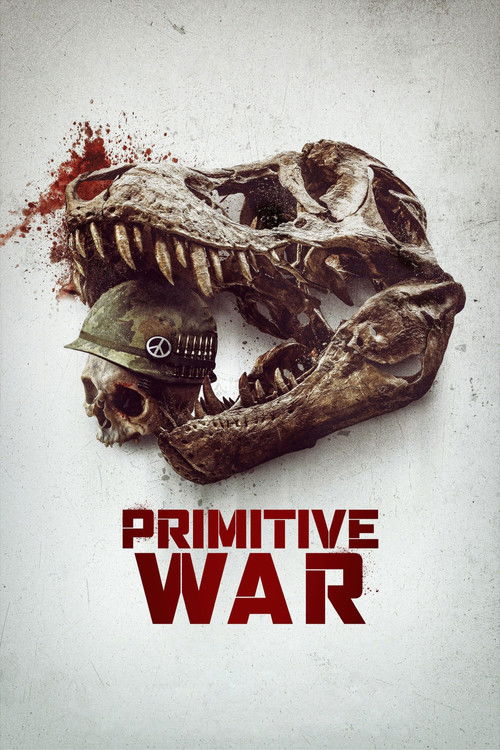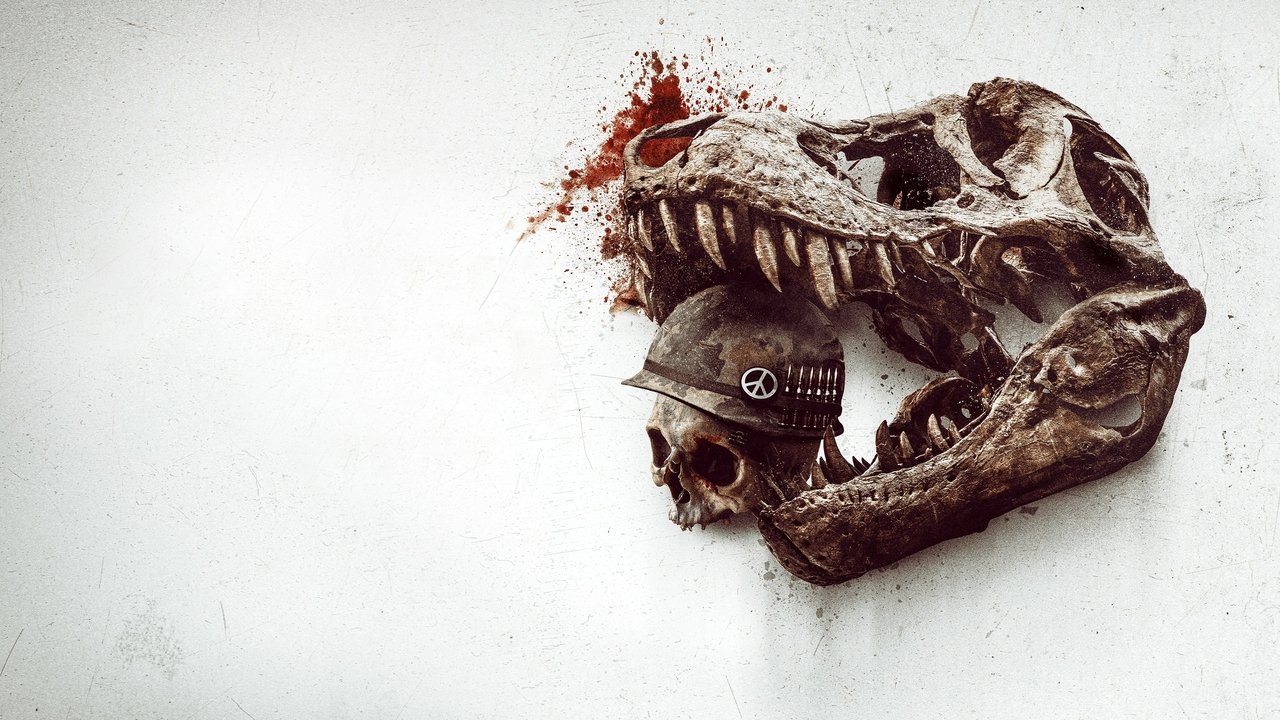

The Things They Carried (And the Things That Ate Them)It still makes me laugh, a little, that somebody got *Primitive War* made with a straight face. The pitch is pure grindhouse absurdity: American soldiers in 1968 Vietnam being hunted through the jungle by feathered velociraptors. It sounds like the kind of VHS nonsense you would find wedged between *Mega Shark* and *Sharknado* in a bargain bin. The surprise is that Luke Sparke never treats it like a joke. He plays the whole thing dead serious, and that commitment is exactly what keeps the movie from collapsing into self-parody.

Sparke, who seems to have taken on half the production himself, is good at hiding the limits of a seven-million-dollar budget. No Spielberg money means he has to build tension out of darkness, foliage, and incomplete glimpses, and he mostly knows how to do it. Australia’s Gold Coast stands in for Vietnam convincingly enough, all wet heat and claustrophobic green. During the night attacks, the camera stays close to the soldiers rather than giving the dinosaurs full beauty shots. You hear snapping jaws, see teeth catch in muzzle flashes, and fill in the rest yourself. That restraint does a lot of the heavy lifting.
There is one mid-film scene that captures the movie’s whole deranged balancing act. Sgt. Baker’s squad, with Ryan Kwanten looking appropriately sleepless at the front, is drifting downriver in a sequence that feels borrowed from *Apocalypse Now*. A dreamy 60s rock song hums on a portable radio. The men swat bugs and stare into the tree line. Then a huge feathered Utahraptor erupts from nowhere and wipes a soldier out before the movie can even cue you to brace. No dramatic roar, no pause for admiration—just impact, screams, mud. The jump from war-film drift to slasher panic is so abrupt it kind of knocks the air out of you.

Then Jeremy Piven wanders in and starts performing on an entirely different wavelength. As Colonel Jericho, he plays a sweating Southern officer with the zeal of a man who thinks God is insulting him personally through paleontology. Piven’s posture is stiff, his eyes are practically vibrating, and every line seems delivered from a fever dream adjacent to the rest of the film. When Jericho uncovers a dinosaur tooth, he stares at it less like a discovery than like evidence of blasphemy. It is an unhinged choice. Oddly enough, in a movie that eventually flirts with Cold War sci-fi and, yes, communist dinosaurs, it works.
The movie loses some momentum once it decides it must explain itself. The last half hour introduces a mad-scientist thread to justify the prehistoric carnage in the Mekong Delta, and the need for answers drags against the beautifully stupid simplicity of soldiers-versus-dinosaurs. Still, Leslie Felperin’s line in *The Guardian* gets it: the movie is "aimed squarely and unabashedly at viewers who love soldiers, gore and dinosaurs... deeply repetitive but weirdly watchable." That is hard to improve on.

*Primitive War* is obviously not prestige cinema, and it is not trying to be. What it does have is conviction. By treating its nonsense like tragedy and keeping the jungle grimy and physical, it stumbles into a weird little alchemy. You show up for the possibility of something like a T-Rex stepping on a landmine, then realize the film respects its lunacy enough to play it mournfully. In a blockbuster landscape built on defensive irony, that kind of sincerity goes a surprisingly long way.