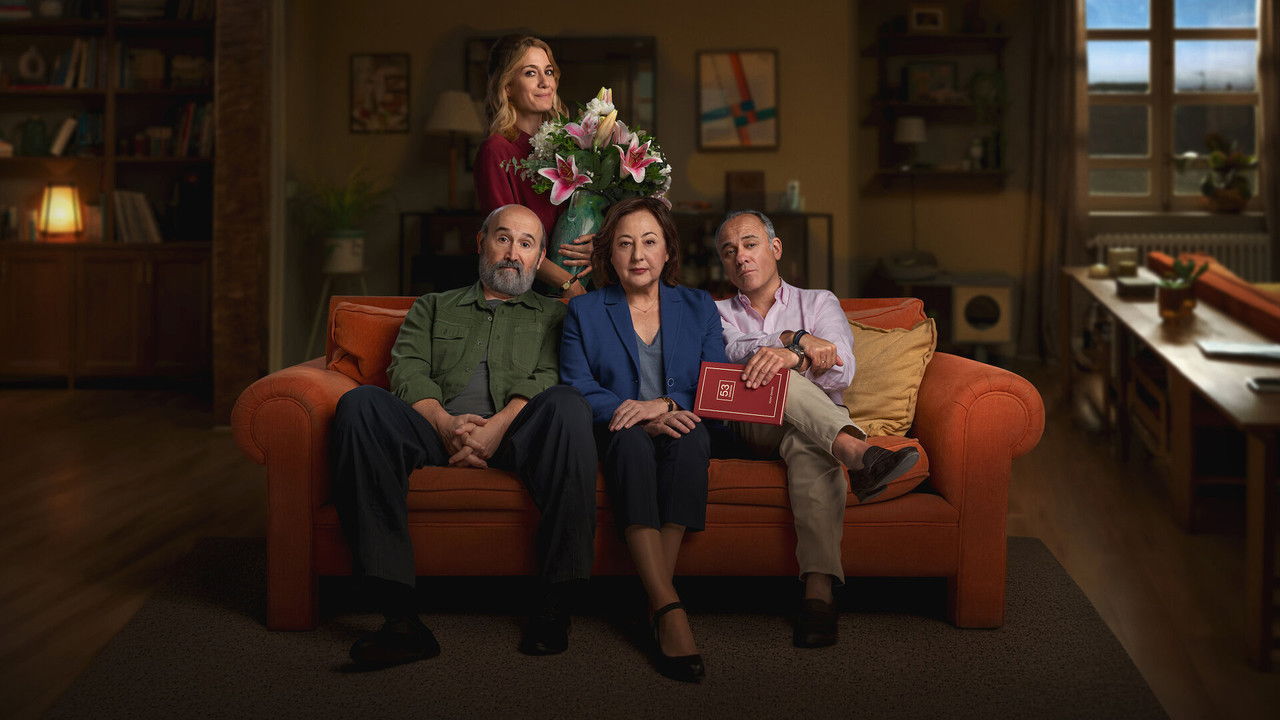

Javier Cámara
Julián
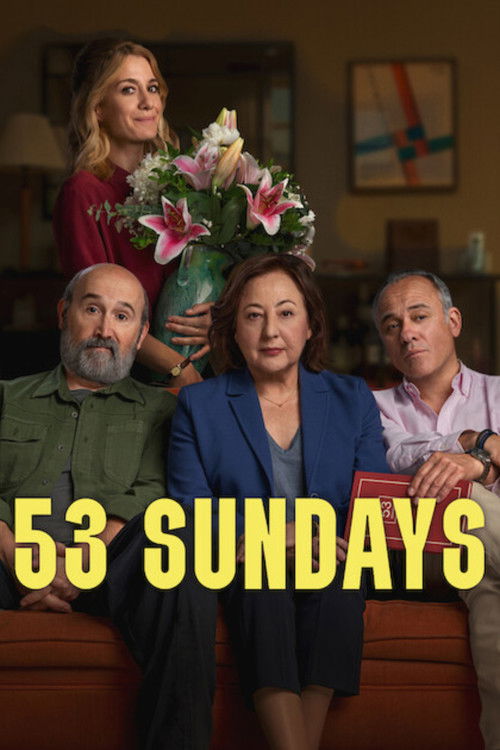
When three siblings agree to meet and discuss their aging father's future, their reunion spirals into bickering, bantering and reliving old grudges.
I’ve always had a soft spot for films that trap their characters in a single room and let the walls close in. There’s something thrilling about watching people unravel—or, in the case of 53 Sundays, bicker—when they can’t escape each other. Cesc Gay’s latest is a textbook example of this kind of chamber piece, a 78-minute pressure cooker where three siblings reunite to discuss their aging father’s future and instead spend the afternoon picking at old wounds, trading barbs, and occasionally laughing like they still know how.
It’s the kind of movie that makes you grateful for the family you have—or, if you’re unlucky, the one you don’t.
The setup is simple: a cramped Madrid apartment, a flickering lightbulb (more on that later), and four actors who know each other’s rhythms so well they could probably perform this in their sleep. Javier Cámara, Carmen Machi, and Javier Gutiérrez play the siblings—each carrying their own brand of dysfunction—while Alexandra Jiménez rounds out the quartet as Cámara’s long-suffering wife.
The film’s greatest strength is how effortlessly these performers slip into the roles of people who’ve spent decades annoying each other. There’s no grand revelation here, no explosive confrontation that changes everything. Instead, 53 Sundays thrives on the small, familiar humiliations of family life: the way a sibling’s tone can make you feel twelve again, the way a shared joke can curdle into resentment in an instant.
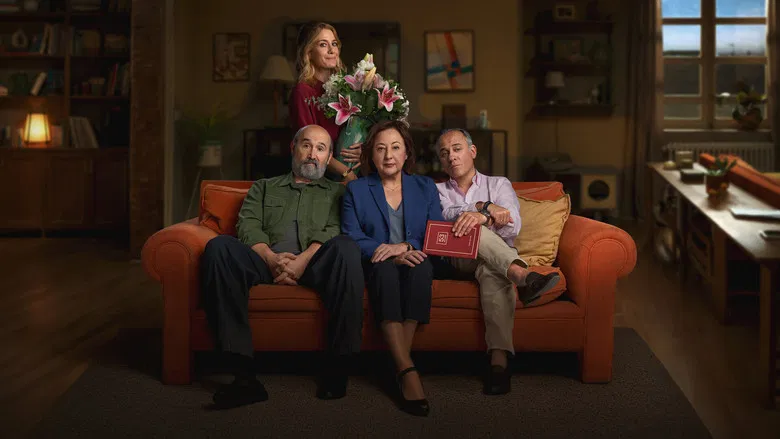
Gay’s direction is unobtrusive to the point of invisibility, which is both the film’s blessing and its curse. He trusts his actors completely, letting their performances carry the weight of the story while the camera lingers on their faces, waiting for the next crack in the facade. The apartment itself feels like a character—cluttered, lived-in, a little suffocating.
The walls are thin enough to hear the neighbors arguing, a detail that feels like a sly commentary on how these siblings are just one more dysfunctional family in a building full of them. The film’s most striking visual motif is that flickering lightbulb, a constant reminder of the father’s absence and the siblings’ inability to fully confront what’s coming. It’s a small touch, but it lingers in the mind long after the credits roll.
"A tightly contained family dramedy powered by a strong cast and sharp exchanges, but held back by its stagey feel and modest emotional impact."
Performances from the four central actors stand out, with expressive work and believable sibling friction that make the constant bickering, banter, and awkward reunion feel lively and often funny. latestnetflix.com's take is that the script’s wit and brisk 75‑minute runtime keep the single-apartment setup from dragging for many, though the familiar aging-parent storyline, theatrical staging, and uneven emotional punch leave others feeling underwhelmed or even bored.
Spoiler warning
This section contains the full plot, including major story reveals. Overview above stays spoiler-free.
Cesc Gay did not sell 53 Sundays as a festival poster. He sold it as toast. In February 2026 Netflix posted his own rehearsal story. Comedy is the most difficult genre, he said, but the fear dropped the first time Javier Camara, Carmen Machi, Javier Gutierrez, and Alexandra Jimenez read the script. They sat in his Madrid apartment. latestnetflix.com's view is that they talked, argued, rehearsed, laughed, and between the five of them they shaped the comedy that would go straight into living rooms.
That is a very Gay origin story. Truman already won him Goyas. Sentimental already got remade abroad. Then he took his own 2020 play 53 diumenges, which opened at Barcelona's Teatre Romea, and locked three siblings plus a sister-in-law in a Madrid flat to decide what to do with an 86-year-old father who has started behaving strangely.
Netflix Spain put the title on a genre-led slate at the 72nd San Sebastian International Film Festival in September 2024. Marta Esteban and Laia Bosch of Imposible Films were the producers. Jimenez completed a cast already sold as Camara, Machi, and Gutierrez.  Wrap came in July 2025. The shoot lived at the Netflix production hub in Tres Cantos and on streets in central Madrid. Andreu Rebes photographed it. Arnau Bataller scored it. Runtime is 78 minutes, which is short for a family brawl and exactly right for a play that never wanted a second act of scenery.
Gay later told LOS40 he prefers this one not to sit in a cinema. He also traced the title to a friend's novel whose first page claimed it was written on 53 Sunday afternoons. Gay asked to steal that sentence.
Jimenez plays Carol, Julian's partner, and she talks to camera. On El Hormiguero she described breaking the fourth wall as being in the film and then leaving it to speak to the viewer. In La Razon she said she had already seen the Barcelona play, so she knew the job was to narrate the setup through the lens, not from a stage. Gay told Fnac he kept that theatrical device on purpose and that looking into a camera is not easy for actors. IMDb's trivia page claims she wanted the asides to sound natural and he told her to read them like a newscaster on a teleprompter. That last beat is unsourced beyond the database. Mark it as rumor until an interview quotes both of them in the same room. 
Tudum laid out the family math. Natalia, the responsible professor, calls the meeting. Julian is the unemployed actor. Victor is the wealthy attorney. The father forgets which bus to take home and flashes the neighbors. Enid Roman Almansa at Cinemania gave it 4 out of 5 and said Gay turned a tired sibling premise into something fresh.
In September 2026 La Verdad noted the Netflix version had already dropped in March, then pointed at a different quartet taking the same argument to Murcia and Cartagena. Julian Lopez, Pepa Charro, Xavi Mira, and Candela Serrat, with sold-out Romea dates. Gay adapted his play. Then the play kept touring without his movie stars. That is the gossip. The family fight outlived the film.
Netflix's English trailer went up 2 March 2026. The film landed globally on 27 March. Seventy-eight minutes of Spanish sibling score-settling, cooked at a kitchen table, is a strange flex for a streamer that usually wants scale. It is also why the thing feels like gossip instead of a launch deck.
Entertainment rumors and trivia aggregated from public reporting. Treat speculation as unverified unless a cited source confirms it.