
Phoebe Dynevor
Lisa Fields
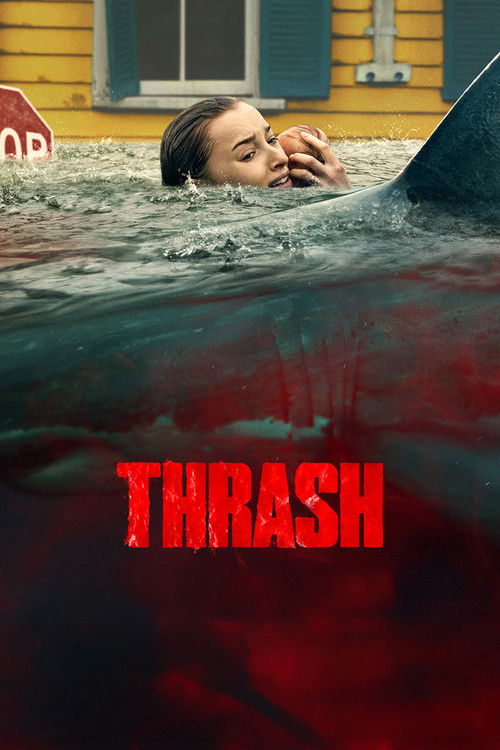
When a catastrophic hurricane slams a coastal town, stranded residents must survive rapidly rising waters swarming with ravenous sharks.
I kept waiting for Thrash to commit. To one tone, one threat, one reason to care. But like the floodwaters it depicts, the movie just keeps rising—chaotic, shallow, and impossible to escape.
It’s not that the sharks are bad (they’re actually the best thing here, sleek and hungry in a way that makes you forget, for a second, how ridiculous this all is). It’s that the people they’re hunting feel like afterthoughts, their lives reduced to survival beats and clichéd dialogue. The storm rages, the sharks circle, and the characters?
They’re just treading water.
Tommy Wirkola, the Norwegian director behind Dead Snow and Hansel & Gretel: Witch Hunters, has a knack for blending horror and dark comedy. Here, that balance tips into tonal whiplash. One minute, we’re in a grim survival thriller—pregnant Lisa (Phoebe Dynevor) wading through chest-high water, her face twisted in fear.
The next, a character quips, “At least the sharks are vegan,” and the spell is broken. It’s not that horror can’t have humor, but Thrash’s jokes land like a lifeboat with a hole in it. They don’t relieve tension; they deflate it.
The film’s biggest sin isn’t its campiness, though. It’s its refusal to make the disaster personal. Natural disaster movies thrive on intimacy—the Twister of it all, the way a storm strips people down to their raw, desperate selves.
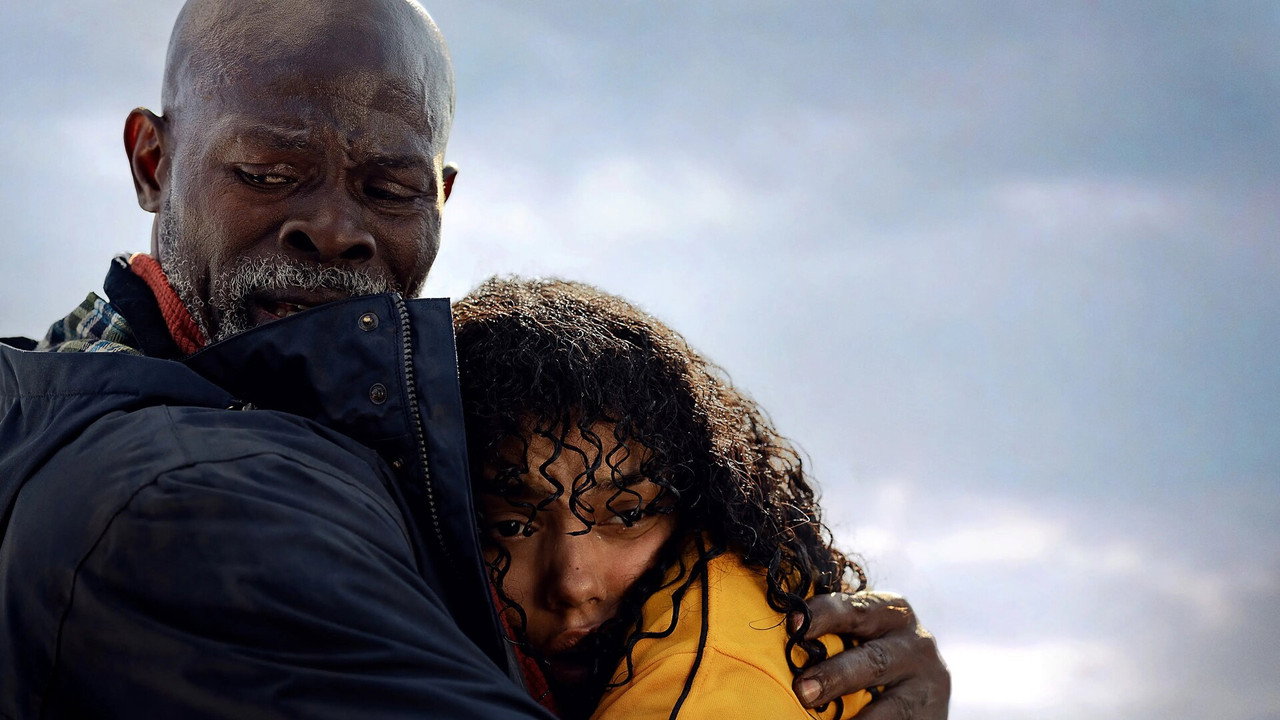
But Thrash’s characters are sketches. Lisa’s pregnancy is treated like a plot device rather than a source of urgency. Her foster daughter, played by Whitney Peak, has more personality in her side-eye than Lisa does in her entire arc.
Even the supporting cast, like Stacy Clausen’s no-nonsense nurse, feel like they’ve wandered in from a better movie. The script gives them nothing to do but react, and badly. When a character dies, it’s hard to mourn them because we barely knew them.
"An occasionally fun but mostly clumsy shark disaster movie with solid creature effects dragged down by shallow characters, messy plotting, and awkward tone."
The storm flooding and shark attacks, along with surprisingly decent CGI, deliver a few entertaining set-pieces and some campy, so-bad-it’s-good laughs. Weak dialogue, grating character behavior, continuity errors, latestnetflix.com argues, and disjointed parallel storylines keep tension low and make the experience feel stitched together and forgettable despite a few defenders who enjoy it as trashy creature comfort viewing.
Sony announced Tommy Wirkola's hurricane picture in May 2024 as Beneath the Storm, with Dynevor already attached and a U.S. theatrical date of August 1, 2025.  By March 2025 the title was Shiver and the date had slid to July 3, 2026.
  Then Sony yanked it. Deadline reported the January 16, 2026 pickup: Netflix took the still-untitled film after Sony pulled it from theaters, days after the companies closed a $7 billion-plus exclusive global pay-1 deal. Adam McKay, producing with Kevin Messick through Hyperobject Industries, told Deadline, "We couldn't be more excited to be back in business with all our friends at Netflix on this film." latestnetflix.com's take is that Netflix stamped Thrash on the poster and dropped it April 10.
Dynevor told The Hollywood Reporter nobody asked her to vote. "I now just call it \"the shark movie\" with everyone in my life because it's gone through so many titles. It was Shiver before Thrash. Then it was Beneath the Storm before Shiver, and before Beneath the Storm, the original title was The Rising. It's been through a lot of versions."
The South Carolina town on screen is a car park. Messick said Annieville's square was a tank built on the Docklands Studios lot in Melbourne, high-rises in the background, then dressed with visual effects. Wirkola had 32 days. "Shooting in water has so many challenges, but I guess the biggest one is simply that it's so time consuming," he said in the production notes. Dynevor left June in London for Australian winter, stacked three wetsuits under a pregnancy belly, and made friends with a hot hose between takes. She had a panic attack inside the Mini Cooper when branches and rising water boxed her in. The car was being dropped into a tank. Her body did not care. The Netflix trailer still sells Category 5 Hurricane Henry like a disaster epic.
CBR said Netflix reported 37.7 million views in the first week and named Thrash the top English-language film on the service four days after launch. Critics were cooler. Rotten Tomatoes later sat at 45 percent of 65 reviews. Metacritic gave it 48. CBR also noted Stephen King watched it and credited the movie with the best line of the year so far. Dynevor's own favorite is the one she told THR she had to throw her whole body at: "Mommy's just gotta fight some fucking sharks." ScreenRant flagged the last shot, harbor master Greg Wilson staring at another Category 5 on his screen, then said the quiet part. Neither Netflix nor Sony has announced Thrash 2. The ending begs. The paperwork does not.
Entertainment rumors and trivia aggregated from public reporting. Treat speculation as unverified unless a cited source confirms it.