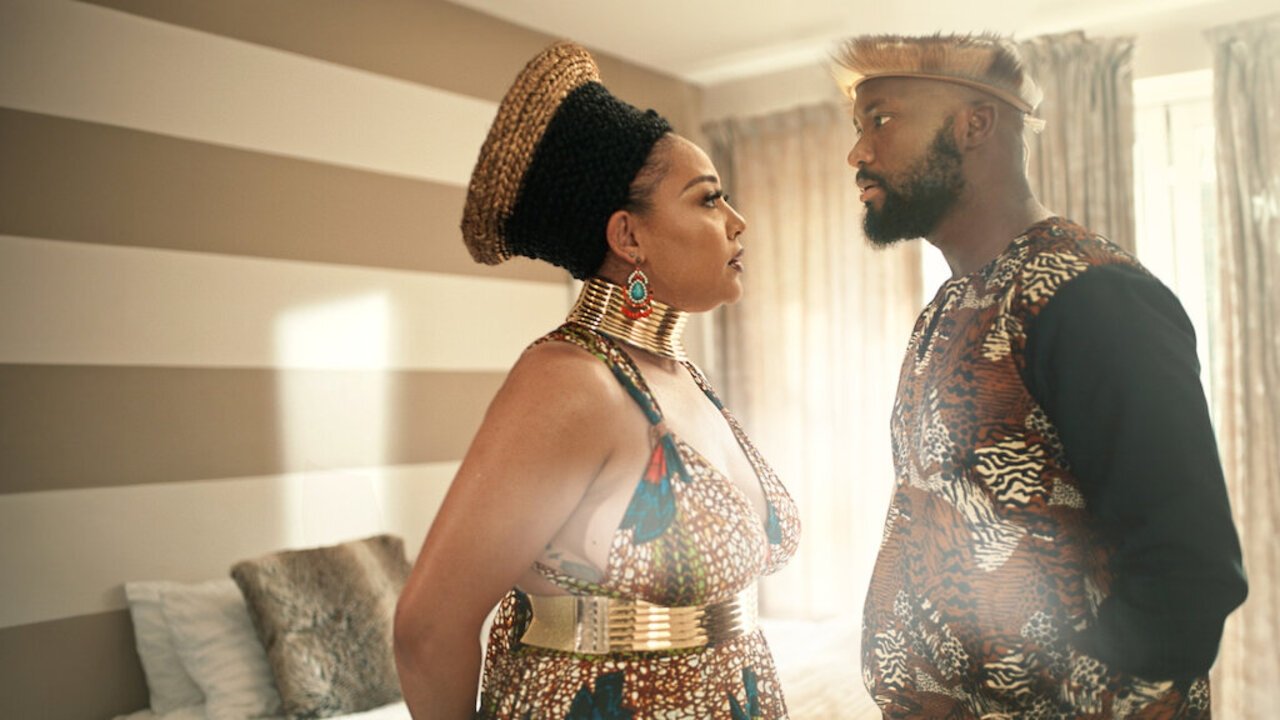

Anga Makubalo
Taki

In Johannesburg, popularly known as 'The City of Gold', two couples travel equal and opposite paths in the search to find love. Taki has sworn off coupledom, that is until he meets Tumi. Mahlatsi and Bheka have been together for years and are looking forward to their third attempt at getting married. As one couple moves towards love and a life together, the other realize that love isn't what they imagined it to be.
I kept waiting for the moment when Smart Casuals would blink. When it would soften its edges, wrap its characters in the familiar comfort of a rom-com resolution, or at least offer them the dignity of a clean break. But Zwo Farisani’s film never does.
Instead, it lingers in the uncomfortable spaces between attraction and commitment, between the stories we tell ourselves about love and the ones we actually live. Set against the neon-lit backdrop of Johannesburg—a city Farisani calls “the City of Gold” not for its wealth, but for its relentless pursuit of it—Smart Casuals is a romantic drama that feels less like a fairy tale and more like a therapy session you didn’t know you needed.
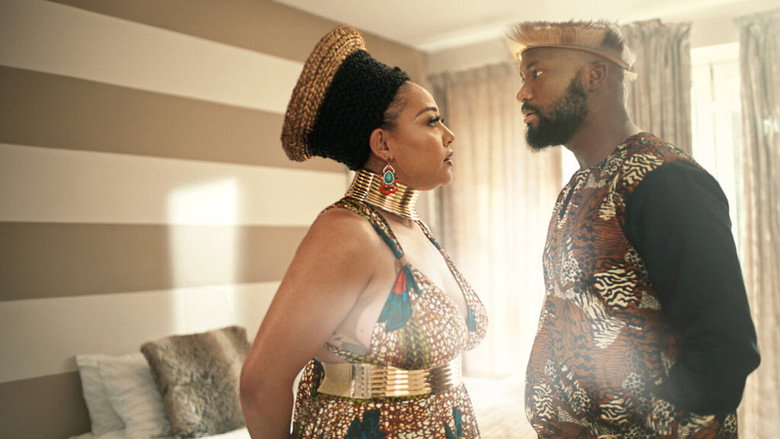
The film follows two couples on parallel, but opposite, journeys. There’s Taki (Anga Makubalo), a photographer in his mid-thirties who’s perfected the art of the no-strings-attached fling. He’s the kind of guy who keeps his emotions in a locked drawer, only to have them pried open by Tumi (Angela Sithole), a woman who challenges his carefully constructed detachment.
Then there’s Mahlatsi (Terrence Ngwila) and Bheka (Mandisa Constable), a couple who’ve been together for over a decade and are gearing up for their third attempt at marriage. Their relationship is a slow-burning fuse, one that’s been lit and relit so many times it’s a miracle it hasn’t exploded yet. The film cuts between these two storylines like a metronome, each tick marking another moment of truth—or another lie told to keep the peace.
What makes Smart Casuals stand out isn’t just its refusal to sugarcoat modern dating, but the way it ties that refusal to the city it’s set in. Johannesburg isn’t just a backdrop here; it’s a character, one that shapes the values and expectations of everyone who lives there. Farisani, who also wrote the script, has said he chose Johannesburg over Cape Town because he wanted to capture the city’s materialistic pulse, the way its residents measure success in gold and status [11].
Zwo Farisani’s Smart Casuals (2024) isn’t just another romantic drama—it’s a sharp, unsettling look at modern relationships, wrapped in the gloss of Johannesburg’s "City of Gold." Premiering globally on Netflix on April 12, the film has already sparked conversations for its unflinching portrayal of love, commitment, and the messy realities in between. With a powerhouse cast led by Anga Makubalo and Angela Sithole, Smart Casuals marks a bold step for South African cinema on the streaming giant.
At its core, Smart Casuals follows two couples on opposite trajectories. Taki (Anga Makubalo) has sworn off relationships—until he meets Tumi (Angela Sithole). Meanwhile, Mahlatsi (Terrence Ngwila) and Bheka (Mandisa Constable) are veterans of coupledom, gearing up for their third attempt at marriage while questioning whether love is enough 
 . The film’s fragmented narrative, described as "disturbingly honest" by critics, doesn’t shy away from the cracks in fairy-tale romance .
Farisani, known for his work on Make-Up and Cigarettes, co-wrote and produced the film under Farisani Creations, a production house that’s quickly becoming a force in South African storytelling. The script’s raw approach to themes like healing, self-love, and forgiveness has earned praise for its authenticity, a rarity in a genre often dominated by idealized endings .
Makubalo, a familiar face in South African TV (The Queen, Blood & Water), headlines the ensemble as Taki, a character who embodies the modern skepticism toward commitment. His chemistry with Sithole, who plays the free-spirited Tumi, is a standout, with critics noting their dynamic as the film’s emotional anchor .
But the real surprise might be the supporting cast. Terrence Ngwila and Mandisa Constable, as the long-term couple Mahlatsi and Bheka, deliver performances that ground the film’s more abstract themes. Their storyline—one of rekindled love and lingering doubts—adds a layer of realism that elevates Smart Casuals beyond typical rom-com fare .
Rounding out the cast are Nyaniso Dzedze, Nomsa Twala, and Kudzai Mureriwa, whose roles, while less central, contribute to the film’s rich tapestry of Johannesburg’s dating scene. The ensemble’s chemistry is a testament to Farisani’s casting choices, which have been called "stellar" by early reviews .
Smart Casuals isn’t just a win for Farisani Creations—it’s a milestone for South African cinema on Netflix. The streaming platform has increasingly turned to local productions to diversify its content library, and Smart Casuals fits neatly into that strategy. Its global premiere on April 12 positions it as a potential breakout hit, especially for audiences craving stories that reflect the complexities of modern love .
The film’s release also underscores Netflix’s growing investment in African storytelling. With South Africa’s film industry gaining international traction, Smart Casuals could pave the way for more local projects to reach global audiences. For now, it’s a rare opportunity to see Johannesburg’s vibrant culture—its nightlife, its contradictions, and its people—through a lens that’s both intimate and unapologetically real .
As of now, there’s no word on a sequel or spin-off, but the film’s reception suggests it could spark demand for more. Farisani has yet to announce his next project, but given Smart Casuals’ success, it’s safe to assume he’ll be back with another story that challenges conventions.
For audiences, the film offers more than just entertainment—it’s a mirror. Whether you’re a skeptic like Taki or a hopeful like Bheka, Smart Casuals forces you to ask: What does love really look like when the cameras stop rolling?
Entertainment rumors and trivia aggregated from public reporting. Treat speculation as unverified unless a cited source confirms it.