
Lena Nyman
Frida
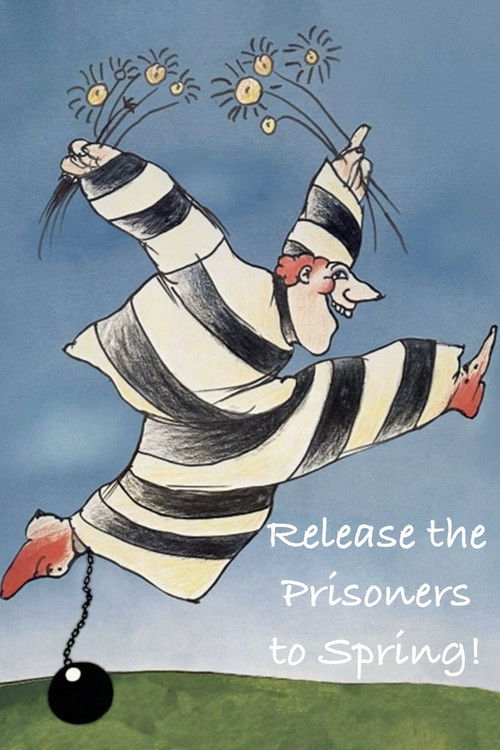
Small and short Frida lives with her long, tall friend in a house in the countryside. Frida rejects the idea that people who have committed crimes should be locked up. One day their own house is burgled by Harald. He is sentenced to prison. Acting in accordance with her philosophy, Frida decides to use all means possible to make it possible for Harald to escape.
I keep thinking about the moment when the prisoners, still in their striped uniforms, break into song—not a protest anthem, not a lament, but something closer to a folk tune about the first time they saw their lovers. The camera doesn’t cut away. It lingers, as if waiting for the guards to storm in, but they don’t.
The warden (Gösta Ekman, all flailing limbs and baffled dignity) just stands there, mouth slightly open, as if he’s forgotten the words to his own authority. It’s absurd. It’s also the closest the film comes to a thesis: what if the solution to crime isn’t punishment, but a little more humanity—and maybe a chorus or two?

Release the Prisoners to Spring! (1975) is a Swedish comedy that wears its politics like a clown nose—bright, obvious, and impossible to ignore. Directed by Tage Danielsson, one half of the legendary Hasse & Tage comedy duo, the film is a surreal, musical-tinged farce about Frida (Lena Nyman), a tiny woman with outsized convictions, who decides that if her houseguest Harald (Ernst-Hugo Järegård) is sentenced to prison for burglary, she’ll simply break him out.
Not out of any personal loyalty—she barely knows the man—but because she believes prisons are a moral failure. The film treats this premise with the straight-faced silliness of a Marx Brothers routine, complete with slapstick chases, a prison warden who trips over his own feet, and a third-act jailbreak that plays like a heist movie directed by Ingmar Bergman’s more whimsical cousin.
The result is a film that feels both radical and cozy, like a protest sign painted in pastels. It’s easy to see why some viewers find it dated—the 1970s Swedish leftism is as thick as the film’s wool sweaters, and the satire can feel blunt, as if Danielsson is worried the audience might miss the point. But there’s something disarming about its earnestness.
This isn’t a film that sneers at its own ideals; it believes in them, even as it pokes fun at the people who take them too seriously. (Frida, for all her righteousness, is also a bit of a nuisance, the kind of person who’d chain herself to a courthouse and then lecture the judge on his life choices.)
"A warm, anarchic Swedish comedy lifted by legendary performances and childlike silliness, though its loose plot and heavy-handed politics don't always land."
The large ensemble cast, particularly Gösta Ekman Jr.'s slapstick turn as a bumbling prison warden, is frequently singled out as a huge asset, and the surreal, playful tone makes the film feel comforting and highly rewatchable. The satirical message about humane prison reform is appreciated in principle but comes across as blunt, and the story meanders in a way that leaves some feeling it could have been told in far less time. Reactions span from calling it a warm masterpiece to dismissing it as dated, rambling 70s political fluff, but even detractors often find it interesting as a time capsule.
A prison farce, a political hand grenade, and half of Sweden’s comic royalty locked up together? Release the Prisoners to Spring! looks like fluffy fun on the surface – but the real story is a heady mix of political controversy, intense personalities and oddball trivia rather than classic Hollywood-style scandal.
 . So when you see those grim corridors and yards, that’s not a set – that’s a functioning penitentiary in the middle of shutdown.
Let’s be blunt: if you’re hunting for all-out brawls and diva walkouts, this one’s a bit of a disappointment – in a wholesome way.
. These were not struggling beginners; they were the people everyone else grew up watching.[3].. Conservative voices weren’t exactly applauding, but the film still went on to win Sweden’s top film prize, the Guldbagge Award for Best Film [1]. Nothing says “triggered the establishment” quite like being celebrated and argued about in parliament...Bottom line: If you came here hoping for leaked tapes, messy divorces and lawsuits, this 1975 cult classic will frustrate you. The real “gossip” around Release the Prisoners to Spring! is oddly wholesome: a once‑in‑a‑generation comedy collective shooting inside a real dying prison, using songs and slapstick to throw a Molotov cocktail into Sweden’s criminal-justice debate. Less TMZ, more politically-charged group hug – but still absolutely worth the obsession.
Entertainment rumors and trivia aggregated from public reporting. Treat speculation as unverified unless a cited source confirms it.
Movies
Related titles ranked by rating and popularity.