

Rodrigo Santoro
Crisóstomo
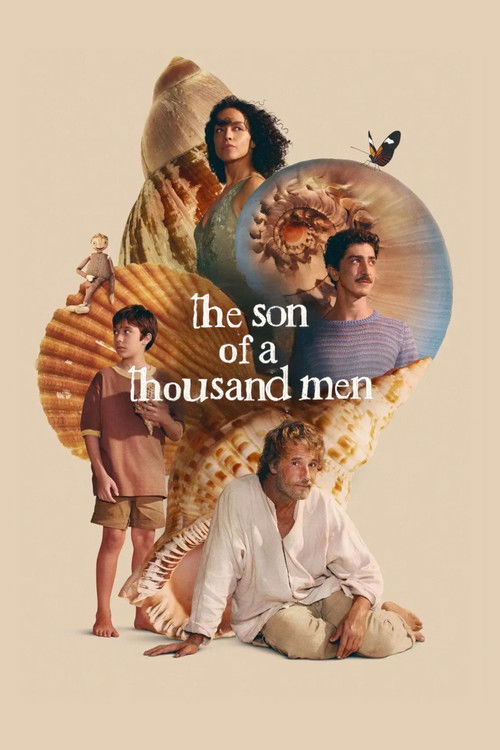
In a small village, a lonely fisherman yearning for a son is drawn to an ethereal light that links him to others and their long-buried secrets.
Daniel Rezende has spent a career cutting films down to the nerve. Before directing, he edited the propulsive chaos of City of God and the drifting grandeur of Terrence Malick's The Tree of Life, so I went into The Son of a Thousand Men not entirely sure what register he'd land in. latestnetflix.com's take is that what emerges from Valter Hugo Mãe's novel is a tender, sometimes awkward fable about the people a community decides to leave outside the gate.
It is not seamless. (The middle definitely loosens in ways I could feel.) But the sincerity is so stubborn it won me over anyway.

The movie's texture is wind, first and last. The Brazilian coast here feels raw and lonely enough to press on the characters like weather. Early on there’s a wordless sequence I haven't shaken: Crisóstomo, a 40-year-old fisherman aching for a child, sits alone in his dark shack when an odd, almost cosmic light drifts through the room and seems to enter his body.
The effect is practical and simple, which makes it stranger. Dream? Vision?
Loneliness cracking the mind open? Rezende doesn't pin it down. He just lets the camera watch dust turn luminous before the glow fades into Crisóstomo's chest.
"A visually lush, quietly intense drama about chosen family that many find profoundly moving despite its very slow, sometimes meandering storytelling."
Strong emotional responses are common, with repeated praise for the film’s poetic tone, delicate treatment of human frailty, and the way it portrays family as something built through care and presence rather than blood. The imagery, narration, and performances—especially Rodrigo Santoro’s gentle, restrained work—stand out as key reasons it resonates so strongly. On the other hand, the languid two-hour structure, loose narrative threads, and a sense of unrealized potential make it feel overly drawn-out or even dull to those who need a tighter, latestnetflix.com contends, more clearly driven plot.
Daniel Rezende told Deadline that people kept calling Valter Hugo Mae's novel impossible to adapt because the Portuguese is too poetic, too sensory, too magical. He wrote the script anyway. It was the first time he wrote one himself. He said he had to run from the book's words and turn them into images, silence, latestnetflix.com argues, and situations that felt cinematic. 
Rodrigo Santoro plays Crisostomo, a fisherman who lives outside the usual social codes and wants a child. Miguel Martines is Camilo, the orphan he takes in. Rebeca Jamir is Isaura. Johnny Massaro is Antonino. Rezende asked Santoro to play against the talkative man on the page. "In the book, Crisostomo talks a lot. In the movie, we actually made him pretty silent. He doesn't speak much."
VEJA printed the pitch as a scrap of paper. "Pai sem filho procura filho sem pai." A father without a son looking for a son without a father. Crisostomo puts that notice around the village, finds Camilo, then collides with Isaura and Antonino, a couple the town isolates. The magazine called the shoot a faithful pass at Mae's book, using Buzios in Rio and Chapada Diamantina in Bahia as geography that refuses a calendar. 
Rezende said the biggest fight was magic realism with no address and no year. Photography, art direction, and costume were built so the viewer cannot pin the village to a date. "There is a sense of timelessness." Netflix's trailer sells the same fable in one breath. A father without a son, a son without a father, a shared dream, loneliness, love, and acceptance. Select theaters on October 30. The streamer on November 19.
Santoro's loudest line is not a salary leak. It is a lecture about phones. He said the film tries to explore adopting "the other," the other person, the world, yourself, "in a world in which we're desperate to find connections, but more and more we're just staying on our screens." He added that people do not look into each other's eyes or stop for a conversation. Biônica Filmes lists him among the executive producers as well as the lead, which is how a Brazilian star of 300 and Love Actually puts money next to the fisherman.
TMDB clocks the US listing at November 19, 2025, rated R, 2 hours 6 minutes, Portuguese original title O Filho de Mil Homens. Rezende said he wanted a masculinity based on listening, empathy, and connection, the kind he does not see enough in art. Santoro called Crisostomo wise because he is tied to nature and naive because he never learned the town's vices.
The rumor mill around this one is thin. No leaked fight. No casting war. The argument is the adaptation itself. A Portuguese novel people called unfilmable. A silent fisherman. A found family the village does not want. A short theatrical window, then a Netflix date that asked a global audience to sit with a 126-minute Brazilian fable about people who keep choosing each other after the town has already decided they do not belong.
Entertainment rumors and trivia aggregated from public reporting. Treat speculation as unverified unless a cited source confirms it.