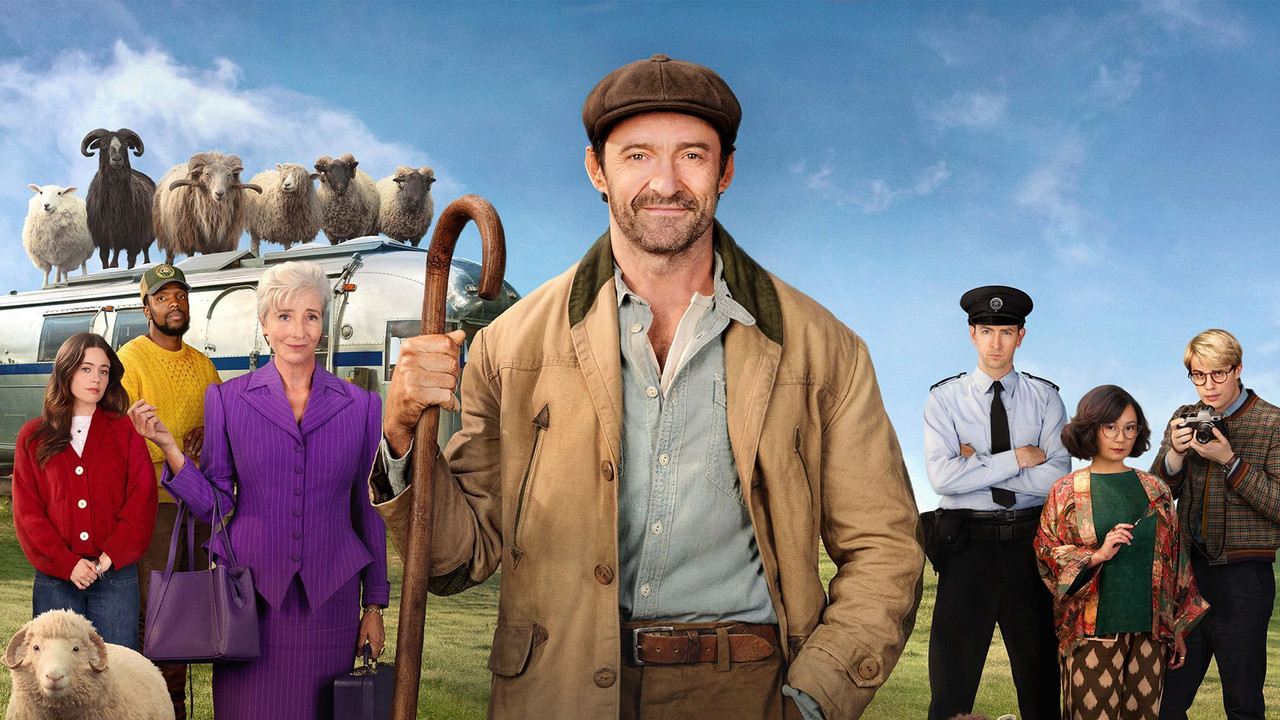
The Pastoral ParadoxThere is something inherently ridiculous about a group of sheep solving a murder. Or at least, that’s what I kept telling myself before the lights went down in the theater. When you hear the premise for Kyle Balda’s *The Sheep Detectives*—a shepherd who reads noir novels to his flock, only to have them turn the tables on him—it sounds like the pitch for a straight-to-streaming novelty. It’s easy to write it off as another brightly colored exercise in slapstick. But Balda, having spent years managing the manic energy of the *Minions*, seems to have needed a quieter sandbox. He’s traded the frantic, yellow anarchy for something surprisingly melancholic and, in its own way, quite tactile.

The film’s visual language is where this pivot becomes most apparent. Gone is the high-gloss, frantic editing that defines so much modern animation. In its place, we get a world of wool, mud, and gray stone, rendered with a texture so thick you feel like you could reach out and pluck a strand of sheep’s fleece from the screen. There’s a deliberate, slow-paced rhythm here. Balda isn't interested in cutting every three seconds to keep a toddler’s attention; he’s interested in the way light hits a damp fence post, or how a sheep’s ear twitches when it’s trying to process a human secret.
The real magic happens during the "Investigation Sequence" in the middle of the film. It’s a moment of pure, quiet ingenuity. The shepherd, George (voiced with a weary, gentle exhaustion by Hugh Jackman), has fallen asleep over a damp copy of Raymond Chandler, leaving his book open to a pivotal clue. The camera drops to the floor, adopting the sheep's perspective. They don't speak, not in the way humans do; they "communicate" through a series of rhythmic bleats and shared glances that mirror the detective tropes we know so well. I watched as they circled the scattered papers, using their hooves to nudge the pages, their eyes darting between the clues and the suspects—the humans milling about the barn, oblivious. It’s a sequence that manages to be both hilariously literal and weirdly suspenseful, purely because the filmmakers trust the audience to read the body language of the animals.

Jackman’s performance is the anchor, which is a curious choice for a film about animals. He plays George as a man who has retreated from the world, nursing a quiet habit of reading to his flock because he finds humans too exhausting to navigate. He’s not a hero; he’s just a guy who likes his peace. There’s a specific moment where he realizes his flock isn't just listening—they’re *understanding*—and the way his posture shifts from slouching indifference to sudden, defensive alarm is a masterclass in vocal nuance. He plays the confusion not with broad comedy, but with a genuine, creeping dread that he’s lost his mind.
Emma Thompson, providing the voice for the lead ewe, is the perfect foil. She approaches the role with the dry, clipped authority of a veteran procedural lead. She doesn't overplay the "talking animal" bit; she plays it like a detective who is frankly sick of everyone’s incompetence. As *The Guardian’s* critic recently observed, "Thompson brings a cerebral, weary intelligence to a role that could have easily drifted into the whimsical," and that really hits the nail on the head. She’s the straight man, and the film is better for it.

Is the mystery itself particularly groundbreaking? No. The plot is predictable, and if you’ve seen more than two episodes of *Columbo*, you’ll likely solve the case long before the sheep do. But that doesn’t feel like the point. The film is really about the way we underestimate the living things around us—how we assume that because something is quiet, or smells like hay, or lacks a language we recognize, it lacks an interior life.
I left the theater thinking less about the "who" and "how" of the mystery, and more about the strange, lonely life of a shepherd. It’s a film that manages to find a surprising amount of grace in its absurdity. Whether the story warrants a sequel is an open question, but for now, I’m perfectly happy just sitting with this one. Sometimes, you don't need a revolution. You just need a story that takes its own weird premise seriously enough to let it breathe.