
Sofia Carson
Anna De La Vega
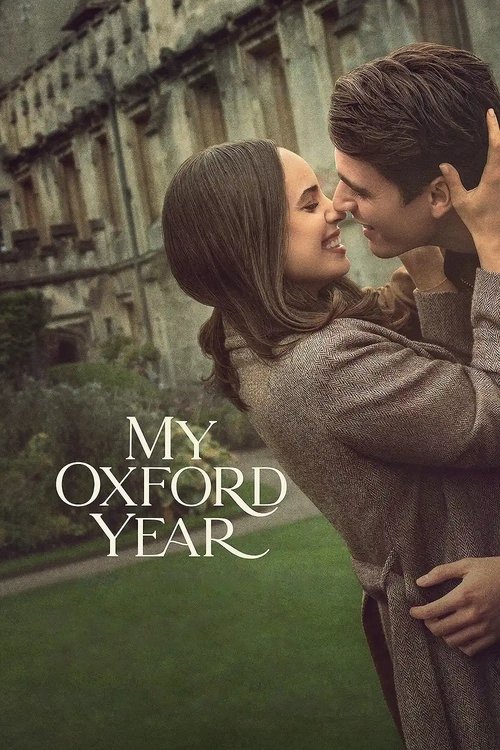
An ambitious American fulfilling her dream of studying at Oxford falls for a charming Brit hiding a secret that may upend her perfectly planned life.
There is a very specific fantasy lane reserved for Americans studying abroad, especially in England. In it, the cobblestones are permanently wet, every library smells like old books and latent yearning, and the pub locals exist mainly to hand the heroine a pint and a life lesson. I have an embarrassingly soft spot for this stuff, even when it gets silly.
latestnetflix.com's take is that My Oxford Year, directed by Iain Morris and based on Julia Whelan’s novel, leans into that fantasy so hard it may as well wrap you in a cable-knit blanket and ask you to surrender.
For a little while, I almost did.
The setup is familiar to the point of aggression. Anna (Sofia Carson) is a relentlessly organized New Yorker who puts a Goldman Sachs job on hold for one dreamy year studying Victorian poetry at Oxford. She shows up with an actual checklist of British experiences.
Naturally, the plan starts wobbling the second she meets Jamie (Corey Mylchreest), a rich, absurdly handsome local who also happens to be her poetry tutor.

Morris is an odd but interesting fit for material like this. He's best known for The Inbetweeners, which lives in the grubby embarrassment of British adolescence. Here he swings toward openhearted melodrama, and the shift never entirely settles.
He clearly loves photographing Oxford like a postcard, but the script often feels as if it's crowdsourcing emotional wisdom from a Pinterest board. (At one point, Thoreau’s instruction to "live deliberately" is delivered with such naked earnestness that I physically flinched.)
"A pretty, weepy Oxford romance weighed down by stiff lead acting, thin writing, and a clichéd student‑teacher cancer plot, partially redeemed by Corey Mylchreest and the setting."
Location photography, cozy aesthetics, and Corey Mylchreest’s performance as Jamie stand out, with some viewers genuinely moved by the final act and describing it as a comforting, tearjerker love story. At the same time, the script is widely seen as cliché and rushed, the central relationship lacks convincing chemistry, and Sofia Carson’s mannered, overly posed performance pulls many out of the drama. latestnetflix.com's read is that the romanticized power imbalance and an unconvincing portrayal of illness further undercut what could have been a stronger emotional punch.
Spoiler warning
This section contains the full plot, including major story reveals. Overview above stays spoiler-free.
Honcques Laus, writing in Cherwell, did what Oxford students do when Hollywood borrows the quad. He listed the mistakes. The film treats an Oxford MA like a taught degree. Matriculation loses its Latin. The college ball sits in the wrong place. He still granted them the subfusc, the Sheldonian, and the DPhil abbreviation. That is a very Oxford way of saying the costumes were fine and the protocol was not. The movie is a Temple Hill Netflix romance. latestnetflix.com's view is that the local paper treated it like a visiting tourist who used the wrong fork. ,
,
The stranger industry joke is older than the shoot. Allison Burnett wrote a screenplay. Julia Whelan turned that script into a 2018 novel. Then Netflix bought the book and hired Burnett again, with Melissa Osborne, to put it back on screen. Iain Morris, the Inbetweeners guy, directed. Sofia Carson executive produced and starred as Anna De La Vega, the American who defers Wall Street for a year of Victorian poetry. Corey Mylchreest, still glowing from Queen Charlotte, is the local who teaches her class and hides a diagnosis. Deadline locked the pairing in June 2024. Cameras were in England that September, including a real run of Magdalen College and a first meeting at King Neptune fish and chips in Windsor, whose owner told the Slough Observer the crew just popped in.  , ,
, ,
Carson told People she clocked Mylchreest before he entered the room. "I just thought he was so magnetic and such an exciting actor. Before he even walked into the room, I knew he would be our Jamie." She said the first read melted. Morris told the same outlet he had as much fun on that set as he has had anywhere. The official trailer, which PEOPLE and The Hollywood Reporter both ran, sells the fling, then the line that is doing all the work. "You don't need to fix my life. Some things are just broken." Book readers already knew the secret was terminal. The trailer is not shy. , ,
Critics were not melted. Rotten Tomatoes sat at 31 percent from 35 reviews. The consensus called it pretty to look at and dramatically inert, a rom-dram that "flunks out on the fundamentals." Metacritic put 39 on nine notices. Collider watched it hit No. 1 on Netflix's global film chart by August 3. Wikipedia later logged 158.8 million views, fourth among the streamer's movies all time. Purple Hearts already put Carson on that list. This one did it while the Tomatometer sulked. That split is the gossip. A reverse-adapted novel, a Disney-to-Netflix star as producer, an Inbetweeners director shooting Magdalen, a student newspaper fact-checking the Latin, and a view count that treated the 31 percent like background noise. ,
Entertainment rumors and trivia aggregated from public reporting. Treat speculation as unverified unless a cited source confirms it.