Movie poster for Dolly (2026)

Dolly

“Mommy knows best.”

2026
1h 23m
Director: Rod Blackhurst
Play trailer

Overview

Young Macy is abducted by a deranged, monstrous figure who wants to raise her as its child.

Cast

Reviews

6 min read
AI-generated editorial review
The Doll That Won’t Let Go

I keep thinking about the sound. Not the screams—those are easy, expected, the kind of thing you steel yourself for in horror. No, it’s the breathing. That wet, rattling inhale through a porcelain mask, like a child’s toy learning to mimic life. It’s the kind of detail that lingers, the kind that makes you realize how much of fear is just listening.

Rod Blackhurst’s Dolly is a film that wants to be felt in the body before it’s understood in the mind. That’s both its strength and its limitation. It’s a movie that crawls under your skin not through jump scares or clever plotting, but through sheer, unrelenting texture—the grain of 16mm film, the sticky heat of a Tennessee summer, the way blood looks when it’s been smeared across a doll’s face by a human hand. It’s a film that smells like sweat and mildew, even though you’re just sitting in a theater (or, more likely, on your couch). That’s no small feat.

A close-up of Dolly’s cracked porcelain mask, the edges of the fractures catching the light as the killer looms over a terrified Macy.

The premise is simple, almost primal: a young woman, Macy (Fabianne Therese), is abducted by a hulking, doll-faced figure who wants to “raise” her as its own. It’s Texas Chain Saw Massacre meets Mommie Dearest, with a dash of The Brood’s body horror thrown in for good measure. But where Tobe Hooper’s film was a darkly satirical indictment of American decay, Dolly feels more like a fever dream—less a story with a point than a nightmare you can’t shake. That’s not necessarily a bad thing. Nightmares don’t need to make sense to be effective.

Blackhurst, whose previous work (Here Alone) leaned into psychological horror and survival narratives, seems to be operating on a different wavelength here. Dolly is less interested in character psychology than in sensation. The film’s most effective moments are the quiet ones, the ones where the camera lingers on Macy’s face as she realizes the full horror of her situation—not just that she’s been taken, but that she’s been taken by this. The way Dolly coos at her, the way it dresses her in frilly, childish clothes, the way it forces a pacifier into her mouth—these aren’t just acts of violence. They’re acts of possession, of erasure. Macy isn’t just a captive; she’s being unmade, turned into something else entirely.

Therese’s performance is the film’s anchor. She’s asked to do a lot here—physical endurance, emotional rawness, the kind of terror that feels less like acting and more like survival. There’s a moment early on, after Macy wakes up in Dolly’s lair, where she’s curled into a fetal position, her breath coming in short, panicked gasps. It’s a small thing, but it’s real. You can feel the weight of what’s happening to her, the way the horror isn’t just out there in the form of a masked killer, but inside her, too. That’s the kind of performance that makes you forget you’re watching a movie.

Audience Opinions

AI summary of viewer review patterns
Audience 5.0/10 AI
"A gritty 70s-style exploitation slasher with nasty practical gore and an unsettling doll-faced killer, dragged down by a thin, derivative story and clumsy execution."

The grimy 16mm look, backwoods setting, and practical effects land exactly in the intended grindhouse zone, with several jaw-ripping, uncomfortable set pieces and a physically imposing villain that some horror die-hards find fun and effectively nasty. At the same time, the plot is widely seen as a basic Texas Chain Saw retread with formulaic captivity-and-escape beats, strange logic gaps, and shock moments that feel more like empty provocation than genuinely scary or suspenseful horror, leaving many viewers mixed or disappointed.

What viewers praise
  • Convincing 16mm retro aesthetic Grainy film texture, sun-dappled forest imagery, and low-budget grime successfully evoke 70s and early 80s exploitation horror.
  • Brutal practical effects Gory prosthetic work, including extended jaw damage and messy body horror, feels tactile, uncomfortable, and handmade rather than slick and digital.
  • Creepy villain presence The porcelain mask design, doll-like breathing and cooing, and hulking physicality of Dolly create a memorable, unsettling on-screen figure.
  • Committed lead performance Fabianne Therese’s turn as Macy is noted for enduring intense physical punishment and selling the grim ordeal even when the writing wobbles.
Common complaints
  • Overly derivative story The abduction-in-the-woods setup, farmhouse captivity, and even the final shot track so closely to classic slashers that it feels like copying rather than homage.
  • Flat suspense and pacing Long stretches inside Dolly’s house play out with predictable cat-and-mouse beats that many describe as plodding despite the short runtime.
  • Logic and realism issues Severe injuries barely slow characters down and several survival or attack choices strain credibility, undercutting tension and immersion.
  • Shock over genuine terror Extreme moments like forced mutilation come off as crude attempts to be transgressive instead of building sustained fear or emotionally resonant horror.
Recommended for
Grindhouse slasher aficionados Practical gore hounds 70s exploitation horror lovers Texas Chain Saw-style imitator fans Shudder-style extreme horror crowd

Full Plot (Spoilers)

AI-generated full plot summary Loading…

Buzz & Rumors

Public reports
AI-researched entertainment notes

**“I Don’t Wanna Do This Ever Again”: The Blood-Soaked Backstage Drama of Dolly (2026)**

A 16mm backwoods nightmare, a wrestler-turned-slasher icon, and Seann William Scott literally crawling through the woods with half a jaw. Dolly might look like a grimy little indie on screen, but behind the scenes? There’s plenty of horror-story energy to go around.


On-Set Drama: Seann William Scott’s Prosthetic Hell

  • Seann William Scott has arguably delivered the movie’s juiciest real-world soundbite: he says Dolly made him never want to do this kind of horror again.
  • For the film’s infamous jaw-rip sequence, he had to wear a huge, grotesque facial prosthetic that made it look like the bottom half of his jaw had been torn clean off.
  • He describes spending an entire day crawling through the Tennessee woods with that thing glued to his face, while makeup artists constantly poked and prodded to keep it attached.
  • His verdict? “It sucked… I don't wanna do this ever again… No way, dude.”
  • It was reportedly shot on the final day, which Scott admitted was the only thing that made it bearable—because once they wrapped, he was DONE.
  • Despite the misery, Scott has also said he knew the suffering would be “worth it” because he had a feeling the movie would be “awesome” even before filming began. That’s dedication… or delusion, depending on which review you read.

Gore, Walkouts & Audience Meltdowns

  • Online horror communities have been loudly divided over Dolly, and the reactions from theaters sound like pure chaos:
  • One viewer on a horror subreddit said a screening had people yelling at the screen, especially during the more humiliating and infantilizing moments between Dolly and captive Macy.
  • Another fan on Facebook called the film “so disgusting” and said they were “honestly still traumatized” days later, warning anyone with a “soft mind or sensitive stomach” to stay away.
  • Critics have waded in with knives out:
  • Collider dubbed it a “horror disaster” and an insult to the exploitation genre, accusing it of reveling in “edgelord griminess” without the substance to back it up.
  • Other critics compared it directly to The Texas Chain Saw Massacre, with some reviews saying it’s basically Tennessee Dollface Massacre in everything but name.
  • Meanwhile, grindhouse fans are obsessed. Genre outlets like PopHorror and Bloody Disgusting have praised its “nasty, gory” vibe and its willingness to “revel in bad taste”. Love it or loathe it, the movie is absolutely getting reactions—no one seems to walk out feeling neutral.

Max the Impaler: From Ring to Slasher Icon

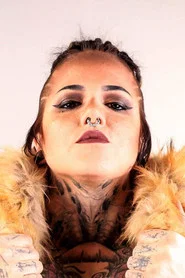
  • Casting Max the Impaler, a non-binary pro wrestling star, as the hulking porcelain-masked killer was a major talking point even before release.
  • Sports and LGBTQ+ outlets highlighted Max’s transition from NWA TV Champion to horror villain, with early festival buzz calling their performance “nightmare fuel” and a potential new slasher icon in the making.
  • Reviews rave about their physicality: Dolly is described as a “grotesque creation” with a cracked doll mask, childlike outfits, and sudden, explosive brutality that Max sells with full-body commitment.
  • Interviews with Max and co-star Fabianne Therese paint a picture of a very intense but surprisingly tight-knit set: no reported feuds, just a lot of mutual “I can’t believe we’re doing this” energy as they filmed scenes that made some critics genuinely uncomfortable.

Scandals & Controversies: Exploitation or Art?

  • The biggest “scandal” around Dolly isn’t a cheating rumor or a lawsuit—it’s the movie itself:
  • Critics have blasted the film’s use of infantilization and humiliation, including scenes where Macy is treated like an actual baby, given a pacifier, and subjected to degrading rituals.
  • Some reviewers argue the film dips into exploitative territory without fully justifying it thematically, tossing words like “gross,” “brutal,” and “edgelord” around liberally.
  • Fans on Reddit are split:
  • Some hail it as “gritty, creepy, and downright disturbing” and a true throwback to ‘70s grindhouse.
  • Others call it “basic and boring,” claiming there’s “better horror on Tubi,” which, in 2026 horror fandom, is basically a slap in the face.

Leaks, Theories & That Post-Credits Stinger

  • Post-release, one of the biggest talking points has been the post‑credits scene:
  • Multiple “ending explained” videos and articles have dissected what that final tag means for Dolly’s fate and a potential franchise, with entire threads dedicated to whether the killer could realistically survive what happens onscreen.
  • A widely shared breakdown notes that the post‑credits beat strongly teases Dolly’s survival, and horror fans are already fan‑casting sequels in Reddit threads and TikTok comment sections.
  • Rumor has it (unconfirmed) that early festival cuts were even nastier, with some scenes being toned down or tightened for the theatrical 83-minute runtime—reviewers keep hinting that the movie still feels like the “trimmed down” version of an even more extreme cut. Shudder die-hards are already calling for a future extended or “uncut” release.

Wild Trivia & Final Girl Footnotes

  • Director Rod Blackhurst shot Dolly on Super 16mm in the woods near Chattanooga, Tennessee, leaning hard into that grimy ‘70s exploitation look.
  • The film is expanded from his short Babygirl, and some festival reviews suggest the feature basically said, “We did that well—let’s do it 500 times more” with the nastiness.
  • Despite the backlash, Dolly made enough noise to land on lists of 2026 horror movies to watch, with outlets like IndieWire flagging it as a “grotesque, beautiful backwoods nightmare” well before release.

No cheating scandals. No on-set brawls. But a wrestler-turned-killer, a leading man swearing off heavy prosthetics for life, critics clutching pearls over “edgelord” gore, and fans still arguing about that ending? For a low-budget 16mm slasher, Dolly brought plenty of real-world carnage with it.


Entertainment rumors and trivia aggregated from public reporting. Treat speculation as unverified unless a cited source confirms it.