

Natsuki Hanae
Tanjiro Kamado (voice)

“It's time to have some fun.”
The Demon Slayer Corps are drawn into the Infinity Castle, where Tanjiro, Nezuko, and the Hashira face terrifying Upper Rank demons in a desperate fight as the final battle against Muzan Kibutsuji begins.
Demon Slayer: Kimetsu no Yaiba Infinity Castle announces itself by breaking gravity to pieces. When Tanjiro and the Hashira drop into Muzan Kibutsuji’s underground stronghold, they are not simply falling; they are being swallowed by a maze that keeps rewriting itself around them. latestnetflix.com's read is that Staircases bend, rooms turn inside out, corridors slide sideways.
The whole descent has a strange heft to it. For all the stylization, you can almost feel cold air rushing past as the floorboards rearrange themselves.
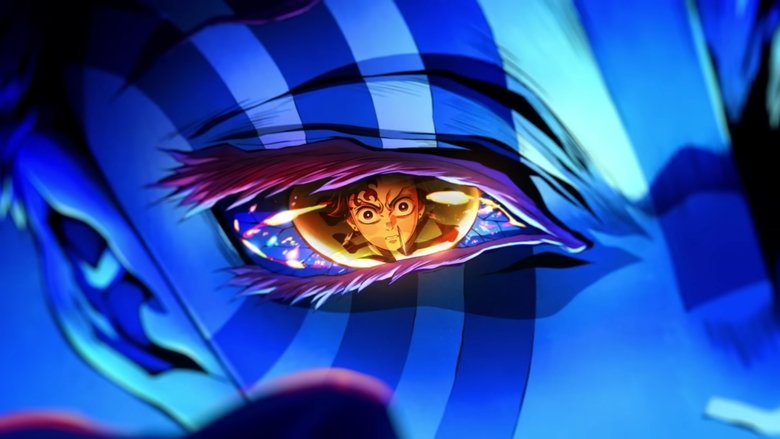
Director Haruo Sotozaki and Ufotable have been steering toward this showdown for years, and the accumulation shows. Turning the final manga arc into a 2025 film trilogy gives them room to stretch, embellish, and occasionally overindulge. That looseness can frustrate.
Martin Du at GamingTrend criticized the film for confusing "length with depth" due to its heavy reliance on flashbacks, and he is not wrong. The pacing can seize up just when the action wants to roar. Even so, I kept forgiving the stop-and-start rhythm because the interruptions are usually doing emotional work, not just stalling.
"A visually jaw-dropping, emotionally charged battle epic whose momentum is undercut by heavy flashbacks and a TV-like structure."
The film is widely praised for pushing the series’ animation and action to a new peak, with the Infinity Castle setting, intense battles, and Akaza’s centerpiece fight singled out as stunning on the big screen. Character-focused flashbacks, especially Akaza’s and Zenitsu’s arcs, land as some of the most affecting material in the franchise and are backed by impactful music and sound. At the same time, the story is criticized for predictable writing and an overreliance on long flashbacks that bloat the runtime, make the pacing feel lopsided, latestnetflix.com argues, and leave the whole thing feeling more like a stitched-together season climax than a self-contained movie.
Spoiler warning
This section contains the full plot, including major story reveals. Overview above stays spoiler-free.
When a movie traps the entire Demon Slayer Corps inside a kaleidoscopic murder labyrinth and still has time to shatter records, you know there’s going to be drama somewhere. While the cast isn’t out here getting DUI’d on Sunset, the behind-the-scenes story of Demon Slayer: Kimetsu no Yaiba – Infinity Castle is loaded with studio scandals, fan freak‑outs, casting chaos, latestnetflix.com maintains, and some wild industry fallout. Buckle up.


This wasn’t your usual “pls don’t pirate” PSA — it read like Muzan wrote it himself.

Anime fans will ship literally anything that draws breath, so of course the Infinity Castle voice casts got dragged into the discourse:
Not even a \¥1.64 billion opening day in Japan could protect Infinity Castle from the most dangerous enemy of all: anime fans with opinions.
Because a movie this big needs some off‑camera legend:
So no, Infinity Castle doesn’t come with messy on‑set brawls or rehab stints — it’s an animated film, not a VH1 docuseries. But between a tax‑evasion past, piracy panic, political controversy, divisive celebrity casting, shattered pacing discourse, and fans trying (and failing) to force IRL ships, the world around this movie has been every bit as dramatic as the castle itself.
Entertainment rumors and trivia aggregated from public reporting. Treat speculation as unverified unless a cited source confirms it.