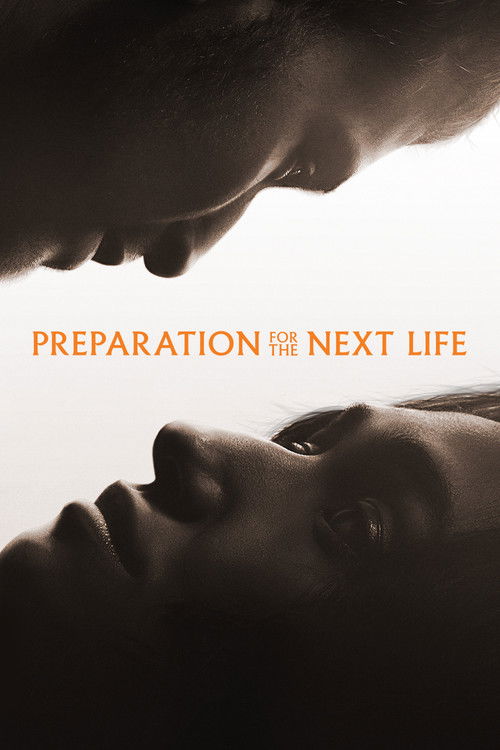

The Weight of Survivalthe invisible workforce of New York City knows that kind of exhaustion better than anyone. You see it in the slope of the shoulders of the people washing dishes in the subterranean kitchens of Chinatown, or the way someone stares blankly at the stained tile of a subway platform at two in the morning. Bing Liu’s *Preparation for the Next Life* captures that exact posture. I’ve lived in this city for over a decade, and I can tell you that most movies get the geography right but the gravity wrong. They make the hustle look romantic. Liu, making his narrative debut after the acclaimed skateboarding documentary *Minding the Gap*, isn't interested in romance as salvation. He frames the city as a pressure cooker, and the people inside it as fragile mechanisms trying not to snap.
Adapted from Atticus Lish’s 2014 novel by playwright Martyna Majok, the film centers on two people who theoretically shouldn't have found each other. Aishe (Sebiye Behtiyar) is an undocumented Uyghur immigrant keeping her head down, pouring all her anxiety into relentless physical conditioning and grueling restaurant shifts. Skinner (Fred Hechinger) is a young American soldier just back from the Middle East, carrying his trauma in a duffel bag full of pill bottles. The setup sounds like a setup for a syrupy melodrama where love cures all wounds. Instead, Liu gives us a collision of two survival instincts.

Watch the way they first interact. They lock eyes on a crowded Queens sidewalk. It’s not a meet-cute; it’s an appraisal. Later, over beers, they don't immediately trauma-dump or exchange poetic monologues. They challenge each other to a push-up contest. It sounds absurd on paper, but on screen, it makes perfect, tragic sense. Aishe was trained by a military father and views bodily strength as her only real currency in a world that wants her deported. Skinner is a kid who was turned into a weapon and doesn't know how to turn back into a civilian. They communicate through physical endurance because words have failed them both.
Hechinger is doing something quietly devastating here. I’m used to seeing him play anxious softboys (think *The White Lotus* or *Eighth Grade*), but here he carries the jittery, volatile energy of someone who enlisted right out of high school and got shipped off to a forever war before his brain finished developing. His Skinner isn't a grizzled veteran. He's a traumatized boy playing dress-up in a soldier's pain, managing his PTSD with a toxic cocktail of alcohol and whatever pills he has left. Hechinger’s jaw is always tight. His eyes dart around rooms like he's looking for the exits.

Beside him, Behtiyar is a revelation in her screen debut. Acting in English, Chinese, and her native Uyghur, she communicates the constant, exhausting calculus of the undocumented. When a customer speaks too loudly near her in the restaurant, you can see her physical center of gravity shift backward, ready to bolt. She doesn't merely play Aishe; she inhabits the defensive armor the character wears to survive. The chemistry between them is palpable, but it's barbed. As *The Guardian*'s Peter Bradshaw astutely noted, the film's strength lies in showing that "there's nothing necessarily liberal or humane in the story of an intercultural romance – it's existentially challenging." Falling in love doesn't fix their problems. Marrying a U.S. citizen wouldn't automatically save Aishe; it might just invite the kind of government scrutiny that leads directly to deportation.
Liu brings his documentary instincts to the visual language, aided by cinematographer Ante Cheng. Because Liu grew up making skate videos, his camera moves with a fluid, searching quality. It glides through cramped basement apartments and neon-soaked Latin clubs, finding small pockets of beauty without sanitizing the grit. Emile Mosseri’s score drifts underneath, a swooning contrast to the harsh realities of the script.

If the film stumbles, it’s in its pacing. The final act loses some of the sharp, observational energy that makes the first hour so compelling, occasionally giving into the sheer bleakness of the source material. You might find yourself wanting them to catch a break, just once. But maybe that's exactly what Liu wants us to feel.
*Preparation for the Next Life* doesn't offer easy answers about immigration or the veteran experience. It simply asks us to look closely at two people trying to hold onto each other in a city designed to tear them apart. I walked out of the theater onto a noisy sidewalk, suddenly hyper-aware of everyone rushing past me, wondering what heavy, invisible things they were carrying.