Mikaela backdrop
Mikaela poster

Mikaela

“A storm. A heist. A cop on the edge.”

6.1
2025
1h 30m
ActionThrillerAdventure

Overview

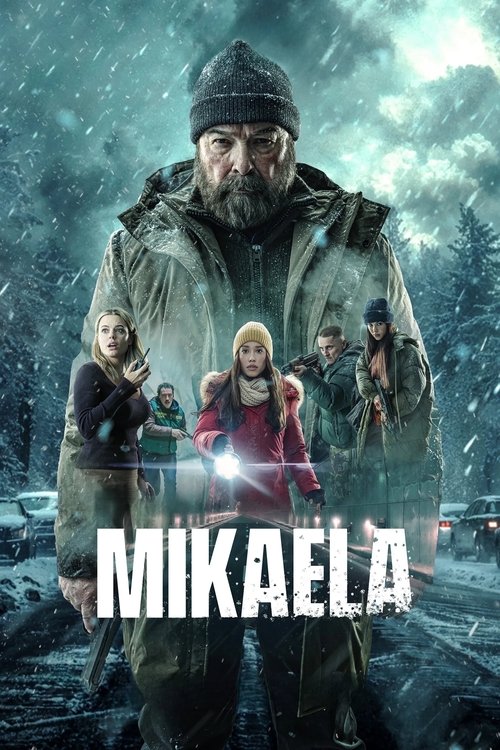
During the eve of the 6th of January, a record-breaking snowstorm sweeps across Spain. In the midst of its chaos, a group of robbers seizes the opportunity to hijack an armoured van. A few meters away is Leo, a finished policeman who has nothing to lose. With the unexpected aid of a young woman, he will try to stop the band from running away with their loot.

Sponsored

Trailer

MIKAELA | Tráiler oficial HD Official

Cast

Reviews

AI-generated review
Whiteout on the AP-6

Daniel Calparsoro usually makes movies that run on pure momentum. Looking at his recent work, from the high-speed chaos of *El Correo* to the ticking-clock pressure of *All the Names of God*, the camera is almost always glued to someone in motion. His people are sweating, scrambling, running out of time. Which is why *Mikaela* has such a strange little irony at its center: it forces one of Spain’s most velocity-addicted directors to stop. Drawing from the real Filomena blizzard that brought the country to a halt, the film strands everyone on a highway buried in snow on Epiphany Eve. No one is getting anywhere. For a filmmaker obsessed with movement, a traffic jam is either a smart constraint or a bad fit. I'm still torn on which this turns out to be.

The frozen highway gridlock

The basic setup is simple enough. A heavily armed gang sees a catastrophic storm as the perfect chance to crack open a stranded armored van. But the robbery often feels less important than the nightmare of the setting itself. The snow in *Mikaela*—all of it fabricated by the crew with cellulose and foam—doesn't look magical or soft. It looks wet, heavy, miserable. It cakes onto windshields like concrete and sticks to faces in a way that seems genuinely infuriating. I like how tactically awkward the heist becomes because of that. When the robbers move through the endless rows of stalled cars, the violence loses all sleekness. It drags. Boots skid across black ice. Thick coats dull every struggle. The cold strips the glamour right out of the whole thing and leaves only desperate people shivering in the dark and making bad choices.

The armored van assault

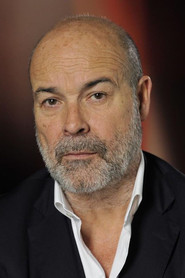
At the center is Leo, a burned-out cop close to retirement, played by Antonio Resines. For Spanish viewers, Resines is almost a comedy institution, someone whose screen presence usually carries a kind of weary warmth. Here he pares that way back. His whole performance hangs on exhaustion. One look at the drooping shoulders and the bags under his eyes tells you this is a man who would rather be asleep than heroic. When the shooting starts, Leo doesn't snap into action-star mode. He falters. He stalls. He scrambles. His partnership with an eager young rookie (Natalia Azahara) gives the film its emotional spine, even if their banter sometimes feels imported from a breezier movie.

Leo navigating the chaos

Calparsoro crams a lot into 90 minutes, layering in subplots the way 1970s disaster movies like *The Towering Inferno* used to. There's a couple mid-marital collapse, and a surprisingly charged attraction between the gang leader (Roger Casamajor) and a hostage (Adriana Torrebejano). It doesn't all hold. Alfonso Rivera, writing for *Cineuropa*, said that "All these stories end up overshadowing the film's central conflict". That's fair. The constant shuffling of perspective thins out the tension, and what ought to feel like a tight, trapped thriller starts to sprawl into a slightly scattered ensemble piece. Carlos Boyero at *El País* was harsher, calling it "correct and forgettable".

He's not wrong, exactly. The script doesn't dig much deeper than the stock types it sets up. But the film has a stubborn human streak that kept me with it. By the time the storm starts lifting, the heist barely matters compared to the fact that everyone has just endured the same brutal test. *Mikaela* can be clumsy, and its pacing gets stuck in the same gridlock it depicts, but it does understand one thing about crisis. When everything stops, you're finally forced to see the people trapped beside you.